
International Desk
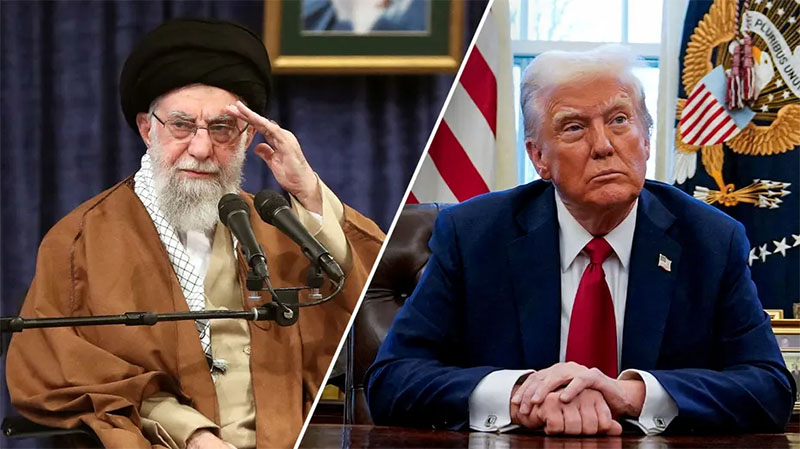
The fifth round of talks between Iran and the United States regarding Iran’s rapidly advancing nuclear program concluded on Friday in Rome, mediated by Oman. Mediator Badr Al-Busaidi stated that while some progress was made, no decisive solution has been reached.
In a post on X after the talks, Al-Busaidi said, “The fifth round of Iran-U.S. talks in Rome concluded today with some progress, though not final. We remain hopeful that in the coming days, outstanding issues will be clarified, paving the way for a sustainable and respectful agreement.”
Iranian Foreign Minister Abbas Araqchi mentioned that Oman had proposed certain suggestions during the discussions, which would be sent to the capitals without committing any party. He said, “These discussions are extremely complex and cannot be resolved in two or three meetings. However, I am optimistic that with the Islamic Republic’s position now clearer, a solution will emerge in the next one or two rounds of talks.”
The discussions, held at the Omani embassy, were represented by U.S. Middle East Envoy Steve Witkoff and State Department Director of Policy Planning Michael Anton. A senior U.S. official, speaking anonymously, stated that the talks were “constructively” progressing and had achieved some advancement, but more work remains.
The primary dispute revolves around uranium enrichment. While the U.S. initially allowed enrichment up to 3.67%, its stance later hardened, now demanding a complete halt to all enrichment by Iran. On the other hand, Iran insists its nuclear program is peaceful and that enrichment must continue domestically.
An alternative proposal discussed involves creating a uranium supply mechanism jointly managed by some Middle Eastern countries and the International Atomic Energy Agency (IAEA), allowing Iran to obtain enriched uranium for peaceful purposes from abroad. However, a similar proposal in 2010 was not implemented, and Iran still maintains its stance on domestic enrichment.
Israel has already threatened to strike Iran’s nuclear facilities if necessary. In response, Araqchi warned on Thursday that Iran would take special measures to secure its nuclear sites and hold the U.S. accountable should Israel launch an attack. Meanwhile, human chains formed by Iranian students at the Fordow nuclear facility called on the public to support the government.
Domestically, Iran is grappling with various crises. Social tensions over mandatory hijab rules persist, coupled with economic instability. Rumors of government-subsidized fuel price hikes and the depreciation of the rial have sparked public discontent. However, the recent talks have slightly stabilized the rial, which the Iranian government is relying upon.
Additionally, Iran’s regional influence has weakened. Israeli aggression against Hamas in the Gaza conflict has pressured Iran’s regional allies. The potential collapse of Syrian President Bashar al-Assad’s government poses a significant challenge for Iran.
Amid this, the U.S., under the Trump administration, has imposed new sanctions on Iran, including a ban on sodium perchlorate sales, which Iran was importing from China. Recently, an explosion related to this substance at Shahid Rajaee Port in Bandar Abbas caused dozens of deaths and over a thousand injuries.
In this scenario, maintaining the continuity of talks is crucial for both nations, even though a final resolution remains elusive.

https://stapravda.ru/20221228/reyting_samyh_populyarnyh_hostingov_v_rossii_196445.html, рейтинг хостингов России подтверждает, что выбор надежного провайдера важен для бизнеса.