
Staff Correspondent
In recent years, Japan International Cooperation Agency (JICA) and the Asian Development Bank (ADB) have made significant investments to improve connectivity between Bangladesh and India’s northeastern states. These funds have been used for various infrastructure projects, including roads, railways, and ports. However, following the political instability in Bangladesh and rising diplomatic tensions between the two countries, concerns are growing about the future of these projects.
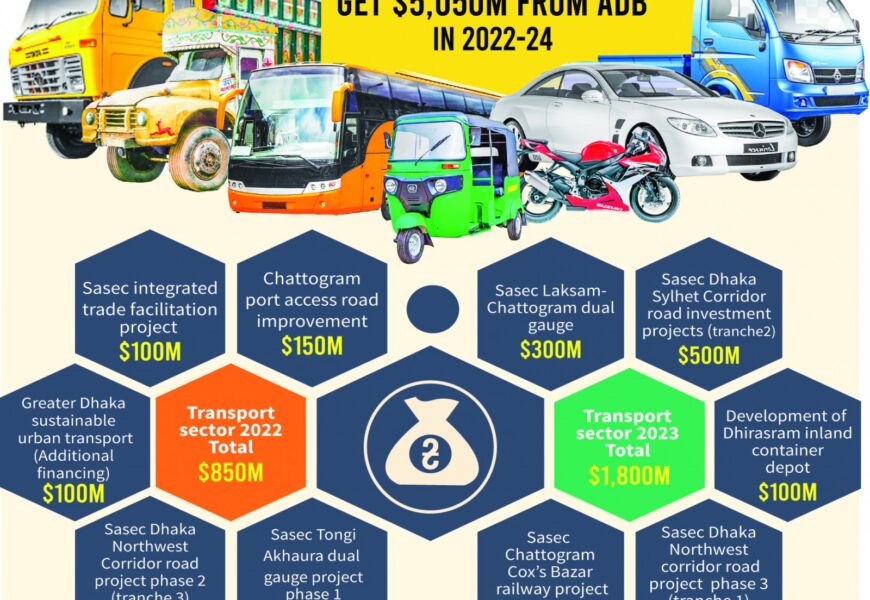
Last year, Japan’s Prime Minister Fumio Kishida announced that Japan had invested $10 billion over 10 years in building connectivity between Bangladesh and India’s northeastern regions. Of this, $2 billion was spent specifically on improving infrastructure in northeastern India. Similarly, ADB has invested $20 billion through the South Asia Subregional Economic Cooperation (SASEC) program, with a significant portion allocated to enhancing connectivity between Bangladesh and India.
Despite the substantial investments in road, rail, and port development projects, the growing friction between the two countries—exemplified by incidents like the attack on Bangladesh’s Assistant High Commission in Agartala—has raised doubts about the implementation of these projects. Experts believe that the political situation may cause delays and complications in achieving the desired outcomes.
Officials from ADB and JICA have pointed out that the success of these projects heavily depends on the stability of the relationship between Bangladesh and India. Former ambassador M. Humayun Kabir emphasized, “If the balance in relations is not maintained, it will be difficult to implement these projects.”
Both JICA and ADB have played key roles as major investors in connectivity projects between Bangladesh and India. However, ongoing political instability and diplomatic issues have raised concerns about the future of these investments.
As of December 2023, ADB’s investments through SASEC have funded 86 projects in sectors such as transportation, trade facilitation, energy, economic corridors, health, and tourism across South Asia. A total of $2.05 billion has been spent on these projects, with $1.44 billion allocated to the transport sector. Economic corridor development also received substantial investment, with seven projects receiving $232 million.
Bangladesh has been the largest recipient of ADB’s SASEC investments, with $791.2 million invested in the country. India follows closely with $742.7 million in accumulated investments.

https://stapravda.ru/20221228/reyting_samyh_populyarnyh_hostingov_v_rossii_196445.html, рейтинг хостингов России подтверждает, что выбор надежного провайдера важен для бизнеса.