
Staff Correspondent
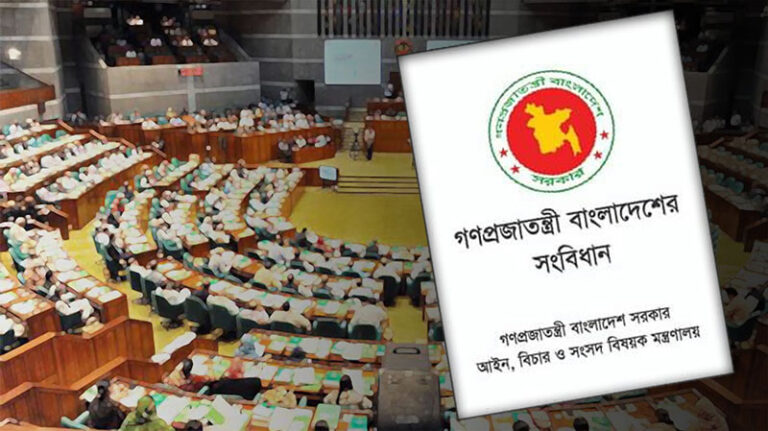
Dhaka, 5 February 2026: In the context of the 13th National Parliament elections to be held on 12 February and the referendum on the implementation of the July National Charter (constitutional reform) on the same day, various statements by members of the Advisory Council on the government formation and oath-taking process have created doubts in the public mind. While constitutional experts, lawyers and even advisors do not have a clear idea about the constitutional reform process and government formation process, the ambivalence about the referendum among ordinary voters is increasing day by day.
Although the explanation given is that the elected parliament will have to act like a Constituent Assembly and reform the constitution within 180 days according to the 84 reform proposals of the July Charter, the statements of Legal Advisor Asif Nazrul and the Chief Advisor’s Press Secretary Shafiqul Alam indicate a quick government formation and transfer of power, contradicting the statement of the head of the reform committee. There are questions in the public mind about which constitution will be taken and who will administer the oath.
Analysts say, “The advisors’ varying interpretations have made the entire process unclear, which is risky for democratic stability.”
According to constitutional experts,
“The reform proposals are becoming so complicated according to the July Charter that the beauty and simplicity of the 1972 constitution are being lost. Even lawyers who have worked on the constitution their entire lives are unable to clearly understand these reform proposals. Is this complexity leading Bangladesh to a new constitutional crisis?”
Professor Ali Riaz, vice-chairman of the National Consensus Commission and head of the Constitutional Reform Committee, said that the parliament formed after the elections will run the government, formulate the budget, and carry out state activities normally from the first day. At the same time, it will function like a ‘Constitutional Reform Council’ or Constituent Assembly for 180 days. The elected members will take separate oaths and make fundamental changes to the constitution in accordance with the July Charter. He clarified that this will not delay the transfer of power – both government formation and reform will proceed in parallel.
But today, Thursday, Legal Advisor Asif Nazrul said in a press briefing at the Secretariat, the newly elected members of parliament will be sworn in within three days of the publication of the gazette after the election. There is no opportunity for the former speaker or deputy speaker to administer the oath. A person nominated by the President (such as the Chief Justice) on the advice of the Chief Advisor will administer the oath. Alternatively, if not within three days, the Chief Election Commissioner (CEC) can administer the oath. He stressed that the interim government will not waste any time in this matter.
On the same day, the Chief Advisor’s Press Secretary Shafiqul Alam told a press conference at the Foreign Service Academy that the responsibility will be handed over to the elected government as soon as possible after the elections. This will not happen later than February 17-18. After the elected members of parliament take the oath, the leader of the majority party will be invited as the prime minister and the responsibility will be explained. The current interim government will have no role in the next government.
These different tones of speech have raised questions in the public mind – will the 180-day reform process outlined in the July Charter delay the formation of the government, or will it lead to a speedy transfer of power? Even among educated circles, there is confusion about the referendum (approval of the 84 proposals in the July Charter), which is even more complicated for the general public.
Meanwhile, the referendum question paper seeks approval on a ‘yes/no’ basis for the key proposals of the July Charter (caretaker government, bicameral parliament, balance of powers, etc.). If ‘yes’ wins, the new parliament will have to meet a mandatory deadline for reforms.

https://stapravda.ru/20221228/reyting_samyh_populyarnyh_hostingov_v_rossii_196445.html, рейтинг хостингов России подтверждает, что выбор надежного провайдера важен для бизнеса.