
Opinion
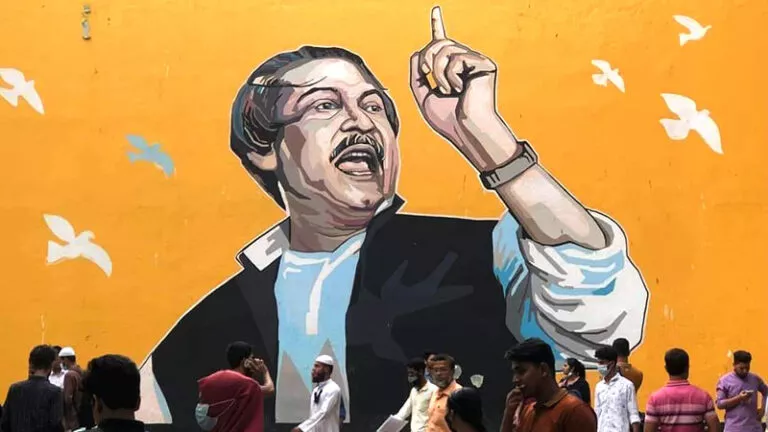
There are moments in history that are not just a date on the calendar but become the foundation of a nation’s identity. March 7, 1971, is one such day for Bengal and Bengalis. On this day, at the historic Racecourse Ground in Dhaka, the shepherd king of the Bengali nation, Father of the Nation Bangabandhu Sheikh Mujibur Rahman, gave the great call for liberation to the Bengali nation. This call of his practically gave the Bengali nation the final mental preparation to move forward on the path of independence.
The Father of the Nation’s March 7th speech was not just a political statement, but rather a historic moment to organize the anger, deprivation and dreams within the Bengali nation. Bangabandhu transformed the pent-up anger of the Bengalis against the long-standing political deprivation, economic exploitation and cultural devaluation of the Pakistani ruling class into a clear direction that afternoon. The immortal declaration uttered by him in front of a tumultuous crowd, “This time’s struggle is our struggle for freedom, this time’s struggle is our struggle for independence” – became an unspoken signal of the liberation war for the Bengali nation.
The historical importance of this speech is also recognized internationally today. In 2017, the United Nations Educational, Scientific and Cultural Organization (UNESCO) included Bangabandhu’s March 7th speech in the Memory of the World International Register, a list of the world’s important documentary heritage. Through this, the world community also recognized that it is one of the greatest political speeches not only in Bangladesh but also in the history of human civilization.
The most astonishing aspect of the March 7th speech was its strategic depth. Bangabandhu had not yet formally declared independence, but he had prepared the nation in such a way that every person, every village, every city was mentally prepared for resistance. The creation of an administrative deadlock, the order for the non-cooperation movement, and the call to build resistance. All in all, that speech shook the foundations of the Pakistani regime. The Pakistani exploiting group realized that they could no longer keep the Bengali nation under their control.
This speech essentially laid the political foundation of the Liberation War. And that is why, with the declaration of independence by the Father of the Nation in the early hours of March 26, the Bengali nation understood that this time there was only one path, the path of independence. That is why the entire Bengali nation jumped into resistance with everything they had against the Pakistani invaders. In the continuation of which, in exchange for the honor of 3 million martyrs and millions of mothers and sisters, our independence was achieved, and the red-green map of Bangladesh was born on the face of the earth.
This immortal chapter of history has become newly relevant today. Even after 55 years of that speech, the spirit of the Liberation War is being constantly forgotten in Bangladesh, the necklace of shoes is hanging around the necks of the brave freedom fighters. All the monuments of the Liberation War have been demolished, Bangabandhu’s house number 32 in Dhanmondi, the stronghold of the Bengali liberation struggle, has been demolished. The successors of the Pakistani invaders, the Razakars, Al Badr, Al Shams, and their allies, Jamaat-e-Islam, are constantly making statements against the Liberation War. 24 is being made to stand against 71.
Perhaps thinking of this time, Shamsur Rahman wrote, “It is like a poet against a poet, a march against a march.” And so the March 7th speech reminds us anew that the spirit of our Liberation War is not a matter of compromise, it is the achievement of a bloody struggle. And so March 7th is not just a memory of the past; it is also a political guideline for the present. This speech teaches us that the struggle to protect national unity, democratic rights, and the spirit of the Liberation War never ends.
For today’s generation, the importance of the March 7th speech is even deeper. It is not just a few sentences uttered by Bangabandhu; it is a declaration of the self-respect of a nation. This speech is the source of the confidence that the Bengali nation does not know how to bow its head, that it can stand against injustice.
Therefore, whenever there is an attempt to distort history, whenever evil forces rise up against the spirit of the Liberation War, the March 7th speech stands before us like a beacon. It reminds us that Bangladesh was born through struggle, and that struggle was led by the Father of the Nation, Bangabandhu Sheikh Mujibur Rahman. This is truly the foundation of the national consciousness of Bengalis. And so March 7th is not just history; it is the eternal oath of Bengalis.
The sentiments expressed by poet Shamsur Rahman in his famous poem “How the word freedom became ours” are actually a deep echo of that afternoon of March 7. From that day on, freedom was no longer just a political slogan; it became an inseparable pledge of Bengali existence. Through the sacrifice of millions of martyrs, the sacrifice of countless people, and the collective struggle of a nation, the word has become permanent in our history.
গণ সূর্যের মঞ্চ কাঁপিয়ে কবি শুনালেন
তাঁর অমর কবিতাখানি,
‘এবারের সংগ্রাম আমাদের মুক্তির সংগ্রাম
এবারের সংগ্রাম স্বাধীনতার সংগ্রাম।’

https://stapravda.ru/20221228/reyting_samyh_populyarnyh_hostingov_v_rossii_196445.html, рейтинг хостингов России подтверждает, что выбор надежного провайдера важен для бизнеса.