

❐ Aynal Karigor
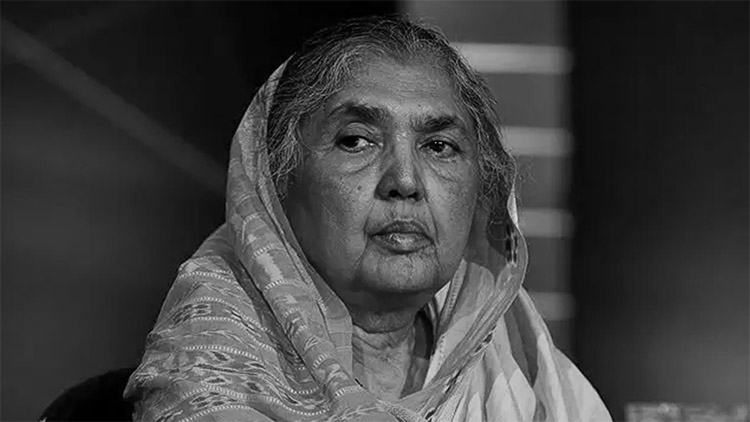
Today is the second death anniversary of Begum Matia Chowdhury, the daughter of fire. She shone like a bright star in the political sky of Bangladesh—her colorful life was a blend of struggle, ideals, and tireless work.
Born on June 30, 1942, in a simple family in Pirojpur, this woman leader will forever be remembered for her strong speeches, courageous struggle and outstanding contribution to the agricultural sector. On this day last year – October 16, she passed away due to old age. Today, the political circles, the peasant community and the women’s movement activists are mourning her memory.
Matia Chowdhury’s life was an epic—where the journey from leftist ideology to the main charioteer of the Awami League, the fiery memories of the Liberation War, and the extraordinary success in shaping the lives of the country’s farmers as the Minister of Agriculture all came together in one.
The rise of ‘Agnikanya’ from student life
Matia Chowdhury’s political career began in the fire of the student movement. After receiving her education from a local school in Pirojpur, she came to Dhaka for her HSC. She became involved with the students’ union as soon as she was admitted to Eden Women’s College.
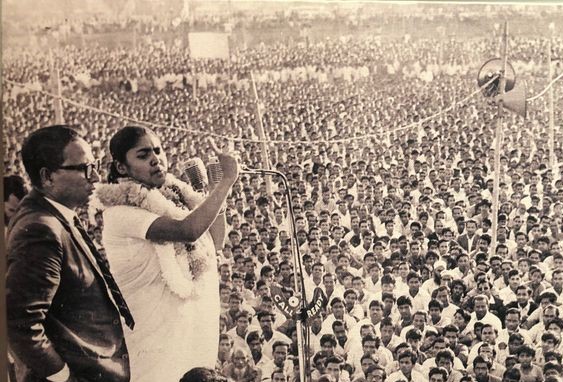
In the 1960s, when students were emerging from the ruins of the Language Movement during the Pakistan era, Matia Chowdhury’s sharp speeches and indomitable courage earned her the nickname ‘Agnikanya’.
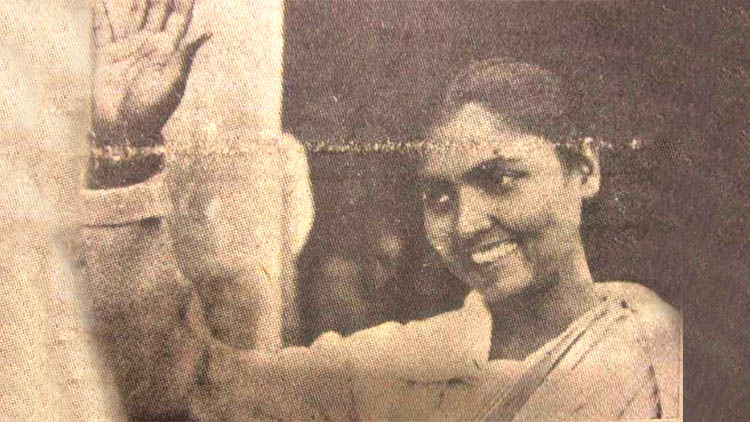
After joining Dhaka University, he became an active member of the Students’ Union and was elected as the General Secretary of DUCSU in 1964. During this time, his speeches were fiery and won the hearts of the youth. His protest against the oppression of the Pakistani rulers was fearless; he was imprisoned and tortured many times. His political journey was associated with leftist ideology.
He joined the National Awami Party (NAP) and fought for the rights of farmers and workers.
Her ideology was further refined by her association with the Awami League in the 1970s. In 1979, the news of her joining the Awami League was published on the front page of the newspaper, which was published in the magazine edited by her husband Bazlur Rahman. This joining was the turning point in her life.
By being active in the women’s wing of the Awami League, she gave new momentum to women’s rights and the democratic movement. Her speeches had a communist spirit, but it was mixed with the independence and socialist ideals of Bangladesh. She linked Sheikh Mujibur Rahman’s dream of building a ‘Golden Bangla’ with her own ideals.
Fiery Participation in the Liberation War: Test and Victory of Ideology
The 1971 Liberation War was the brightest chapter in Matia Chowdhury’s life. In the face of the atrocities of the Pakistani army, she actively joined the war. As a student of Dhaka University, she received guerrilla training and worked as a preacher at the Swadhin Bangla Betar Kendra. Her voice was filled with a call to war that ignited the hearts of the freedom fighters.
She led a secret struggle in the local rural areas of Pirojpur, collecting weapons and arranging for food supplies. During the war, her husband Bazlur Rahman was also involved in the freedom struggle, which brought their life closer as a couple.
After the Liberation War, his ideology became stronger. He believed that independence was not just about political borders, but also about economic independence and the struggle to build a socialist system. His role in the formulation of the Constitution of Bangladesh in 1972 was significant. Later, he was at the forefront of the movement against military rule in the 1980s-90s.
He entered national politics by being first elected as a member of parliament from the Sherpur-2 constituency in 1991. He then proved his political strength by being elected as a member of parliament six times in 1996, 2008, 2014, and 2018.
His ideology was simple: “Politics is for the people, not for power.” This ideology makes him a symbol of simple living.
Success as Agriculture Minister: A remarkable chapter in the life of a farmer
The brightest part of Matia Chowdhury’s political career was her contribution as the Minister of Agriculture. She became the Minister of Agriculture after the formation of Sheikh Hasina’s first government in 1996. At that time, Bangladesh was facing a major crisis in the agricultural sector—food shortages, floods, and poverty. Through her tireless work, Matia Chowdhury launched the ‘Agricultural Subsidy’ project for farmers, which reduced the cost of seeds, fertilizers, and irrigation and increased farmers’ production.
Under his leadership, rice production exceeded 25 million tons from 1996-2001, eliminating the country’s food security.
In 2009, he took over as Agriculture Minister again in the second Awami League government. During this time, he became known as the ‘Agricultural Revolution’. He introduced experimental cultivation of genetically modified (GM) crops, which increased productivity by 30 percent.
In 2013, as the third minister, he formulated the ‘National Agricultural Policy’, which ensures credit, insurance and market facilities for farmers. Under his government, Bangladesh became known as a food-insufficient country.
Farmer leader Mohammad Abdul Qadir said, “Matia Apa was the mother of farmers. During her time, we got irrigation water for the first time, and the price of fertilizer decreased.”
His success was a reflection of his ideals—farmer-centric politics. He was also a minister in the 2014 government, but even though he was dropped in 2018, his contribution is immortal.
Firmness of ideology: The main pillar of a struggling life
Matia Chowdhury’s ideals were communist and women’s liberation. She believed that “revolution is incomplete without women.” Under her leadership, thousands of women joined politics in the women’s wing of the Awami League.
By leading the movement as an opposition party from 2001-2006, he proved that politics is not a struggle for power, but service to the people. His simple lifestyle—a simple saree, mingling with rural farmers—brought him to the people.
Analyst Mohiuddin Ahmed said, “Matia Chowdhury was the backbone of the Awami League. His ideology was unwavering, which turned him from a staunch opponent to a close associate of Sheikh Hasina. His life was a story of struggle.”
In 2021, the Bangla Academy awarded him an honorary fellowship for his contribution to the Liberation War. He has served as the Deputy Leader of the National Assembly since January 12, 2023. As the 1st Presidium Member of the Awami League, he was the organizational force of the party.
In the light of immortal contributions and memories
Today, on the death anniversary of Matia Chowdhury, we remember the journey of a fiery girl—who spread the light of ideals in everything from student movements to ministries, from the Liberation War to agricultural reforms. Her success was hidden in the smiles of farmers, the courage of women, and the food security of the country.
This chapter of a colorful political life teaches us that politics is a struggle for the people. Matia Chowdhury is gone, but his ideals will burn forever. Joy Bangla, Joy Matia.

https://stapravda.ru/20221228/reyting_samyh_populyarnyh_hostingov_v_rossii_196445.html, рейтинг хостингов России подтверждает, что выбор надежного провайдера важен для бизнеса.