
-Anwar Shadat Jihan
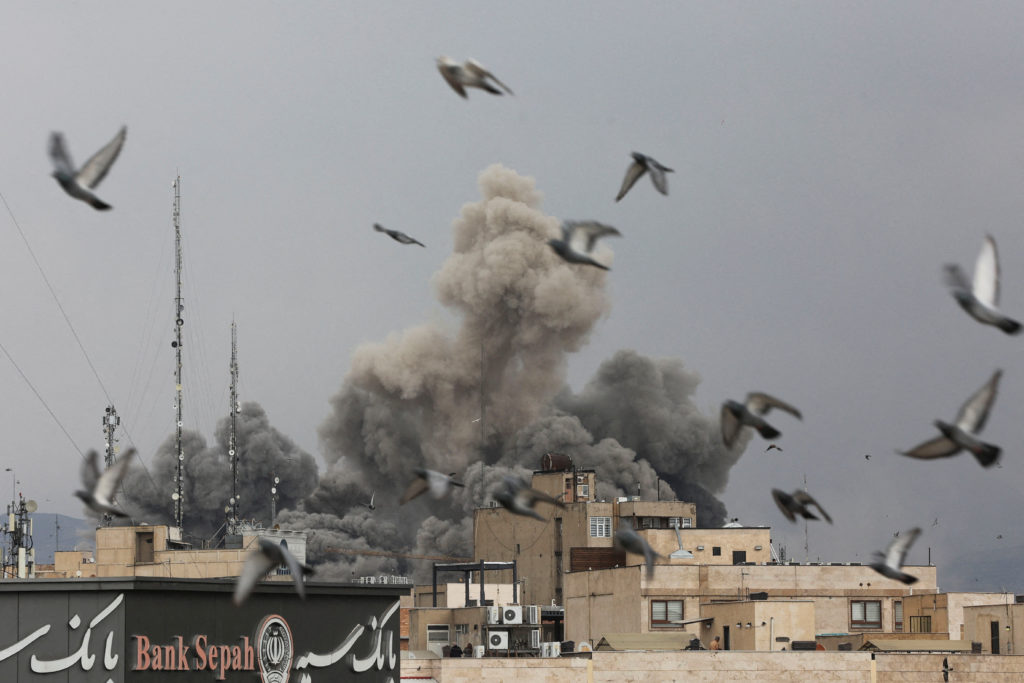
Ushering into power with an anti-war manifesto while criticizing and denouncing U.S. interventions in Iraq, Afghanistan, and Libya, President Donald J. Trump, during his first term in office, was peaceful in comparison with his predecessors. However, the whole dynamic of Trump’s so-called peaceful coexistence seems to have altered in his second term. In a matter of seven months, the U.S. attacked nuclear sites in Iran, captured Venezuela’s Maduro, and in the latest spree of attacks, launched a full-scale military attack against Iran, in which the supreme leader of Iran, Ali Khamenei, was killed. Whether it was strategically sound and necessary is a question that will haunt experts for decades. But what it means for the global economy, how it will affect the global community, and most importantly, who will be the ultimate victims of this military action are the most pressing questions today.
Undoubtedly, when the decision was made to launch the attack on Iran, the immediate consequences were also considered. But to what scale the consideration was at par with what has unfolded since is unclear. After being attacked and having their supreme leader killed, what Iran has done has caught analysts off-guard. Iran launched attacks on all six Gulf Cooperation Council (GCC) states—attacking civilian targets such as hotels, airports, seaports, and oil refineries. From Dubai to Saudi Arabia, and Oman to Qatar—Iran’s drones and ballistic missiles are roaring down and hitting targets it considers to be threats, simply because these Gulf countries have strategic partnerships with the United States.
To what extent the United States will go to protect its GCC partner states is yet to be discovered. But the immediate aftermath of these attacks will be extremely painful not only for the GCC countries but for the globe due to the strategic importance of these countries for the global economy. For years, these GCC countries have advertised themselves as tax havens, unparalleled to others in terms of safety, and as a hub for trade and businesses. But it all changes with the picture of missiles flying over the Burj Khalifa instead of celebratory, extravagant fireworks. When the tourists, instead of lounging under the sun on the beach, have to struggle to find a bunker bed in the garage of a hotel, and when residents don’t know whether they will be able to find shelter in case of an attack—the so-called ‘veil of safety’ that the GCC leaders have managed to erect ruptures.
How GCC leaders will reassure safety for their residents in a situation where the United States either fails to provide protection or decides protecting its GCC allies is of lower priority will shape the future of the $3 trillion economy. Over time, the GCC countries have transformed themselves into key hubs, not only for businesses within their territories but as routes that are an absolute necessity for maintaining global trade. Energy that powers the world flows through the Gulf, products that keep the world running travel through the Gulf, and most importantly, money—money that keeps the world revolving—is transacted through the Gulf. So, when the Gulf region is disturbed, the world economy is bound to stutter.
Termed the ‘Superman’ of global energy markets by analysts and diplomats, the GCC countries so far have been considered stabilizers of the global energy markets in times of disruption and instability. With approximately 30% of the world’s oil reserves and 20% of global natural gas reserves at their disposal, these countries have been a major factor in ensuring uninterrupted global energy. Not only does this region contain the vast majority of the world’s oil reserves, but one-third of the world’s supply of crude oil, methanol, and fertilizer is exported through the Strait of Hormuz, sitting at the edge of the Gulf. One-fifth of the world’s liquefied natural gas and gas derivatives are transported through this strait as well. Even though the immediate aftermath of the attacks and counterattacks has been modest for energy prices, if this disruption lingers for long—the sufferers will be not only Iran or the U.S.A., but the global community.
The GCC countries thus have an important stake in powering the globe. What makes this geographic location even more important is the scale of total merchandise trade. Approximately $1.6 trillion worth of non-oil trade is conducted through the GCC countries. Food, machinery, electronics, vehicles, and 20% of global arms travel through the ports of these countries—through the ports that connect the Gulf economies to the global economy. Dubai’s Jebel Ali Port—the 10th most active container port with connections to more than 150 ports worldwide; Saudi Arabia’s King Abdulaziz Sea Port—the 14th most efficient port; and Bahrain’s Khalifa Bin Salman Port—the 10th best port in the West, Central, and South Asia region—and many more in the region are logistical hubs through which food that feeds millions is transported, medicines that protect and cure millions are moved, and machinery that keeps industry moving is shipped.
Then, there is global aviation. GCC countries have some of the busiest airports that not only transport people but provide freighter services as well. Ten percent of total world air traffic moves through the top 10 airports in the GCC. In 2024, the GCC handled approximately 327 million passengers. Dubai and Qatar have transformed their aviation to a level where the former is #1 globally for international passengers for 11+ consecutive years and the latter is the highest-ranked in the region for connectivity. Besides, GCC’s major aviation hubs handle approximately 16% of the world’s scheduled international freight.
The Gulf has transformed itself into a financial hub as well—for the rich, for the powerful, and for those who have no better way to move their funds into countries where there is more scrutiny. It is well-established that the Gulf is considered the sweet spot for moving black money and for whitening it!
So, a prolonged war in the Gulf is a threat not only to the Gulf region itself, but to the world. The world economy depends on this region; global energy is routed through this region and, most importantly of all—millions of people live in this region who have nothing to do with either Trump or Khamenei. When a missile remnant burns through a house where an innocent baby is sleeping, it doesn’t affect Trump, Khamenei, or Mohammed bin Salman—it shatters the life of that family. When Trump decides to attack and kill Khamenei, and in retaliation—being driven by pure ego—the other side starts attacking random countries randomly, the ultimate victim is neither Trump nor Khamenei, but the whole world.
If history were to teach us one lesson from the plenty of wars we have already seen, it would be that war brings nothing positive for anyone involved and brings hell for those who have nothing to do with it. With history as the teacher, it is time that world leaders embrace humanity and put an end to this insanity.

https://stapravda.ru/20221228/reyting_samyh_populyarnyh_hostingov_v_rossii_196445.html, рейтинг хостингов России подтверждает, что выбор надежного провайдера важен для бизнеса.