
Opinion
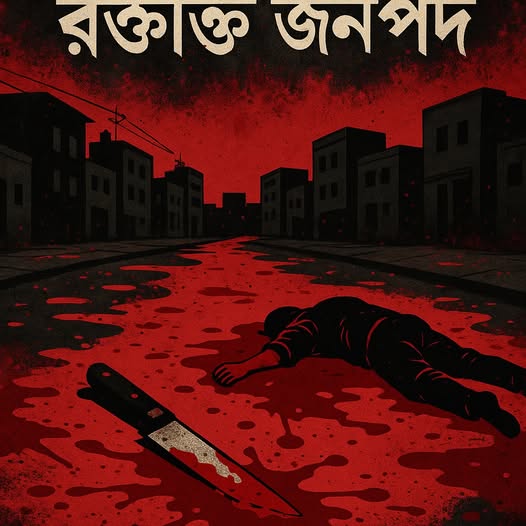
Has murder become as commonplace as having a meal in Bangladesh? This isn’t just about criticizing the Yunus government. Even during the Awami League’s tenure, reports of bodies found in paddy fields, canals, and ponds in places like Savar and Gazipur near Dhaka were frequent in newspapers, on TV, and on social media. Burnt skeletons were discovered in brick kilns. However, those murders were committed covertly, and the killers rarely confessed, with bodies surfacing after days or even weeks.
The difference now is that murders are no longer hidden. After August 5, 2024, it seems people in Bangladesh gained a license to kill. Following the massacre of thousands from August 5 to 8, when the Yunus government granted indemnity to the killers through an ordinance preventing any trials or cases for those murders, violence surged. Any act could be justified by claiming, “I am an anti-discrimination student leader” or “Such things happen in revolutions,” absolving perpetrators from accountability.
According to the Yunus government, the total death toll from July 15 to August 5, 2024, was 400. I do not call them martyrs. Only those who fought and died for the liberation of an independent, sovereign state in 1971 are martyrs to me. Even figures like Bangabandhu Sheikh Mujibur Rahman or Ziaur Rahman do not fall under this definition in my view. During the July uprising and the August conspiracy, the number of deaths Yunus, the “Panchatantra” group, and the “dirty masterminds” claim is 400. Meanwhile, during July and August alone, 3,000 police officers were killed, as noted by diplomat Harun Al Rashid Bhai. Adding the deaths of Awami League members and ordinary citizens over the past eight months would yield a number beyond imagination.
Beyond these, people have been killed for trivial reasons, such as eating rice noisily or simply smiling at someone. The murderers defend themselves by claiming to be anti-discrimination student leaders. When asked what kind of freedom of speech, rule of law, or election allows for the killing of thousands post-August 5, they respond that killing fascists or their supporters is no crime.
Most of these lower-tier Yunus supporters are pseudo-religious zealots. Whether they perform prayers or consume alcohol and drugs is irrelevant; killing fascists seems to be their ultimate act of piety. Ironically, those they curse—like Bangabandhu Sheikh Mujibur Rahman and Sheikh Hasina—are the most devout political leaders in Bangladesh’s 54-year history. Yet these radicals oppose the Awami League under an Islamic guise because, to them, Islam equates to Pakistan or Saudi Arabia.
A reader once commented on one of my articles, reminding me of the 1970 elections. In that election, nearly 25% of East Pakistanis voted against the Awami League, choosing pro-Pakistan parties like the Pakistan Peoples Party and Jamaat-e-Islami. At that time, about 15 million people in Bangladesh were against independence. Over 54 years, this number might not have grown to 60 million, but it has likely increased significantly.
Under Awami League rule, these forces were controlled. While Sheikh Hasina may not have succeeded in reforming extremists’ characters, she was effective in suppressing them. However, after her fall, these radicals resurfaced. Their supporters are a strange mix—religious zealots at the grassroots level and liberal, highly-educated atheists among the masterminds. For this bizarre group, nothing—be it murder, violence, or plunder—is a crime. They neither answer to God nor to the state.
The current situation has deteriorated unimaginably, though violence is not new. I began this article referencing the corpses discovered during Awami League rule. Following the August 15, 1975 assassination of Bangabandhu and the subsequent killing of four national leaders in November, Bangladesh effectively became a state of murder. Ziaur Rahman institutionalized this culture by eliminating around a thousand freedom fighter military officers and reintroducing Jamaat-e-Islami to Bangladesh.
After a free election brought the BNP to power in 1991, there was hope for the country. Despite various challenges, the nation progressed until August 4, 2024. However, Yunus’s rise on August 8, 2024, mirrored Ziaur Rahman’s model, legitimizing violence and reinstating the killers as heroes, dragging Bangladesh back into a dark era.
Today, anyone can kill someone under any pretext, declare themselves an anti-discrimination leader, and walk free. Adding a tag of “fascist sympathizer” to the victim makes the narrative complete.
When a nation becomes this violent and feral, does it matter who comes to power? While I do not know what kind of government can steer us out of this, I am certain we are suffering from a national mental illness.
Will we ever escape this culture of indiscriminate killing? I don’t know. We proudly sing of our country as the most beautiful and fertile land, but in reality, we are among the most barbaric and envious people. Our poets and writers may have romanticized our nation, but their words fostered false pride, preventing us from striving for improvement.
The end of this brutality remains uncertain. Until then, I advise: don’t smile at strangers here. While murder might go unpunished, smiling at someone could cost you your life.
-Shamim Ahmed
Researcher, Writer.
Canada

https://stapravda.ru/20221228/reyting_samyh_populyarnyh_hostingov_v_rossii_196445.html, рейтинг хостингов России подтверждает, что выбор надежного провайдера важен для бизнеса.