
International Desk
Nepal’s interim Prime Minister and former Chief Justice Sushila Karki recently gave a clear and strong message that directly points to the current political situation in Bangladesh. She said, “We will not let Nepal become like Bangladesh.”
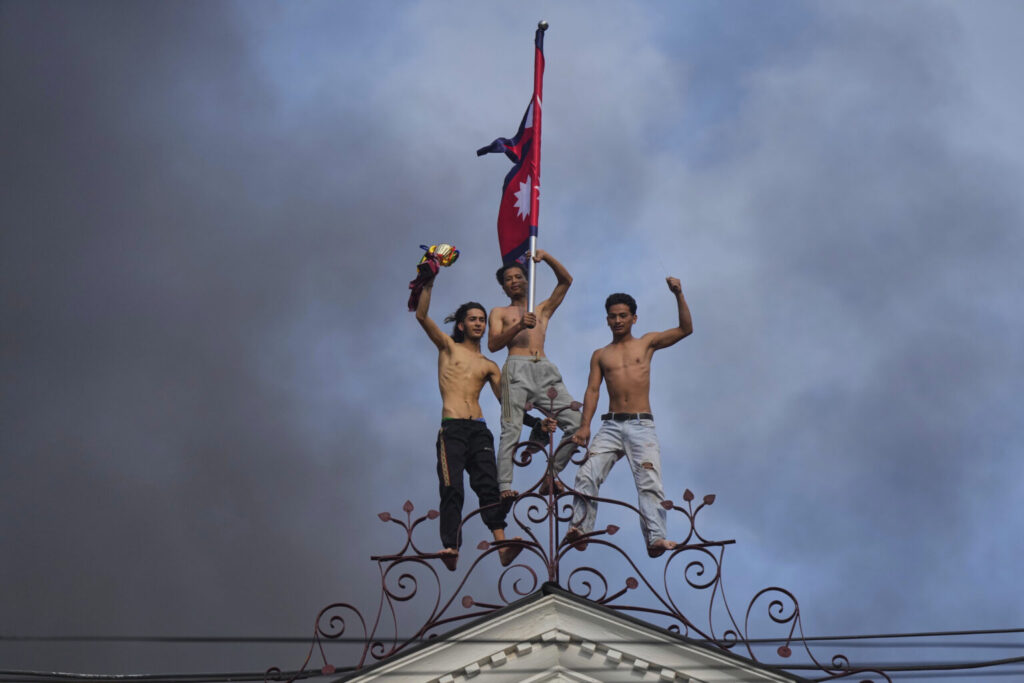
Through this comment, Karki expressed his firm commitment to avoid destructive consequences for law and order and state institutions in the aftermath of the Gen-G movement in Nepal.
He noted that despite the multifaceted pressure from protesters in Nepal, he has not allowed the country’s law and order system to be destroyed and will not do so in the future.
On the other hand, citing the context of Bangladesh, he pointed out that the interim government led by Dr. Muhammad Yunus gave up a large part of its power by showing excessive flexibility towards the demands of the July-August protesters, which resulted in the weakening of various organs of the state apparatus and the creation of an environment of “mobocracy” (mass extremism and violent control) and anarchy.
Sushila Karki said, “We respect the movement, but anarchy, arson, vandalism and violent acts against state institutions can never be tolerated without considering them as national crimes. We will not allow a situation to arise in Nepal where the state machinery becomes paralyzed and anyone can do whatever they want.”
This statement has sparked widespread discussion in Nepal’s political circles. Many analysts believe that Karki’s stance is part of an effort to move Nepal towards long-term political stability.
On the other hand, in Bangladesh, the Yunus government has given impunity to the protesters, legitimizing all the injustices, killings, corruption, and anarchy.
Some Gen-G leaders see this comment as a “distrust of the spirit of the movement.”
It is worth noting that Sushila Karki was appointed as the interim Prime Minister after the fall of KP Sharma Oli’s government in the face of the Gen-G movement in September 2025. She has already promised to hand over power through elections by March 2026.
The incident highlights a stark comparison between the political paths of the two neighboring South Asian countries—where, on the one hand, Nepal is emphasizing strict rule of law and a limited-time interim arrangement, while, on the other hand, the post-movement situation in Bangladesh is still shrouded in uncertainty and controversy.

https://stapravda.ru/20221228/reyting_samyh_populyarnyh_hostingov_v_rossii_196445.html, рейтинг хостингов России подтверждает, что выбор надежного провайдера важен для бизнеса.