

United States Representative. Washington, November 5, 2026
US columnist Adel Nazarian calls for congressional investigation into internal US State Department differences over Chinmoy Krishna Das’ release, Holey Artisan attack convicts, USAID funding, and Jamaat-e-Islami
A special column published in the US media outlet Newsmax calls for an investigation into the role of the then US Biden administration in the political transformation of Bangladesh, the 2024 movement, and the fall of the Sheikh Hasina government. In an article titled ‘ What Did Biden’s State Department Know About Bangladesh? ‘ published on November 3, author Adel Nazarian raised several questions for US policymakers about the political situation in Bangladesh.
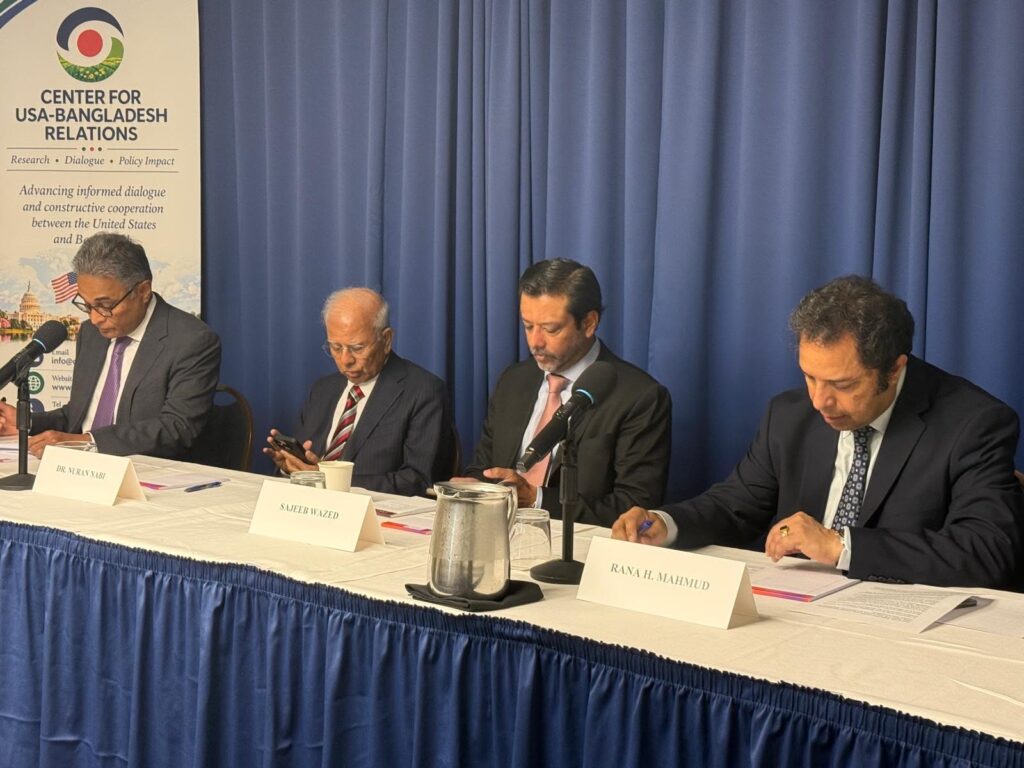
The column was written in the wake of Sheikh Hasina’s press conference organized by the Center for USA-Bangladesh Relations at the National Press Club in Washington, DC on October 19. It discussed the security of minorities in Bangladesh, the detention of Chinmoy Krishna Das, the release of those convicted of the Holey Artisan attack, and the role of various US-funded organizations, in addition to the speech of Sheikh Hasina’s son and former advisor Sajeeb Wazed Joy.
The most important aspect of the column is that the author not only expressed concern about the political situation in Bangladesh; but also called on the US Congress to investigate Biden-era grants, diplomatic contacts, and policy decisions on Bangladesh.
Questions over release of embassy worker murder convicts
A statement by Sajeeb Wazed Joy in the column has gained particular importance. In a conversation with the author, Joy claimed that in the case of the murder of a US embassy worker in Bangladesh, the then government, under pressure from the US embassy, found the killers and ensured their punishment through trial. But later, he alleged, the interim administration led by Muhammad Yunus released those convicted in the murder.
The author suggests that the US Congress collect the names of the individuals involved, court rulings, executive orders authorizing their release, and the assessment of the US Embassy in Dhaka to verify the veracity of these allegations.
He has raised questions with the US State Department about whether Washington was aware of the release of those who were convicted in the embassy killings and whether US officials had raised any objections to it.
Joy also alleged that some of the people involved in the 2016 terrorist attack on the Holly Artisan Bakery were later released. The author also called for a documentary-based investigation into this allegation.
Calls for investigation into Biden administration’s role in Sheikh Hasina’s downfall
In the most politically explosive part of the column, Sajeeb Wazed Joy alleged that the Biden administration was behind the fall of the Sheikh Hasina government in 2024. He claimed that USAID funding and the activities of various US-backed democracy organizations helped organize various groups participating in the movement.
However, the author also raises an important caveat. The existence of a US grant or project does not necessarily prove that Washington has directly orchestrated an anti-government movement. But he believes that the American public has a right to know which organizations received US taxpayer money, what it was used for, and how well US officials were aware of the activities.
In this regard, he called on Congress to request documents on USAID grants during the Biden era and records of communications exchanged between US diplomats regarding Bangladesh.
It is worth noting that the Biden White House denied allegations that the United States had any role in the change of government in Bangladesh in 2024. Both the allegations by Sajeeb Wazed Joy and the denial by the US administration are mentioned in the column.
Internal disagreements within the US State Department regarding Jamaat-e-Islami?
The column also raises an important claim about Jamaat-e-Islami in Bangladesh.
Sajeeb Wazed Joy claimed that during his discussions with the US State Department’s Counterterrorism Division, officials considered Jamaat-e-Islami a terrorist organization. But the same department’s Political Affairs Division now considers the party a legitimate political party.
The author clarifies that this is an account of Joy’s personal conversation; it is not evidence of Jamaat being included in the US’s official list of terrorist organizations.
However, Nazarian suggested that Congress should investigate whether counterterrorism officials at the US State Department had raised any specific security concerns about Jamaat or related organizations, whether those concerns reached the policymaking level, and what actions the relevant officials took.
Sheikh Hasina government also admits human rights violations
Another notable aspect of the column is that the author did not ignore allegations of human rights violations during the Sheikh Hasina government’s tenure.
He mentioned that the UN investigation found evidence of systematic repression by the Sheikh Hasina government and security forces during the 2024 movement. At the same time, the column mentioned that Sajeeb Wazed Joy also admitted to interference by some parts of the security system in the 2018 and 2024 elections.
The author states that those who were subjected to torture and oppression during Sheikh Hasina’s rule have the right to justice. Similarly, those who are subjected to political retaliation and harassment after Sheikh Hasina’s ouster also have the right to justice.
In other words, the author did not view Bangladesh’s political crisis solely as a question of the Awami League or Sheikh Hasina’s political comeback; rather, he brought to the fore the issue of justice for human rights violations, both past and present, and the establishment of the rule of law.
Calls on the US to initiate action with Chinmoy Krishna Das’ case
The last part of the column mentions the arrest and trial of Chinmoy Krishna Das as the beginning of the US diplomatic initiative.
The author said that US diplomats could exert diplomatic pressure on the Bangladeshi government to ensure Chinmoy Krishna Das’ access to his lawyer and an open trial, and could also seek clarification from Bangladeshi authorities on the legal basis for his continued detention.
The author’s main point here is that the United States should go beyond words and take effective diplomatic initiatives regarding the safety of religious minorities in Bangladesh, the rights of political prisoners, and the transparency of the judicial process.
The last question in the column is particularly significant. The author reminds us that the United States once pressured the Bangladeshi government to bring the killers of its embassy staff to justice. Washington should also be keen to know whether those individuals have been released.
Author Adel Nazarian: Brief Introduction
Adelle Nazarian


https://stapravda.ru/20221228/reyting_samyh_populyarnyh_hostingov_v_rossii_196445.html, рейтинг хостингов России подтверждает, что выбор надежного провайдера важен для бизнеса.