
 Economic Desk
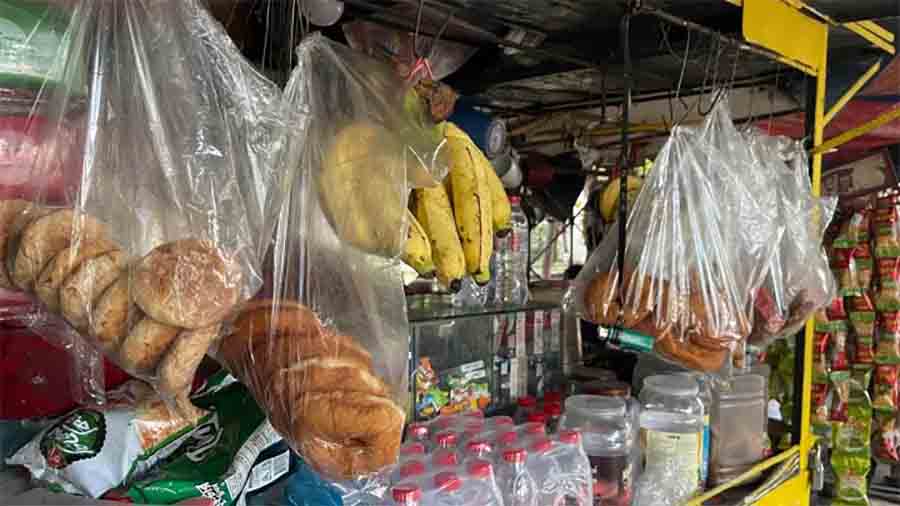
In the morning, Md. Simon leaves home after eating rice and takes a battery-powered rickshaw. When he feels hungry between 11 am and 12 pm, he eats ban roti or butter bun with a cup of tea at a tong shop in Mirpur. It is not a very expensive food. But that food is also now included in his budget. Ban roti has not been available in some shops around for a few days. He is also hearing about the price increasing again.
In Simon’s words, ‘The price of everything goes up, our expenses go up. But our income doesn’t go up.’
Simon’s experience highlights a major paradox in the country’s economy. On the one hand, the number of bank accounts with deposits exceeding crores of taka is increasing, and the amount deposited in these accounts is also increasing. On the other hand, high inflation and slow income growth are reducing the purchasing power of low-income people. Many are having to cut back on their food bills to cope with the price of daily necessities.
According to the latest data from Bangladesh Bank, the number of accounts with deposits of more than Tk 10 million in banks increased by 5,077 in the three months from April to June this year. At the end of March, there were 1,36,485 such accounts. At the end of June, it increased to 1,41,562.
At the same time, the amount deposited in these accounts increased by 16,498 crore taka. At the end of March, the amount deposited in accounts with deposits exceeding 100 crore taka was 8,59,162 crore taka. At the end of June, it increased to 8,75,660 crore taka.
However, these accounts cannot be directly called ‘new millionaires’. Because the accounts with deposits of more than a crore taka include accounts of various government and private institutions in addition to individuals. Rather, if these statistics are compared with the country’s income distribution, inflation, and poverty data, a picture of inequality in the economy is obtained.
Reverse image as a person
While the number of accounts with deposits exceeding one crore taka has increased overall, the picture is different at the individual level. At the end of June, the number of individual accounts with deposits exceeding one crore taka stood at 40,701. The deposits in these accounts were worth 90,131 crore taka.
At the end of March, there were 40,630 accounts with deposits of more than one crore taka at the individual level. At that time, the deposits in these accounts were 91,352 crore taka. That is, in three months, the number of accounts with deposits of more than one crore taka at the individual level increased by only 71. But the amount deposited in these accounts decreased by 1,221 crore taka.
On the other hand, the role of accounts of various government and private institutions behind the overall increase in accounts and deposits of crores of taka is played by accounts. Due to various reasons including uncertainty in business and investment, high interest rates, gas and electricity crisis, a part of the money held by the institutions may be lying in the bank. As a result, even if the accounts with deposits of more than crores of taka in the bank increase, it should not be seen as direct evidence of increase in wealth at the individual level.
However, other statistics also show that the realities on the two sides of the economy are different.
The top 10 percent owns the majority of income
According to the latest Household Income and Expenditure Survey by the Bangladesh Bureau of Statistics (BBS), the top 10 percent of households in the country accounted for 40.92 percent of the total income in 2022. In 2016, this rate was 38.09 percent.
On the other hand, the bottom 10 percent of households had only 1.31 percent of the total income. This means that the amount of income that goes to the top 10 percent of the country is many times more than that of the bottom 10 percent.
The Gini coefficient, a measure of income inequality, has also increased. In 2016, the Gini coefficient at the national level was 0.482. In 2022, it increased to 0.499. Inequality is even greater in urban areas; the Gini coefficient there was 0.539.
In other words, even though the country’s economy is large, the benefits of that economic progress have not been distributed equally among everyone.
Prices are rising, income is not increasing at the same rate
This picture of inequality is compounded by recent inflation, which has further increased the pressure on low- and middle-income people. According to Bangladesh Bank, inflation in the country was 8.32 percent in July.
Inflation means that the same amount of money can buy fewer goods than before. If income remains the same or increases less than inflation, real purchasing power decreases. Those whose income is spent on food and daily necessities are most affected.
A recent World Bank assessment also states that wages for low-income people in Bangladesh have not kept pace with commodity prices. As a result, their real purchasing power has decreased. At the same time, poverty has also increased in recent years.
According to the World Bank, the national poverty rate increased from 18.7 percent in 2022 to 21.4 percent in 2025. This means that the number of people living below the poverty line has increased during this period.
Cuts in bread too
The most direct manifestation of the decline in purchasing power of low-income people is in the food market. The ban roti or butter bun, which was once a cheap food to satisfy hunger at the Tong shop in Mirpur, is now under pressure from prices.
Jotsna, a seller at a tea shop in Mirpur, said, “Ban roti and butter buns have not been supplied for three days. The bakery people are talking about increasing the prices. They have also said that a butter bun that costs 20 taka will cost 25 taka.”
Another shopkeeper in Mirpur-1 area, Rahela Begum, said that bakeries in the area have stopped selling goods for the past few days. She believes that preparations are underway to increase prices.
However, not all bakeries are on the path of increasing prices. A worker in charge of supplies at a bakery in Mirpur-2 area said that sales have decreased after raising prices twice last year. If prices are increased again, sales may decrease further.
He said, “People’s income has not actually increased. But expenses have increased a lot. Now if you sell a bun that is selling for 10 taka for 15 taka, people will not eat it.”
That is, both the producer and the consumer are under pressure. As the price of raw materials increases, the cost of production increases. On the other hand, if prices increase, there is a risk that low-income people will go beyond their purchasing power.
Product weight is decreasing at the same price
Along with increasing prices, another trend is also being seen—reducing the quantity of products at the same price.
Mokidul Islam Shishir, branch manager of Banalata Live Bakery in Mirpur-2 area, said that their company has not yet decided to increase prices or reduce weight. However, two types of plans are being discussed in the market situation.
He said that a 400-gram loaf of bread could be reduced to 320 to 350 grams. And if the price is increased, it will remain at 400 grams.
For the consumer, costs increase in both cases. If the price increases directly, they have to pay more. And if the weight is reduced while keeping the price the same, they get less product for the same money.
Increased costs of raw materials and fuel
Jalal Uddin, president of the Bakery Owners’ Association, said that the prices of flour, dalda, oil and packaging materials have increased. Due to this, they have increased the prices of some products and reduced the weight of some products.
He said that the prices of various raw materials including flour and oil have increased significantly. At the same time, the shortage of electricity and gas is also hampering production. The cost of production is increasing due to the additional fuel consumption to run generators.
Jalal Uddin claims that a large portion of their buyers are working class people—daily laborers, rickshaw pullers, and hawkers. As a result, the pressure of price increases ultimately falls on them.
In this regard, SM Nazer Hossain, vice-president of the central committee of consumer rights organization Consumers Association of Bangladesh (CAB), said, “Products like roti and banroti are part of the diet of many marginalized people. Therefore, it is necessary to take into account the ability of the common people before increasing prices or reducing their weight.”
There is growth, but where is the relief?
A major achievement of Bangladesh’s economy over the past decade has been poverty reduction. According to the World Bank, the national poverty rate fell from 37.1 percent to 18.7 percent between 2010 and 2022. But the pace of poverty reduction has slowed since 2016, and the benefits of economic growth have gone relatively more to the middle and upper income groups.
The World Bank says Bangladesh’s growth has become less inclusive in recent times. Employment has weakened, real wages have fallen, and inflation has put more pressure on low-income people.
Meanwhile, while deposits in the banking sector have increased, investment and credit growth have been relatively weak. As a result, where the money is going and how much employment and income it is generating is becoming more important than whether there is money in the economy.
The biggest source of inequality is in people’s homes.
The number of accounts with crores of taka in bank accounts has increased—this is an economic fact. But it is not a complete picture of the financial condition of the people of the country. Because it includes both individuals and institutions.
However, when looking at income distribution data, inflation, poverty, and wage trends together, one thing is clear: the flow of money at the top of the economy and the purchasing power of people at the bottom are not moving at the same pace.
On the one hand, the number of accounts with deposits of more than one crore taka in banks has increased by 5,077 in three months and the amount deposited in these accounts has increased by 16,498 crore taka. On the other hand, the additional price of 5 taka is also becoming important for low-income people. If a butter bun of 20 taka costs 25 taka, it is not just a difference of 5 taka; at the end of the month, it may be a reason for the family to skip some other need.
For people like Simon, calculating the country’s economic progress is very simple—how much income has increased, how much money is needed in the market, and how much money is left in hand at the end of the day.
The bank’s calculations are increasing by crores. But if a rickshaw puller in that economy also has to calculate the cost of buying a bun before noon, then along with growth, another calculation comes to the fore – how much is the purchasing power of the common man increasing?
Ultimately, the biggest test of a country’s economic progress is not the number of bank deposits, but the number of people eating. If that list continues to shrink, then the inequality figure will grow even bigger, along with the figure of crores of taka increase.

https://stapravda.ru/20221228/reyting_samyh_populyarnyh_hostingov_v_rossii_196445.html, рейтинг хостингов России подтверждает, что выбор надежного провайдера важен для бизнеса.