

Chittagong Correspondent
Despite repeated warnings from the owners to quell the workers’ protests, eight denim factories of the Pacific Group in the Chittagong EPZ were finally forced to close down after failing to quell the protests. The owners issued a notice last night announcing the closure of the factories for an indefinite period, factory sources said.
The closed establishments are: Pacific Jeans-1, Pacific Jeans-2, Pacific Attire, Pacific Accessories, Pacific Workwear, Universal Jeans, HT Fashion, Jeans 2000.
Pacific Group Chief Operating Officer Suhrid Chowdhury said, “The factory was declared closed yesterday (Thursday) after a worker protest. At night, the owner announced an indefinite closure of the factory, which will be effective from Saturday.”
Workers protested in front of various factories of Pacific Group in different sectors of CEPZ from 9 am to 1 pm on Thursday. This led to a shutdown of work in the companies. When the workers tried to quell the protest, they beat up the factory’s HR and production officials. The protesters also attacked the workers who wanted to join the work.
An official from the HR department of Pacific Group said, “The workers had been protesting for a few days. It became intense on Thursday. The workers beat up many officials. A leave notice was sent to us at night.”
The factory closure notice states that some workers illegally stopped work on October 14 and went on strike. Although the authorities ordered the workers to join work through a notification, the workers did not join work and continued to behave unruly and continued on October 15 and 16. At one point, the workers fought among themselves, vandalized the factory and physically assaulted officials and employees. Such behavior of the workers falls under the BEIC strike as per the Bangladesh EPZ Labor Act-2019. In this situation and due to the obstruction of the workers, it is not possible to continue the factory operations.
A production official said that on January 5, several workers protested at Pacific. They vandalized a police vehicle. The police filed a case. After learning about the matter, some workers protested on Wednesday demanding the withdrawal of the case. The owner talked to the police about withdrawing the case, but the workers prevented others from joining the work. They want to hear an announcement from the owner about the withdrawal of the case.
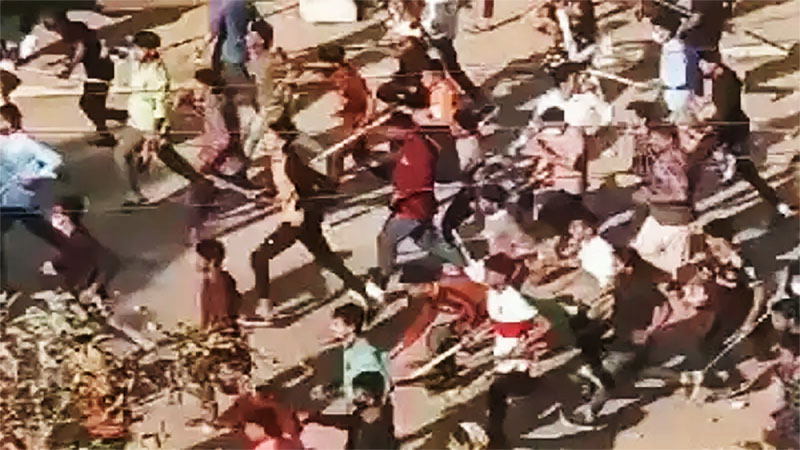
At one point, the company’s MD called on everyone to return to work in a video message, saying that if anyone wants to stop work and destroy the environment, he will be forced to close the factory indefinitely. Still, the workers have been protesting since yesterday morning. They are forcing others to join them in the protest. Those who did not agree were beaten up. While trying to calm them down, some officials from the company’s human resources department and production were injured and beaten up.
In February this year, workers of Pacific Casual Limited, a subsidiary of Pacific Group, protested over their 22-point demands. Clashes also occurred at that time. As a result, the owners closed two units of the factory. Later, the workers joined the work by giving a bond.
On October 9, workers and employees of Pacific Group located in the Chittagong EPZ protested, alleging police harassment.
Then on October 14, protests took place in several factories. The next day, on October 15, protests were held in all of them, but no clashes occurred. On Thursday, along with protests in all of the factories, there were “incidents of beatings” of officials.
Impact of factory closures in ready-made garment sector on poor class: Life of economy at risk
The ready-made garment sector accounts for 84% of Bangladesh’s export earnings and 11% of its GDP. It employs 4.1 million workers. But from August last year to October, nearly 200 garment factories have closed. As a result, more than 100,000 workers have become unemployed.
Labor leader Nazma Akhter said, “More than 100,000 workers are unemployed, a large portion of whom are women. This is increasing economic instability.”
Although 95% of the factories in the ready-made garment sector are locally owned, a large part of the production and supply chain is controlled by foreign buyers (big brands from Europe and the United States).
Analysts say that since July last year, political unrest has led to a gradual decline in orders in Bangladesh’s garment sector. Added to this are various factors including additional tariffs, power and energy crises, lack of bank loans, and closure of LCs for raw material imports. Large groups have been forcibly closed due to political involvement.
The BGMEA has warned, “If this crisis is not addressed immediately, another 200,000 workers could become unemployed before the 2026 elections. This will also have an impact on the family members dependent on the workers.”

https://stapravda.ru/20221228/reyting_samyh_populyarnyh_hostingov_v_rossii_196445.html, рейтинг хостингов России подтверждает, что выбор надежного провайдера важен для бизнеса.