
International Desk
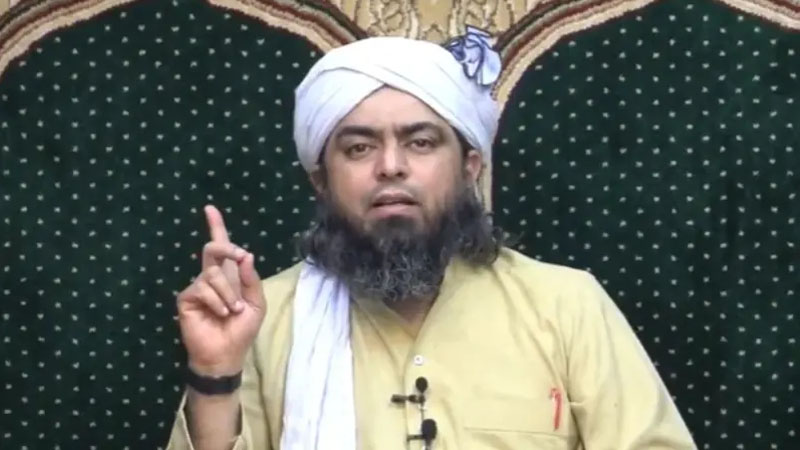
Punjab Police have arrested popular YouTuber and religious speaker Engineer Muhammad Ali Mirza in Jhelum, Pakistan. A case has been registered against him under Section 295-C of the Blasphemy Act and he has been detained for 30 days under the Maintenance of Public Order (MPO) Act.
The incident has created new tensions in Pakistan’s religious circles, where sects are pitting one sect against another and sects against each other. Mirza Jhelum’s Quran and Sunnah Research Academy has been sealed and closed.
Background to the arrest Engineer Muhammad Ali Mirza, a resident of Machine Mahalla in Jhelum, has become known for his lectures on religious and social issues on his YouTube channel, which has more than 3.1 million followers. However, his outspoken statements have often sparked controversy.
According to a report by Dawn News, he was arrested based on a complaint from a religious group.
The complaint states that Mirza made allegedly derogatory remarks about the Prophet of Islam, Muhammad (PBUH), in a viral video, which hurt the religious sentiments of Muslims. Based on this complaint, an FIR was lodged at the Jhelum City Police Station on 26 August 2025 under Section 295-C of the Pakistan Penal Code and the Prevention of Electronic Crimes Act (2016).
Jhelum Deputy Commissioner Muhammad Misam Abbas and District Police Officer (DPO) Ahmed Muhiuddin confirmed the arrest to Dawn News under the MPO of Mirza.
Section 3 of the MPO Act empowers authorities to arrest and detain individuals deemed to be a threat to public safety.
Police said Mirza’s statements could cause religious tension and possible communal violence, making his arrest “inevitable.”
Background to Pakistan’s Blasphemy Law Pakistan’s blasphemy law, Section 295-C, is extremely harsh, providing for the death penalty or life imprisonment for blasphemy. The law has a long history of abuse. It has often been used on false charges against minorities, including progressives, Shias, Qadianis, Hindus, Sikhs, and Christians.
The law has been linked to incidents of burning houses, issuing fatwas to kill, and mob violence. Thousands of innocent people are currently in prison under the law. Now, the law has added a new dimension to the internal conflict among religious leaders.
One mullah is jailing another mullah for blasphemy and issuing fatwas of infidelity. Mirza’s arrest is the latest example of this trend.
Mirza’s controversial history Engineer Muhammad Ali Mirza is a mechanical engineer and former government employee who gained fame through his religious speeches.
However, his views, particularly on the Ahmadi community and historical religious figures, have often sparked controversy. In 2020, he was arrested on charges of hurting religious sentiments and released on bail two days later.
A blasphemy case was filed against him in 2023, alleging that he insulted the Prophet Muhammad (PBUH) and made comments against Pakistan’s legal position on the Ahmadi community.
In addition, he survived three assassination attempts in 2017, 2021, and 2023. Tehreek-e-Labbaik Pakistan was involved in these attacks.
News of Mirza’s arrest has sparked concern and anger among his supporters, with many saying his comments were misrepresented and that the arrest is an attack on freedom of expression.
“The arrest of Engineer Muhammad Ali Mirza is an attempt to silence independent voices rather than maintain public order,” said Lahore lawyer J. Sajjal Shahidi.
On the other hand, religious groups have demanded strict legal action against him. The incident is being hotly debated on social media.
Transparent legal reforms and dialogue are needed to stop the abuse of Pakistan’s blasphemy laws and reduce religious conflict. Mirza’s arrest reflects the growing divisions between religious denominations and the complex socio-political situation in Pakistan.
The results of the investigation and the government’s next steps will determine the impact of this incident.

https://stapravda.ru/20221228/reyting_samyh_populyarnyh_hostingov_v_rossii_196445.html, рейтинг хостингов России подтверждает, что выбор надежного провайдера важен для бизнеса.