
❐ Staff Reporter
The prices of essential items for iftar and sehri have increased at the beginning of the holy month of Ramadan. One excuse after another is being given for the increased prices. Retailers are blaming wholesalers, wholesalers say that prices are increasing because of importers. Some are talking about the post-election supply crisis, while others are raising the issue of increased transportation costs. However, ordinary consumers are the ones who are under the most pressure due to these arguments.
This is the scene seen in various markets in the capital, including Fakirapul, Gopibag, Motijheel, Dainik Bangla Mor, Jatrabari, Mohammadpur Town Hall, Krishi Market, Mohakhali Raw Market and Joarsahara.
The prices of daily necessities including lemons, brinjals, cucumbers, onions, dates, chicken, meat and fruits have increased abnormally around Ramadan. The prices of some products have almost doubled in the last one week. This rise in the market during the month of restraint has created additional anxiety in the lives of people with limited incomes.
While traders have cited various reasons for the price hike, consumers have alleged that an unscrupulous syndicate creates an artificial crisis during Ramadan and makes extra profits. According to them, this trend cannot be stopped unless market supervision is strengthened.
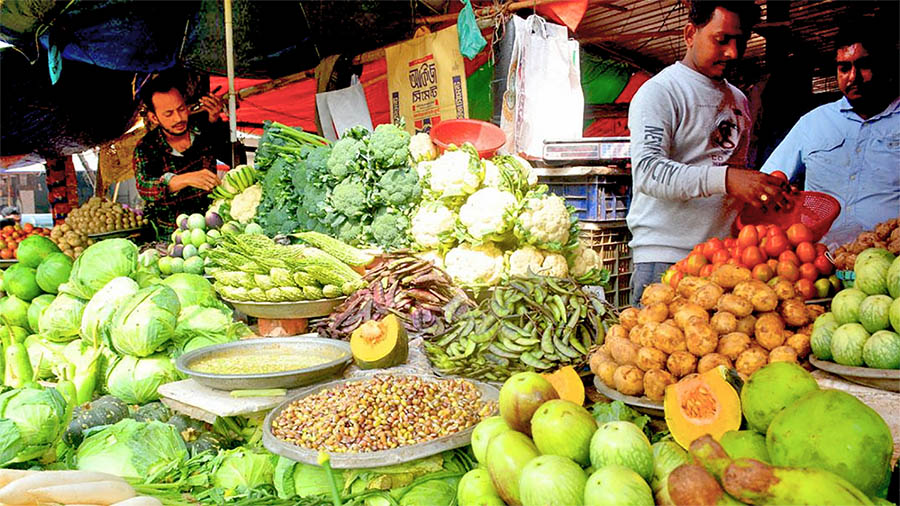
A visit to the capital’s Mohammadpur Town Hall, Krishi Market, Mohakhali Raw Market and Joarsahara Market showed that although there are some differences in prices across markets, an upward trend is evident almost everywhere. The price of lemons has also increased due to the increased demand during Iftar. Depending on the size, each lemon is being sold for 100 to 220 taka.
The price of brinjal has almost doubled to Tk 100 to Tk 140 per kg. Local cucumbers are being sold for Tk 120 to Tk 140 per kg. Green chillies are being sold for Tk 200 to Tk 240 per kg.
Sultan Soleiman, a vegetable seller at Mohammadpur Town Hall, said that they have to sell at a higher price at the retail level because they have to buy at a higher price in the store.
Tarique Rahman, a vegetable seller at Dainik Bangla More, said, “The prices of everything have increased. I bought it from the store at a higher price. So I have to sell it at a higher price.”

The price of local onions has increased by Tk 10 per kg in the wholesale market in a week to Tk 53-56; it is being sold at retail at Tk 60-70. There is also pressure in the pulse market. The price of chickpeas has increased by Tk 10-15 per kg and is being sold at Tk 95-105. Small-grain lentils are being sold at Tk 160 per kg, large-grain lentils at Tk 100 and medium-grain lentils at Tk 115-120.
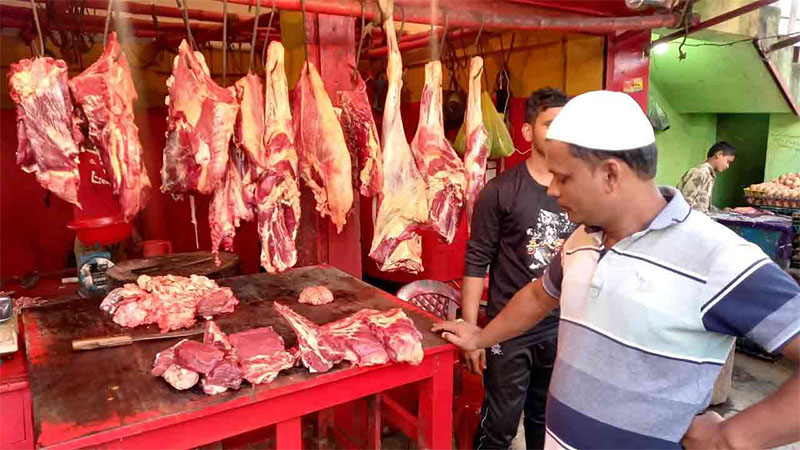
Meanwhile, the prices of chicken and meat have also increased due to the increased demand. Golden chicken is being sold at Tk 320 to 340 per kg and broiler at Tk 200 to 210. Mutton is being sold at Tk 1,300 per kg and beef at Tk 800. Vendors claim that the increase in prices at the farm level has also affected the retail market.
Despite the announcement of a duty reduction, there is no relief in the date market. Despite the National Board of Revenue (NBR)’s decision to reduce import duty by 40 percent, the prices of different varieties of dates in the retail market have increased by Tk 50 to Tk 150 per kg.
Market stakeholders complain that some unscrupulous traders are artificially raising prices despite having stocks.
Sirajul Islam, president of the Bangladesh Fresh Fruits Importers Association, claimed that compared to last year, the price of dates is fairly controlled this year and is being increased more at the retail level.
Plums are seen selling for Tk 500 to Tk 600 per kg in Badda and Kuril Joarsahara markets in the capital.
There is no fixed price limit in the date market. For example, Sukkari is being sold at 800 to 900 taka, Medjool at 1,400 to 1,600 taka, Medjool Jambu at 1,700 to 1,800 taka, Ajwa at 1,100 to 1,400 taka, small size Ajwa at 800 to 900 taka and Maryam at 1,100 to 1,500 taka. Chhatra dates are available at 600 to 750 taka.
An increase has also been observed in the domestic fruit market. The price of bananas has increased by 40 to 60 taka per dozen. Guava is being sold at 100 to 150 taka per kg and medium-sized pineapples are being sold at 40 to 60 taka each. The price of foreign fruits was already high; it has increased further with Ramadan in mind.

https://stapravda.ru/20221228/reyting_samyh_populyarnyh_hostingov_v_rossii_196445.html, рейтинг хостингов России подтверждает, что выбор надежного провайдера важен для бизнеса.