
Staff Correspondent
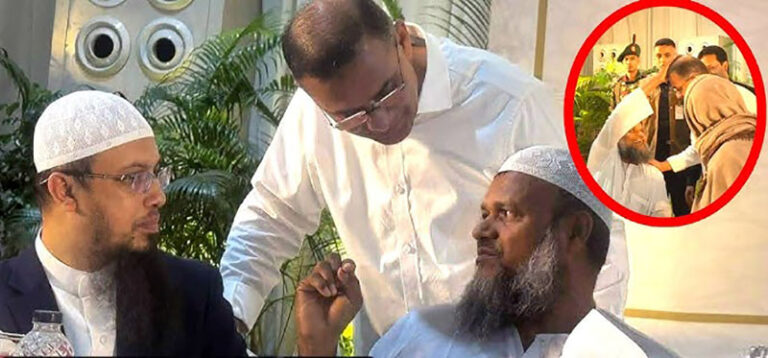
Prime Minister Tarique Rahman made an important announcement at the inauguration of the monthly honorarium program for religious leaders of different religions, including imams, muezzins, and khadems, at the Osmani Memorial Auditorium in the capital on Saturday.
He said that it has been decided to include an imam, khatib or other local religious leader as a member in each district and upazila law and order committee.
This move has been described by the government as part of its efforts to promote peace, harmony, and communal awareness in society.
Speaking at the event, the Prime Minister said, “Religious leaders are an important part of society. With their involvement, we will be able to maintain law and order and strengthen communal unity.”
The announcement is linked to the government’s monthly allowance program for religious leaders, which began yesterday. The government’s initiative has been welcomed by many, who believe it will help prevent crime and increase social awareness at the local level.
Last February, the Ministry of Home Affairs reconstituted the district and upazila law and order committees, which include various stakeholders including administrative officials, police, Ansar-VDP, local elected representatives, bar associations, chambers of commerce, press clubs, etc.
Now, with the addition of religious leaders, the committees are expected to become more diverse.
The government led by Prime Minister Tarique Rahman, which came to power after elections last February, has prioritized law and order and combating corruption.
Before returning to the country, Tarique Rahman wrote in a post on Facebook on the occasion of Janmashtami greetings on August 21, 2025:
“Bangladesh belongs to no single person, no group, and no party. It belongs to all of us. Every citizen, regardless of party or faith, race or ethnicity, whether believer or non-believer, shares one proud identity – being Bangladeshi. The BNP’s politics is rooted in this simple truth that every citizen must enjoy equal rights in every sphere of life.
We believe no citizen should be forced to hide behind party labels for the sake of safety. Religious or political identity will not elevate anyone above the rule of law. Only democracy and the rule of law can guarantee the safety and dignity of all citizens, beyond divisions of party, religion, or class.
… Religion is individual, but the right to security is the birthright of every Bangladeshi citizen. Together, let us build the Bangladesh that belongs to us all.”
In this message, he clearly emphasized that the state belongs to everyone – regardless of religion, belief or non-belief – and that religion is a personal matter, not the state’s. The rule of law will ensure the security of all, and religious identity will not give anyone superior rights.
But critics believe that his announcement to include religious leaders (mainly imams/khatibs) in the law and order committee after coming to power contradicts his previous position.
The previous message characterized religion as ‘private’, while giving religious leaders a formal role in state committees (which regulate law and order) – which could further involve religion in state processes.
There are allegations that ‘moral policing’ has reached its peak due to fundamentalist influence in the country. In such a situation, does the inclusion of religious leaders in the law and order committee lead to Sharia-inspired control?
The previous post talked about equal rights for all, including non-believers (atheists), but how much of that security will remain intact if religious leaders increase their influence in current decisions?
Is this a compromise to political pressure, moving away from election promises and the London/exile liberal message?
Critics say it could violate the boundaries of secularism. This contradiction is being debated in political circles, and time will tell whether it opens the way to peace or opens new doors to division.

https://stapravda.ru/20221228/reyting_samyh_populyarnyh_hostingov_v_rossii_196445.html, рейтинг хостингов России подтверждает, что выбор надежного провайдера важен для бизнеса.