
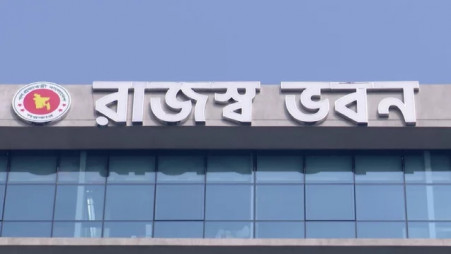
Staff Correspondent
The National Board of Revenue (NBR), the largest revenue collection agency in Bangladesh, is now operating in an unprecedented atmosphere of instability, repressive decisions and fear. In just two weeks, more than 400 officials have been transferred and several officials have been dismissed, dismissed and sent on compulsory retirement. The latest is that 9 officials were directly dismissed from their jobs in a single day for allegedly participating in the agitation, which has created extreme panic, anger and frustration among the officials.
More than 500 officials have been transferred so far in the series of transfers and dismissals that began on August 12. More than 30 have been dismissed as a disciplinary measure, and 5 have been sent on compulsory retirement. The officials allege that these transfers were not based on any systematic evaluation, but rather as punishment for the ‘crime’ of participating in the movement or expressing opinions.
This crackdown on honest, experienced and fearless officials has broken the morale of the entire revenue administration. Sudhijan believes that this crisis is not just personal or professional, but will damage the country’s revenue management in the long term.
The interim government, in the name of ‘reform’, dissolved the NBR and formed two new departments, Revenue Policy and Revenue Management. This reorganization has weakened the core revenue structure and created opportunities for the administration cadre to establish influence by reducing the importance of customs and tax cadre officials.
Officials believe that this is devaluing experienced, talented and long-standing field workers in revenue collection. The way in which benefits are being given to administration cadres, ignoring their experience and skills, has created a cadre-based discrimination.
When NBR officials went on a limited strike against the new structure, the government chose the path of repression instead of dialogue. Attempts were made to stop the movement by intimidation through transfers, dismissals, dismissals and defamation of officials. However, at that time, revenue collection and import-export at important ports including Chittagong and Benapole had almost come to a standstill. This affected trade and commerce and also questioned Bangladesh’s image in the international community.
The government later tried to quell the agitation by promulgating the ‘Revenue Policy and Management (Amendment) Ordinance 2025’. Although it provided for the leadership of the Revenue Management Department to be placed in the hands of revenue cadres, the inclusion of administration cadres in the Revenue Policy Department did not alleviate the frustration among the officials. This move did not resolve the crisis of confidence but rather raised more questions.
It is worrying that many honest and dedicated officials are losing their jobs just for being involved in the movement. Punitive action is being taken against them without any investigation or reasonable explanation. Experts say that this is strengthening the environment of ‘flattery’ and corruption instead of a culture of honesty.
Former NBR member Farid Uddin also admitted, “Although the demand is reasonable, there may be objections to the nature of the movement; however, the state should have created an environment of trust. Instead of doing so, it is being punished.”
Although the NBR wants real-time access to bank accounts to prevent tax evasion, bankers see the risk of compromising the privacy of depositors. Some say it could also yield good results if implemented properly. But the reality is that in this situation, as people’s trust in the NBR has waned, any new initiative is being viewed with suspicion.
Officials also agree that tax reforms are needed to increase Bangladesh’s tax-to-GDP ratio. But those reforms must be inclusive, transparent, and protect the dignity of professionals. Reforms that create an atmosphere of fear, remove honest people from jobs, and impose administrative authority do not last.

https://stapravda.ru/20221228/reyting_samyh_populyarnyh_hostingov_v_rossii_196445.html, рейтинг хостингов России подтверждает, что выбор надежного провайдера важен для бизнеса.