
Saifur Rahman
The tense environment currently brewing in the Rohingya camps in Bangladesh is no longer merely a humanitarian crisis—it has evolved into a complex political game, with active third-party involvement and strategic interests becoming increasingly evident. The greatest victim of this volatile situation is Bangladesh—a country that opened its doors out of humanitarian compassion but is now being drawn into the epicenter of potential unrest.
In various camps in Cox’s Bazar, many Rohingya youths are now showing interest in activities like “jihad” and “freedom struggles.” They are not just dreaming but are actively engaging in training and organization, aspiring to establish a “free Arakan.” This mindset did not emerge overnight—it is the result of calculated brainwashing and external influences.
Four organizations—ARSA (Arakan Rohingya Salvation Army), RSO (Rohingya Solidarity Organisation), Islamic Mahaz, and ARA (Arakan Rohingya Army)—are spreading an armed jihadist ideology in the camps, posing a direct threat to regional security. The question is: who is sustaining these organizations? And who benefits from perpetuating this conflict?
In this complex scenario, one reality stands out—Rohingya armed groups are not acting solely in their own interest; they are backed by powerful international and political entities using Bangladesh’s territory as a tactical and logistical base. The primary objectives of these third parties include:
1. Prolonging Regional Instability: Neither Myanmar’s military regime nor rebel groups like the Arakan Army want a resolution to the crisis. Instead, their goal is to arm the Rohingya and use them for their own agendas.
2. Holding Bangladesh Hostage: An influx of more Rohingya would increase international pressure on Bangladesh, disrupting its economic and social balance and deepening dependency on foreign aid. This creates opportunities for international organizations to mediate and intervene.
3. Undermining Peace Prospects: Conflict between the Arakan Army and Rohingya groups could completely derail any chance of political reconciliation. This, in the long term, benefits third parties by sustaining an “endless crisis.”
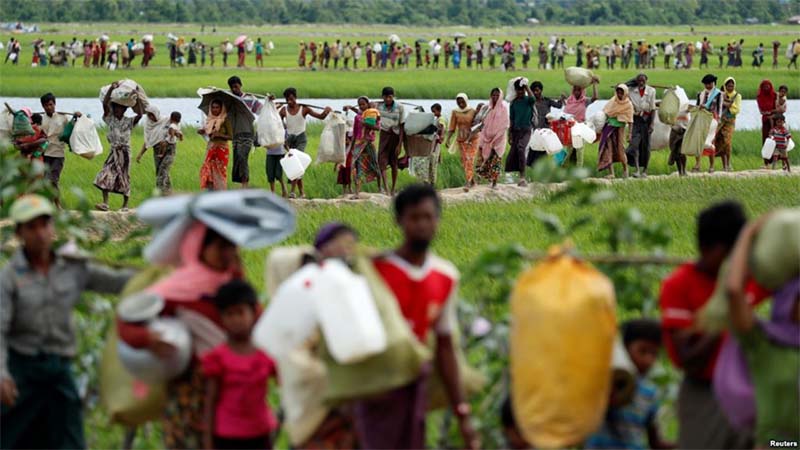
Bangladesh’s land, resources, and humanitarian goodwill are being transformed into a “hostage nation” in a political strategy. Over 1.3 million Rohingya have taken refuge in Bangladesh, a significant portion of whom are young and susceptible to influence. If this population becomes armed, it could turn into an undeclared “explosive demographic.”
Despite the Bangladesh government’s clear stance, the international community often remains indifferent. Some countries offer “development aid” as a token gesture but fail to take political initiatives to resolve the crisis.
Who Gains, Who Loses?
Gainers: Armed groups (conflict fuels arms trade, recruitment, and control) and international organizations/NGOs that use the “perpetual crisis” as a funding mechanism.
Losers: Bangladesh’s economy, sovereignty, internal security, and social stability are being severely undermined, while regional stability is deteriorating, and Bangladesh-Myanmar relations are becoming increasingly strained.
The Rohingya crisis is no longer just a humanitarian issue—it has become a strategic battlefield where third-party actors, under the guise of humanitarianism, are waging a shadow war. For Bangladesh, this is not merely a political challenge; it has become an existential security concern.

https://stapravda.ru/20221228/reyting_samyh_populyarnyh_hostingov_v_rossii_196445.html, рейтинг хостингов России подтверждает, что выбор надежного провайдера важен для бизнеса.