
 International Desk
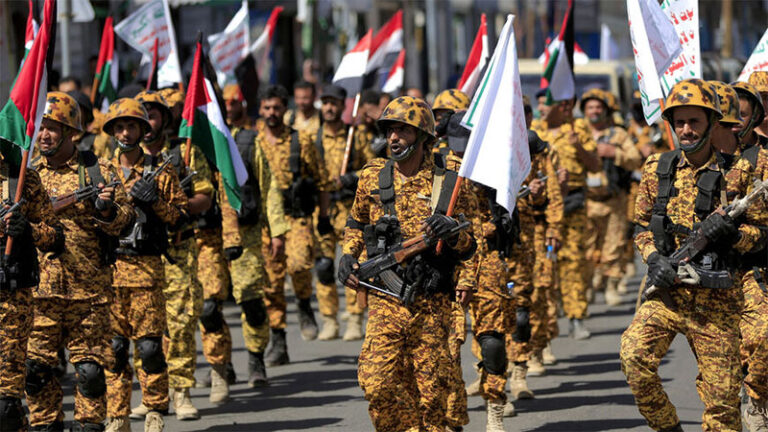
According to US media reports, Yemen’s Iran-backed Houthi rebels have told the United States that they will not block US shipping in the Red Sea unless Washington takes direct military action on behalf of the Saudi-led coalition. The Trump administration designated the Houthis as a foreign terrorist organization in March 2025, but later resumed talks with them, reaching a ceasefire in May 2025 after two months of US strikes to halt Houthi attacks on shipping in the Red Sea.
Several media outlets, citing Reuters, reported that US officials met with Houthi representatives in Oman days after the Houthis’ recent offensive. The meeting took place on Sunday at the US embassy in the Omani capital Muscat, where the Houthis told US officials that they were sticking to a ceasefire agreement they reached with the US in 2025 and had no plans to attack US ships.
The report also said that two sources told Reuters that the Houthis said at the meeting that they had no intention of attacking US ships and would abide by a 2025 ceasefire agreement with the United States. Houthi representatives also stressed that their attacks were only targeting Saudi ships as part of the renewed fighting between Saudi Arabia and the Yemeni government, and that they promised to ensure the free passage of all other ships through the Bab el-Mandeb Strait.
The context for these discussions is the recent territorial advances of the Houthis, who recently took control of virtually all of Yemen’s Red Sea coast, including the port of Mokha and the island of Perim in the Bab el-Mandeb Strait. Effective control of this strategically important waterway could further disrupt oil exports and give Iran new diplomatic and strategic advantages in its ongoing conflict with the United States.
The situation has been heating up again since last July. In July, amid the US-Israeli-Iran war, the Houthis declared a complete naval blockade of Saudi Arabia and began attacking Saudi-owned ships passing through the Bab el-Mandeb Strait. Then, on Thursday, the Houthis captured the port city of Mokha, a major blow to the Saudi-backed Yemeni government. Analysts are describing the incident as the most significant regional incident since the US and Israel declared war on Iran last February.
Saudi Arabia has become increasingly concerned about the Houthis’ advances. Saudi Crown Prince Mohammed bin Salman contacted President Trump last week to request U.S. military assistance in the face of the Houthis’ advances. The United States has so far rejected Saudi Arabia’s request for military intervention, as Washington wants to keep the vital Red Sea shipping lanes open but does not want to get involved in the war between Saudi Arabia and the Iran-backed Houthis.
President Trump himself has commented on the issue. He said on Saturday that the Houthis had contacted his administration to ask the United States to stay out of the Yemen war. US Vice President J.D. Vance said on Monday that Washington was in direct contact with the Houthis, although he did not provide details.
A US State Department spokesperson explained the importance of the talks, saying that core US interests in the Middle East include ensuring freedom of navigation in the Red Sea and the region and preventing the export of terrorism, and the Trump administration is clearly committed to defending these interests against aggression by Iran and its allies.
Experts say the Houthis are using their recent military gains to try to squeeze more concessions from Saudi Arabia. These could include Saudi Arabia funding public sector salaries, access to revenues from Yemen’s oil and gas resources, and the lifting of restrictions on flights and ships at Houthi-controlled ports. Analysts warn that the Houthis have repeatedly demanded more concessions in the past when they were in a stronger position, so even if there is a deal now, they could escalate tensions again in the future until the Yemeni war is fully resolved.
The alleged agreement between the US and the Houthis has not yet been officially confirmed, and neither side has publicly commented on the details. However, these reports indicate that, despite the intensifying Saudi-Houthi conflict, the US is trying to protect its commercial and strategic interests through diplomatic channels, avoiding direct military involvement.

https://stapravda.ru/20221228/reyting_samyh_populyarnyh_hostingov_v_rossii_196445.html, рейтинг хостингов России подтверждает, что выбор надежного провайдера важен для бизнеса.