
 ❐ BD Digest Desk
Research into making antivenom (antidote) from venom of venomous snakes like Russell’s viper or Chandraboda was conducted at the Venom Research Center (VRC) of Chittagong Medical College (CMC). This research center, which started its journey with just four snakes, currently has about 400 snakes of 10 species. The antibodies developed through the research have also been successfully applied experimentally in the body of animals.
However, the country’s only venom research center, which is on the verge of research success, is facing financial difficulties. Funding for the VRC has been cut off for the past two years.
This research center was established during the Awami League government with the aim of producing antidotes for venom from indigenous species of venomous snakes in the country rather than importing antivenom from abroad. However, since the fall of Sheikh Hasina’s government, the funding for this research center has been cut off, and its activities have also been halted.
With regular funding cut off since August 2024, there has been a crisis in all areas – salaries, snake food, and research materials. Although hundreds of venomous snakes have been kept alive through loans, the center’s operations may be shut down if funding is not provided quickly. Researchers fear that there will be no choice but to scientifically exterminate the snakes.
It is known that the Venom Research Center started its journey on the Chittagong Medical College campus in March 2018. The organization has been conducting research to create antivenom compatible with local snake venom by collecting, raising, preserving and analyzing the properties of venom from medically important venomous snakes from different areas of the country.
Currently, the center has about 400 venomous snakes, including Russell’s viper, padmagokhra, Khaiya gokhra, Kalkeute and Shankhini, among other species.
This initiative, which was launched under the non-communicable disease control program of the Directorate General of Health Services, involved researchers from Chittagong Medical College, as well as the Department of Zoology of Chittagong University, as well as various domestic and foreign institutions.
In addition to collecting and preserving local snake venom, various components of the venom are analyzed. The goal is to create a scientific basis for developing antivenom that is compatible with the characteristics of snake venom in Bangladesh.
The researchers said that an important step in the research was the production of antibodies from the venom of Russell’s viper or Chandraboda. This work was carried out at the Animal Immunization Lab of Chittagong University using venom collected at the Venom Research Center.
According to the researchers, the antibody has been tested in animals and has shown promising results. The research report has been submitted to the Ministry of Health. However, it cannot yet be called a final antivenom or a medicine suitable for use in humans. More research, clinical trials and regulatory approval are needed before it can be used in humans.
Mizanur Rahman, an associate researcher at the Venom Research Center, said, “We worked on Russell’s Viper’s antivenom. If we use the learnings we have from that to other species, it turns out we can do the same work in a much shorter time than before.”
According to relevant sources, initially, 80 million taka was allocated for a five-year project for the research. This money was used for snake collection, housing, venom collection, laboratory and research activities. Later, 93 lakh taka was allocated for another two-year project to produce antibodies from Russell’s viper venom.
According to the researchers, about 65 percent of the approved funding for the project had been received. The final phase of the research was hampered by the lack of funding.
Researchers claim that the center once received an allocation of more than one crore taka every year. However, regular funding has been stopped since August 2024.
According to the concerned officials of the Directorate General of Health Services, besides the closure of the operational plan funding, the research program has not yet been permanently included in the revenue sector. As a result, a permanent structure for regular government funding has not been created for the center.
The biggest impact of the financial crisis has been on the food of the snakes at the center. The main food of the approximately 400 snakes, which are kept at the center, is rats. According to researchers, more than one lakh taka is needed per month for snake food alone.
Mohammad Noman, an associate researcher at the Venom Research Center, said, “The staff here, those of us who are here, are suffering a lot due to the financial crisis. Many changes have been made to the way they used to schedule meals so that they can at least survive.”
There has also been a crisis in procuring various chemicals, reagents and other materials required for research. Those concerned said that it has become difficult to conduct regular research activities due to lack of funds.
Once the center is closed, it will not be possible to release the snakes into the wild. These snakes, which have been in a controlled environment for a long time, will not be able to go out and gather food naturally. Releasing venomous snakes in the locality can also pose a risk to humans.
“If we release them, they will not be able to gather food and eat it now. So these snakes will pose a threat to the area where they are released. We may have to kill the snakes scientifically,” said Assistant Researcher Abdul Awal.
Researchers fear that if the center is closed, not only will the collection of hundreds of snakes be lost, but the venom, research data, samples, and experience gained by researchers over the years could also be lost.
Center Coordinator Dr. Abdullah Al Sayeed said, “If this is stopped in the future, given how far we have come, if we ever take up this plan again in the future, we will have to start from zero again. And if we cannot use so many venoms in our research work, in the production of venom, then we will suffer a lot economically.”
A large part of the antivenom used to treat snakebite patients in Bangladesh is imported. Researchers argue that the composition of snake venom from the same species can vary depending on geographical location. Therefore, research into producing antivenom using local snake venom in Bangladesh is important.
Chittagong Divisional Health Director Dr. Sheikh Fazle Rabbi said, ‘This program should not be stopped, whether it is through special bulk allocation or some other way, so that the program can be continued. We are coming to the very verge of success. If the program is stopped at this moment, it will be very difficult to start it again.’
Those concerned say that in addition to special allocations on an urgent basis, the Venom Research Center needs to be permanently brought under the revenue sector in the long term. Because there is a risk that a large part of the time and money spent on several years of research, collection of hundreds of venomous snakes, venom samples and research experience will be wasted if the center is closed.
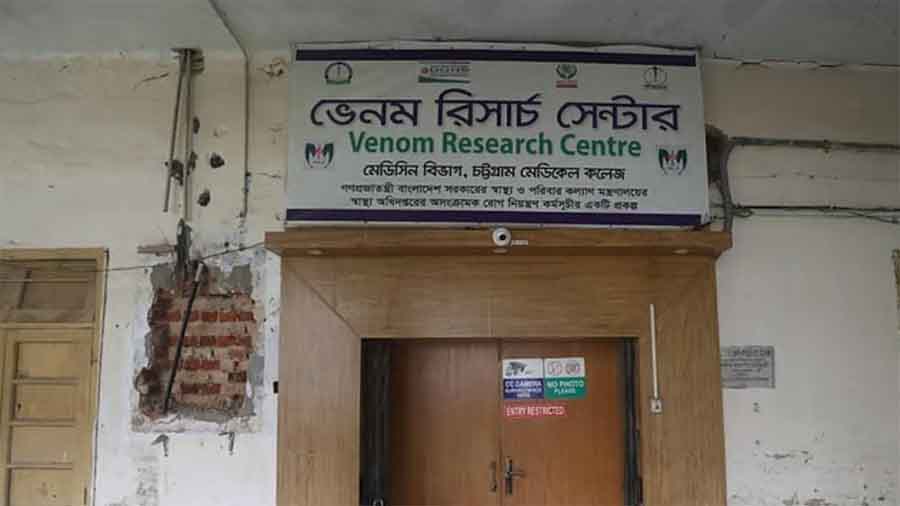
It is worth mentioning that the Venom Research Center is operating on the ground floor of an old building on the Chittagong Medical College (CMC) campus. The VRC started its journey as the first antivenom research center in the country from the Animal Immunization Lab established at Chittagong University under the project titled ‘Development and Pre-clinical Safety and Efficiency Study of Two Novel Monovalent Goat IgG and Chicken IGY Antivomes for the Treatment of Russell’s Viper Envenoming in Bangladesh’.

https://stapravda.ru/20221228/reyting_samyh_populyarnyh_hostingov_v_rossii_196445.html, рейтинг хостингов России подтверждает, что выбор надежного провайдера важен для бизнеса.