
BD Digest Report
Ziaur Rahman’s personal integrity, his heroism in the 1965 Indo-Pakistani war, and the resulting long-term psychological and strategic conflict with India have sparked a new debate in contemporary Bangladeshi politics. In a recent article, analyst Mainul Haque claimed that India’s distrust of Ziaur Rahman was rooted in the historical memory of the 1965 war, which is also closely linked to his subsequent assassination and the BNP’s current political directionlessness.
The article mentions that Ziaur Rahman was awarded the title of ‘Hilal-e-Juraat’ for his immense bravery as a company commander of the Pakistan Army in the Khemkaran sector during the 1965 war. The author raises the question, how much trust did the Indian military leadership place in the same officer when he emerged as one of the commanders of the Bangladesh Liberation War in 1971, just 6 years after the war?
According to analysts, as a ‘tested former enemy’, Zia was always a ‘carefully managed asset’ to the Indian intelligence and military establishment. The declaration of independence from the Kalurghat radio station transformed Zia into a symbolic political-military figure rather than a common rebel, which was uncomfortable for India.
The article alleged that the forces led by Ziaur Rahman were pushed into the strategically very strong Pakistani base of Kamalpur without adequate preparation—a possible blueprint to weaken or destroy him militarily. Not only that, but the plan to not make him the army chief despite being a senior officer after independence and to send him as a defense attaché to Burma was seen as an expression of the hatred of political and foreign powers towards Zia.
The author claims that the assassination of Ziaur Rahman at the Chittagong Circuit House in 1981 was, in a way, revenge for the 1965 war and a process of eliminating the main obstacle in the path of Indian hegemony.
The most controversial part of the discussion was about the current top leadership of BNP and Tarique Rahman. The author raised the question, why is Tarique Rahman adopting a ‘knee-jerk’ policy towards India, while Ziaur Rahman and Khaleda Zia were uncompromising against Indian hegemony?
He blamed the BNP’s failure in recent years on the ‘Indian hegemonists’ hiding within the party. According to him,
the mysterious absence of top leaders from the 2013 ‘March for Democracy’.
The inaction of frontline leaders when Khaleda Zia was evicted from her cantonment house or taken to jail. The missed opportunity to be accepted by the party’s younger generation by capturing the spirit of the July Revolution.
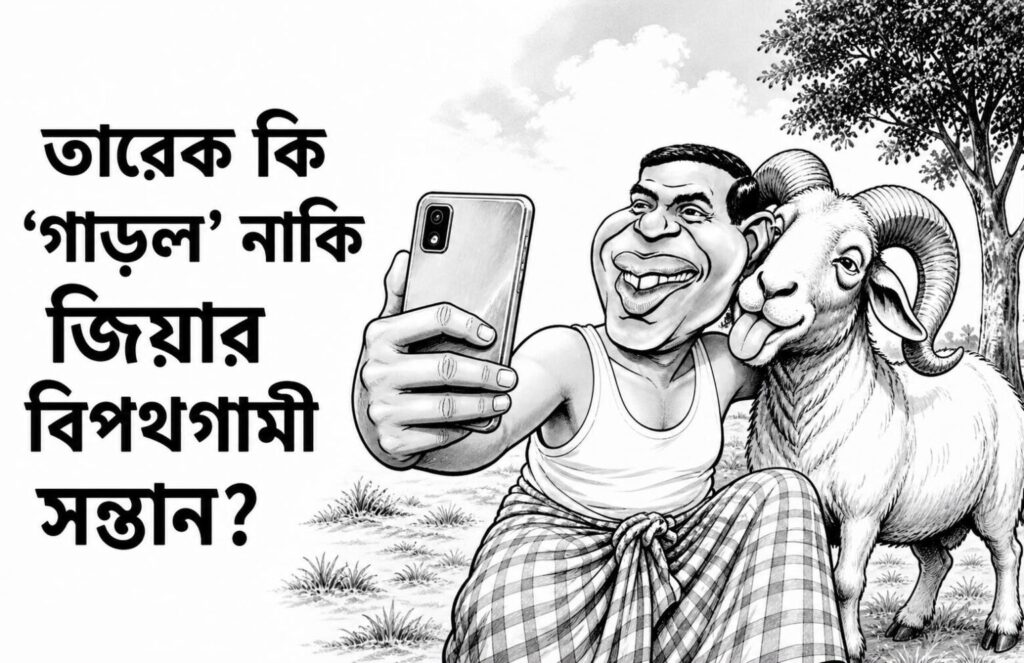
Towards the end of the article, the author harshly criticizes Tarique Rahman’s current political position. He raises the question – is Tarique Rahman ‘garal’ (stupid or guided by someone else’s wisdom), or is he a misguided son of Ziaur Rahman?
He claims that the BNP’s policy-making level is now dominated by people who have ‘bottled’ Tarique Rahman. The writer comments that Tarique Rahman cannot escape the responsibility of failing to reap the fruits of the July Revolution and deviating from the nationalist ideals.
Finally, the article calls on BNP grassroots leaders and activists to try to understand this political crisis and historical reality through logic rather than blindly abusing it.

https://stapravda.ru/20221228/reyting_samyh_populyarnyh_hostingov_v_rossii_196445.html, рейтинг хостингов России подтверждает, что выбор надежного провайдера важен для бизнеса.