
Staff Correspondent
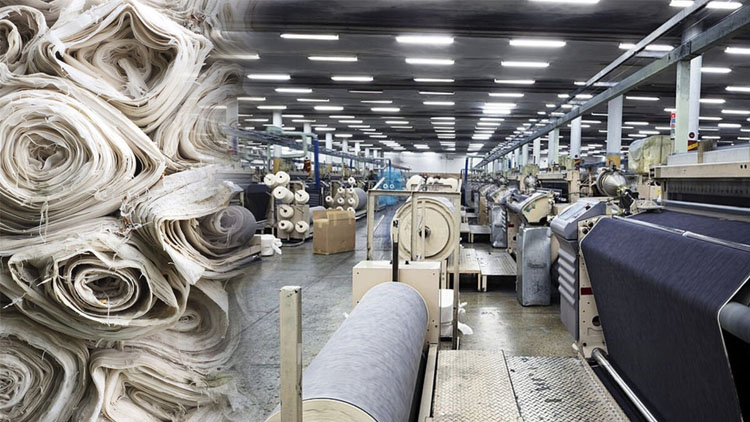
The dispute between textile mill owners and ready-made garment (RMG) exporters over duty-free yarn imports has intensified. Amidst this tension, the Bangladesh Textile Mills Association (BTMA) has announced to shut down mills indefinitely from February 1. The decision, which comes just before the national elections, has raised concerns that the country’s main export sector, RMG, could face a major setback.
About 85 percent of Bangladesh’s total export earnings come from the garment sector. As a result, disruption in yarn supply will directly impact foreign exchange earnings, employment and the overall economy. Considering the seriousness of the situation, the government has also been quick to find alternative solutions. In this context, Commerce Secretary Mahbubur Rahman said that the government acknowledges the problems facing the textile sector. He said that the government is exploring various options and trying to reach a solution quickly. However, he did not say anything specific about possible steps. In his words, multiple stakeholders are involved in this decision, so maintaining a balance of everyone’s interests is now a big challenge.
Sensitive situation before the election
Textile entrepreneurs have complained that the government has failed to provide effective protection to the nearly $23 billion industry. The announcement of the mill closure comes just two weeks before national elections, making the situation even more sensitive.
In this context, BTMA President Shawkat Aziz Russell said, this is not a threat – the sector is struggling to survive. He alleged that although there are various incentives in the garment sector, textile mill owners do not get those benefits. On the contrary, foreign buyers are the big beneficiaries.
According to him, if domestic mills are shut down, garment manufacturers will eventually have to import yarn from abroad—especially India—at higher prices. This will increase production costs in the long run and reduce competitiveness in the international market.
Concerns over impact on workers, banks and supply chains
The textile sector employs about one million workers. If the mills are closed, their wages will become uncertain, which could lead to labor unrest. In addition, if yarn production stops, there will be a major disruption in the supply of raw materials to the garment industry.
Industry insiders are warning that if factories fail to repay their loans, the pressure of defaulted loans in the banking sector will increase. According to economists, if large capital-based mills close, it will create multidimensional pressure on the economy.
The beginning of the conflict
The dispute arose after the Bangladesh Trade and Tariff Commission recommended that the Ministry of Commerce write to the National Board of Revenue on January 12 requesting it to withdraw the benefit of duty-free import of yarn under bonded license. Garment exporters reacted strongly to this and called it suicidal for the export sector.
Later, textile mill owners met with the financial advisor and demanded the immediate cancellation of this facility. However, without receiving any concrete assurance, they remained adamant on the decision to close the mill.
Experts’ suggestion: The balanced path
Experts are emphasizing on protecting the interests of both parties in the policy solution. International trade expert Dr. Mustafa Abid Khan said that while direct withdrawal of bonded facilities may harm exports, it is also important to sustain spinning mills. According to him, a supporting framework needs to be developed in accordance with WTO principles.
Professor Mostafizur Rahman proposed that textile mills could be given cash assistance or special loan facilities for a limited period. He also said that an anti-dumping investigation could be initiated if there is evidence of yarn exports from India at unfairly low prices.
Trend of increasing import dependence
Bangladesh has imported more than $2 billion worth of yarn in the current fiscal year, a large portion of which is from India. Domestic entrepreneurs are complaining that due to the Indian government’s incentives, yarn from that country is coming to Bangladesh at comparatively lower prices, leaving local mills behind in the competition.
On the other hand, the knitwear exporters’ association BKMEA says that yarn imports have also decreased recently due to reduced exports. According to them, the main problem is lack of competitiveness.
Industry waiting for a solution
All parties acknowledge that the textile sector needs to be protected. But it must be done in a way that does not harm garment exports. Stakeholders have called for strengthening spinning mills through increasing productivity, incentives, ensuring fuel supply, and policy support.
Now the focus is on the government—how to quickly make a balanced decision and protect the country’s most important export sector from a potential crisis.

https://stapravda.ru/20221228/reyting_samyh_populyarnyh_hostingov_v_rossii_196445.html, рейтинг хостингов России подтверждает, что выбор надежного провайдера важен для бизнеса.