


BD Digest Desk
A large part of Bangladesh’s banking sector is in deep crisis. Due to corruption, irregularities and loan fraud, the amount of non-performing loans in banks has increased alarmingly. A large part of it is no longer likely to be recovered. The situation has reached a point where almost one-third of the total loans in the banking sector are now non-performing. In contrast, the non-performing loan rate in India is 1.7 percent and in Pakistan 5 percent.
The capital-to-risk-based assets ratio, which measures the financial strength of banks, has also fallen to negative 3.8 percent. This effectively puts the country’s banking sector at risk of bankruptcy. The BNP government is struggling to deal with this crisis.
A report by the British magazine The Economist has revealed such a picture of Bangladesh’s banking sector.
Bangladesh, once a global powerhouse for rapid economic growth and poverty alleviation, is now facing a multifaceted economic crisis. Irregularities, loan fraud, and corruption in the financial sector have weakened the banking system. At the same time, political instability, investment stagnation, and a production crisis in the industrial sector have exacerbated the new government’s economic challenges.
The Economist’s report raises the question: Has Bangladesh lost the title that was once known as a role model of development for the whole world?
According to the report, ordinary depositors have been suffering for a long time to get their money back. Ekant, the owner of a cafe in Dhaka, has not been able to withdraw his deposit money from the bank for the past one year. Despite going to the bank several times, he could not get the problem resolved. The bank authorities have informed him of the liquidity crisis every time. Many other customers have faced the same experience as Ekant.
The report cites complaints from at least six depositors, some of whom failed to withdraw money saved for their children’s weddings and others to pay for their parents’ funeral expenses.
Although huge loans have been disbursed from banks controlled by influential business groups, the likelihood of a large portion of them being returned is slim. Currently, about 33 percent of the country’s total banking sector loans are in default.
In comparison, the NPL ratio in India is 1.7 percent and in Pakistan 5 percent. Not only loan recovery, but also the capital situation is worrying. The combined capital deficit of the banks stands at 3.8 percent. As a result, a large part of the country’s banks are at risk of becoming practically financially insolvent.
After independence, Bangladesh, which began its journey with poverty, natural disasters and limited export capacity, became a remarkable example of economic progress in the decades that followed. In 1971, US State Department officials called the country a ‘bottomless basket’. But in later years, Bangladesh gained international recognition through the development of the ready-made garment industry, increased export earnings, poverty reduction and progress in health and education.
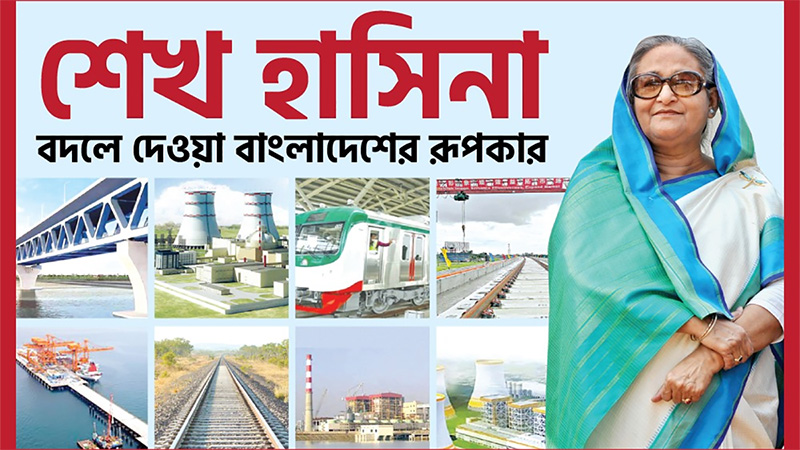
The progress of this country of about 180 million people is now facing new obstacles. Along with political and institutional weaknesses, the financial sector crisis has put overall economic growth at risk. BNP came to power last February. However, since forming the government, the party has been under pressure over the plight of the banking sector, worker dissatisfaction in the ready-made garment industry, and the law and order situation.
Meanwhile, political tension has reached a new level over Sheikh Hasina’s announcement to return to the country in December. The government has accused the Awami League of being behind the political instability. The court sentenced Sheikh Hasina to death in absentia. If her announcement to return to the country is implemented, the political situation could become more unstable and there could be fears of anti-government protests, the report said.
The report also said that a large portion of defaulted loans in the banking sector are concentrated in Sharia-compliant Islamic banks and state-owned banks. In this regard, the situation of Islami Bank is particularly noteworthy. This one of the largest banks in the country was once in political controversy due to its association with Jamaat-e-Islami. Later, the S Alam Group took control of the bank, alleging that it was financing terrorism.
The banking sector crisis is directly affecting business, trade and investment. While the private sector credit growth rate was around 10 percent in 2025, it has fallen to 4.5 percent this year. This is the lowest in the last 33 years. The report mentions that Bangladesh’s economic growth may be limited to 3.7 percent this year. The growth rate was around 6.5 percent at the end of Sheikh Hasina’s government.
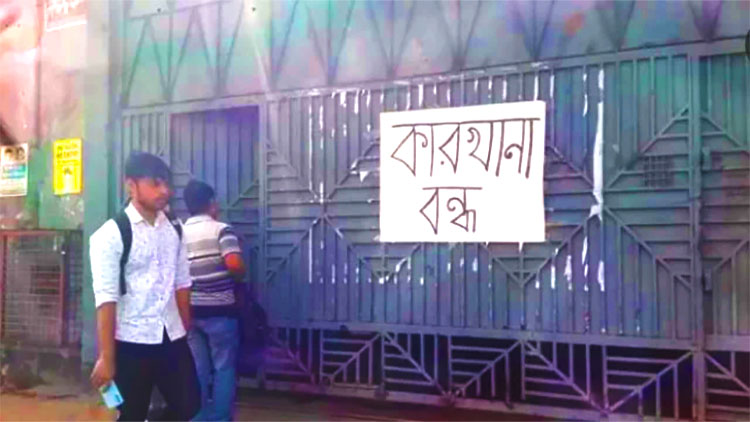
The banking sector, along with the energy crisis and industrial unrest, are also playing a role behind this economic crisis. The energy crisis has halted production in various industries and factories in the country. In addition, worker dissatisfaction and strikes in the ready-made garment industry have further complicated the production situation.
According to the World Bank’s forecast, the poverty rate in Bangladesh is likely to increase for the third consecutive year in 2026. This is likely to hinder the progress made in poverty reduction over the past few decades.
Bangladesh Bank has so far provided $6.2 billion in emergency liquidity assistance to keep banks in financial distress afloat. The amount is about 1.2 percent of the country’s gross domestic product (GDP). However, this assistance is not enough to cover the overall capital shortfall of the banking sector.
According to the assessment of international credit rating agency Moody’s, the banking sector may need about 10 percent of GDP equivalent to address its capital shortfall in the next few years.
The government’s ability to finance such a large sum is limited. Due to tax evasion and weak revenue management, Bangladesh’s revenue collection is only 7 percent of GDP. In a comparable position in South Asia, Pakistan’s revenue collection is about 10 percent of GDP. On the other hand, the government’s budget deficit has reached 3.3 percent of GDP to meet the cost of food and fuel subsidies. The government is having to borrow from private banks that are in a good position to manage government expenditure.
At the same time, the central bank’s additional liquidity support is increasing the money supply in the market, which is likely to create new pressure on inflation.
Questions have also been raised about the new government’s steps to restructure the banking sector. In June, a moratorium was created for distressed borrowers to pay interest on loans. In addition, a maximum limit on bank loan interest has been set.
Economists fear that fixing interest rates is reducing banks’ freedom to set interest rates based on borrower risk, which could hinder risk management in loan disbursement.
However, Finance Minister Amir Khasru Mahmud Chowdhury explained the government’s position and said that the problems are not being left for the future. Initiatives have been taken to clean up the financial statements of banks. The issue of giving additional time to repay loans to good institutions that are in temporary crisis will also be considered.
However, doubts remain about the extent to which changes in political power will bring about changes in the regulatory framework of the banking sector.
The report, quoting an economist, said that a section of the influential business groups associated with the BNP were out of power for 15 years. It has been feared that they too are interested in taking economic benefits. In such a situation, the question of whether banking sector reforms could become a tool to ensure the benefits of a new influential group has also come to the fore.
A former government official assessed that despite the change in power in Bangladesh, the system has not fundamentally changed.
Overall, the huge non-performing loans in the banking sector, capital crunch, declining private investment, weak revenue collection, and political instability have put the Bangladesh economy in a difficult position. To overcome this situation, the big test for the new government is not only emergency liquidity assistance, but also ensuring accountability in bank management, debt recovery, institutional reforms, and financial management free from political influence.

https://stapravda.ru/20221228/reyting_samyh_populyarnyh_hostingov_v_rossii_196445.html, рейтинг хостингов России подтверждает, что выбор надежного провайдера важен для бизнеса.