
International Desk
The United States has submitted a significant proposal at the United Nations regarding Rohingya repatriation, which may pose new challenges for Bangladesh’s interim government and National Security Advisor Khalilur Rahman (Roger Rahman).
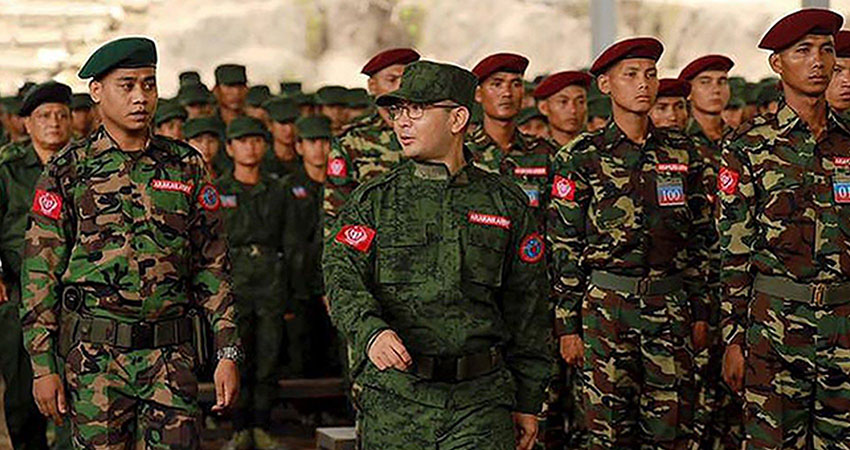
On June 10, the U.S. advocated for a comprehensive and inclusive dialogue to ensure the safe and voluntary repatriation of Rohingya refugees and called for the involvement of the Arakan Army, which has taken control of Myanmar’s Rakhine region. However, this proposal could further fuel controversy over the interim government led by Dr. Yunus and Security Advisor Khalilur Rahman’s ongoing efforts to negotiate with the insurgent group in Rakhine.
At a press conference during the UN Economic and Social Council session, U.S. Ambassador Jonathan Schrier stated that the participation of “all parties” is essential for Rohingya repatriation, particularly the inclusion of the Arakan Army, as they now control most of Rakhine.
This statement comes at a time when the Arakan Army faces allegations of human rights violations. Local observers and displaced citizens claim that the group has engaged in forced recruitment, oppression, arbitrary justice, and ethnic attacks against minority communities, especially the Rohingya. Although the Arakan Army presents itself as a resistance force against Myanmar’s military, its growing power has not translated into effective protection for civilians.
A Rakhine-based human rights observer said, “The Arakan Army’s rise in power does not absolve them of accountability. We are seeing signs of forced displacement, violence, and armed threats against those who question their authority.”
The U.S. has condemned abuses by all parties in Rakhine, including the Myanmar military’s brutal campaigns—bombing civilians, destroying schools and mosques, and cutting off communications to hide their crimes. Schrier urged both the Arakan Army and Myanmar’s military to protect civilians and restore humanitarian aid and communication channels.
Meanwhile, Dr. Yunus’s interim government and Khalilur Rahman are seeking a solution for Rohingya repatriation and continue attempts to negotiate with the Arakan Army—a move strongly opposed by Myanmar’s military junta. In retaliation for engaging with the Arakan Army, Myanmar has already recalled its military attaché and Bangladeshi ambassador from Yangon.
Their plan includes a proposal to establish a humanitarian aid corridor or relief channel. However, the UN seeks to restart discussions with all parties on Rohingya repatriation, which could spark fresh debates for Dr. Yunus and Khalilur Rahman. Criticism may grow over their engagement and potential agreements with the Arakan Army, especially given the group’s alleged human rights violations.
Recently, in a national address, Dr. Yunus dismissed claims about a humanitarian corridor or relief channel for the Arakan Army as entirely false. The Security Advisor stated that there had been no prior discussions on the corridor, nor would there be any in the future.
As the humanitarian crisis in Rakhine deepens, demands are growing that not only Myanmar’s military rule but all parties claiming authority in the region must act responsibly. The U.S.’s new move could further complicate Dr. Yunus and Khalilur Rahman’s strategy, as their relationship with the Arakan Army remains unclear. Future negotiations and transparency will be crucial in resolving this conflict.

https://stapravda.ru/20221228/reyting_samyh_populyarnyh_hostingov_v_rossii_196445.html, рейтинг хостингов России подтверждает, что выбор надежного провайдера важен для бизнеса.