
❐ BD Digest Desk
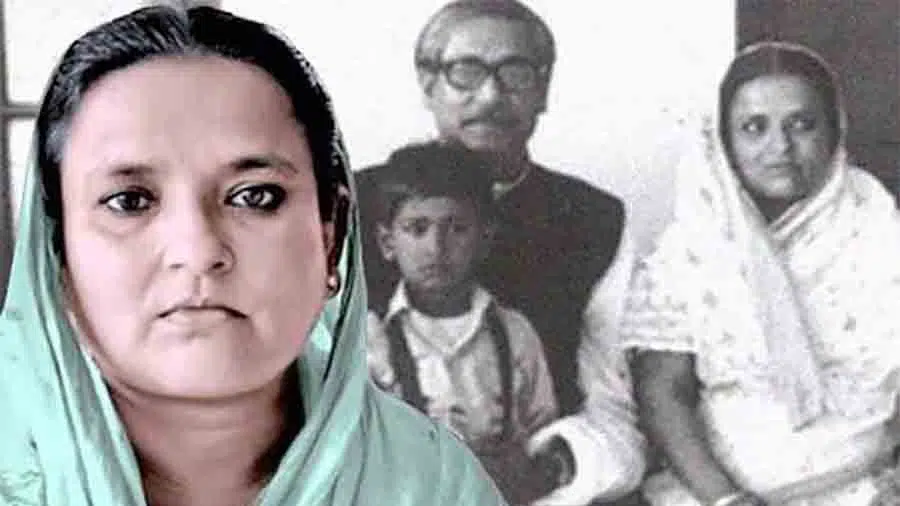
Today, August 8, 2026, is the 96th birthday of Bangamata Begum Fazilatunnesa Mujib, the wife of the Father of the Nation Bangabandhu Sheikh Mujibur Rahman. Bangabandhu had her as his life partner since childhood in Tungipara, Gopalganj. This noble woman was by his side as a worthy comrade-in-arms until her death. That is why Bangabandhu was able to succeed in his political life and bring independence to Bangladesh.
Researchers on the independence struggle of Bangladesh say that Begum Fazilatunnesa’s contribution, inspiration and self-sacrifice behind Bangabandhu’s rise from Sheikh Mujib to the Father of the Bengali Nation are undeniable. It is because of her that Bangabandhu was able to sow the dream of independence in the minds of a nation and bring its taste. Sheikh Mujib’s beloved Renu worked from behind the scenes to implement his political philosophy and ideals.
Begum Fazilatunnesa was the main inspiration and encouragement behind Bangabandhu’s writing of his autobiography. Bangabandhu first recalled her contribution in his autobiography. Despite going through all the thorny paths of life’s struggle, she managed her family quite well. Despite everything, she was the best shadow companion of Bangabandhu’s life and politics.
When politics was banned during the dictator Ayub’s government, Bangabandhu had to be imprisoned. During this time, he sewed clothes, rented a house, and ran the family. He handled everything with a cool head. In addition to educating his children, he filled their father’s need with his own affection and love.
In his ‘Unfinished Autobiography’, Bangabandhu Sheikh Mujib wrote, “When Renu was five years old, her mother died. Her grandfather was the only one left. His grandfather also died when Renu was seven years old. Then, he came to my mother. Renu grew up with my siblings.”
She got married to Sheikh Mujib at the age of just 13. In his ‘Unfinished Autobiography’, Bangabandhu wrote about the marriage, “I was probably twelve or thirteen years old when I got married. After Renu’s father died, her grandfather called my father and said, ‘I have to marry one of my granddaughters to your eldest son. Because, I will bequeath all the property to their two sisters.’ Renu’s grandfather is my father’s uncle. My marriage with Renu was registered to obey the orders of the elders. I heard that I was married. I did not understand anything at that time, Renu must have been three years old at that time.'”
Although they got married, their family life actually began after Bangabandhu passed the entrance exam. Their wedding ceremony took place in 1942. In the same year, he was admitted to Islamia College in Kolkata. That is where his political career began. During this time, Begum Sheikh Fazilatunnesa Mujib spent her time reading various books.
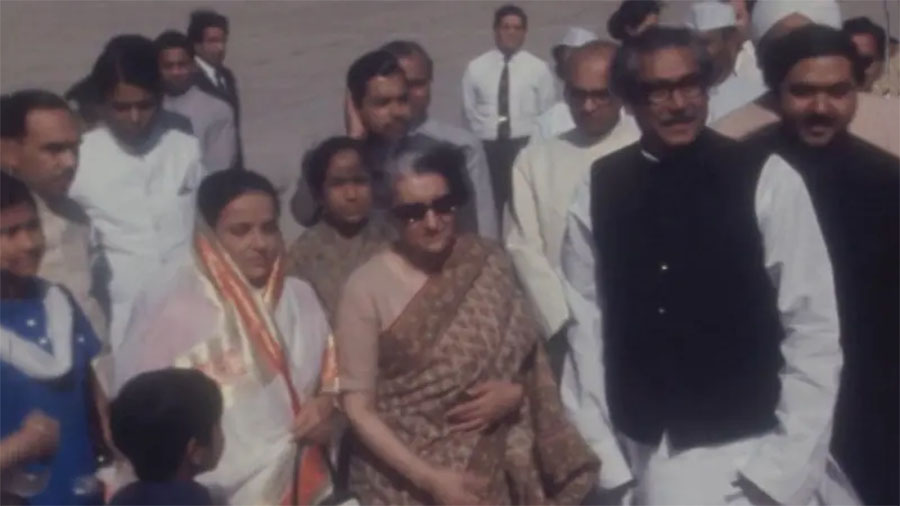
On April 10, 1974, after the signing of the Tripartite Agreement, Sheikh Mujib went to Delhi. He was received by Indian Prime Minister Indira Gandhi. On the right is the then Foreign Minister of Bangladesh, Dr. Kamal Hossain.
Without any formal education, he was a wise man with fine talent, intelligence, responsibility and patience. He was also the main inspiration and encouragement for the writing of the ‘Unfinished Autobiography’ of the Father of the Nation. Sheikh Mujib also remembered the contribution of his wife in his autobiography. After overcoming all the thorny paths of life’s struggle, he also managed his family quite well. Despite everything, she was the best shadow companion in the politics of Bangabandhu’s life.
Whenever necessary in the political context of that time, she stood by the Awami League and its leaders and activists with all her might. Even during the movement, she would inform Bangabandhu about every incident when she met him in prison. There, Bangamata would listen to Bangabandhu’s advice and inform the leaders of the Awami League and Chhatra League.
On the other hand, she also helped to keep Bangabandhu’s morale strong by visiting him in prison. She also played an important role in the success of the six-point program for the liberation of Bengalis when Bangabandhu was in prison. Whenever her husband Sheikh Mujib, who was involved in Chhatra League politics, needed additional money during his stay in Kolkata, she would send him the money earned from his father’s property without hesitation.
The Pakistani government imprisoned and oppressed Bangabandhu. At that time, she stood by the party and its leaders and activists even after selling the furniture and ornaments of her house. Despite being the wife of a President and Prime Minister, she lived like a commoner. There was no luxurious furniture in her house, nor was there any ego.
Everyone was impressed by her kind behavior and humility. She loved her children as much as she disciplined them. She fulfilled the duties of both parents. This courageous woman, who was a mixture of gentleness and severity, raised her children inspired by her husband’s ideals. No one who asked for her help ever returned empty-handed. Sheikh Fazilatunnesa often married off a girl from a poor family by spending money from inherited property.
In 1968, the Pakistani government filed a case against Bangabandhu, along with 35 Bengali army and navy members and high-ranking officials, on charges of treason. This is known as the Agartala Conspiracy Case. When Bangabandhu was arrested in this case, Bengalis took to the streets demanding the release of all political prisoners. Protests spread across East Pakistan.
In the turbulent political situation, various law enforcement agencies of the Pakistani government also threatened to arrest Begum Fazilatunnesa Mujib. But she was not disturbed and, with her sharp intelligence, tried in various ways to raise money for lawyers to prepare for the legal fight against the case. At one point, Ayub Khan’s government backed down.
At that time, the West Pakistan government decided to release Sheikh Mujib on parole to participate in the Round Table Conference in Lahore. But Begum Mujib was hesitant about releasing him on parole. She strongly objected to this. Seeing the pace and nature of the movement in East Pakistan, Begum Mujib may have understood that the Pakistani government would be forced to release Sheikh Mujib unconditionally, not on parole.
He even met Bangabandhu in prison and told him not to go to the Lahore meeting to get released on parole. He also understood that the Bengali nation was united regarding Sheikh Mujib. The Pakistani government would be forced to withdraw the Agartala conspiracy case. Therefore, Bangabandhu also refused to be released on parole on the advice of Bangamata. In the meantime, the movement for the release of the royal prisoners including Sheikh Mujib spread across the country; it took the form of a mass uprising. At one stage, the Ayub government decided to release Bangabandhu in the face of the movement. He was released from jail on February 22, 1969. The next day, on February 23 of that year, the Bengali nation welcomed their undisputed leader Sheikh Mujibur Rahman with the title of ‘Bangabandhu’.
Historians and political analysts have recognized Sheikh Fazilatunnesa Mujib’s decision not to seek parole as unique in the political history of Bangladesh.
In 1954, Sheikh Mujib was a member of the United Front cabinet. That same year, Begum Mujib moved to Dhaka with her children. They moved into a house on Rajni Chowdhury Lane in Gendaria, Dhaka. When Bangabandhu became a minister, they got a government house and moved into a government house on Minto Road. But when Pakistan dissolved the United Front cabinet, they had to vacate that house at short notice. They had to change their homes many times.
At one point, in 1961, Bangabandhu built a house at number 32, Dhanmondi. This was the favorite house of Bangabandhu and Bangamata. Bangamata’s great pains and labor were involved in the construction of this house. They moved into their own house on October 1, 1961. After that, this house became the home of the leaders and activists.
Various activities of the party and the liberation war have been conducted from here. During Bangabandhu’s imprisonment, leaders and activists came to this house. She also stood by them in various ways, including providing intellectual advice. Bangabandhu’s historic March 7th speech also bears the imprint of Bangamata’s intelligence.
Recalling the incident of that day, his daughter Prime Minister Sheikh Hasina said, “Before the March 7th speech, so many people gave me so many suggestions, they were driving my father crazy! Everyone came – I have to say this, I have to say that. My mother gave my father food, took him home and closed the door. She told my father straight away, you will lie down and rest for 15 minutes. Many people will say a lot. You have been involved in agitation and struggle all your life, you have served time in jail. Do you know what to say? Whatever comes to your mind, say it.”
Then, raising his index finger to the crowd at the then Race Course Grounds, Bangabandhu declared, ‘This time’s struggle is our struggle for freedom; this time’s struggle is our struggle for independence.’
It was his call that made the Bengalis jump into the freedom movement. Bangabandhu’s call for freedom had the psychological support of Bangamata. This support gave Bangabandhu courage. Today, this speech is part of the world heritage. Besides, Sheikh Fazilatunnesa Mujib can be considered as Bangabandhu’s main motivator and advisor in hoisting the flag on March 23, 1971.
Not only that, Sheikh Fazilatunnesa Mujib faced the situation with immense courage, strong morale and patience for the entire nine months of the great Liberation War. During this time, they spent a lot of time in captivity. On December 16, the Bengalis achieved independence in the Liberation War.
On January 8, 1972, Bangabandhu was released from a Pakistani prison. From there, he went to London. It was from London that he first spoke to Begum Mujib. On January 10, Bangabandhu returned home. Bangamata Begum Fazilatunnesa’s long wait came to an end. After that, she stood by Bangabandhu in the work of building a war-torn country. He gave many heroines a socially dignified life by marrying them.
After independence, Bangamata said to the heroines, “I am your mother.”
He said, ‘The nation is proud of these brave women. They have no reason to feel ashamed or embarrassed. Because they are the first to prove that not only the boys of Bangladesh, but also the girls are incredibly strong in their sense of self-respect. (Daily Banglar Bani, 17 Falgun, 1378 Bangabd).’
Bangamata Sheikh Fazilatunnesa Mujib even contributed to Bangabandhu’s promotion of the country internationally. The then Prime Minister of India, Indira Gandhi, had a very good relationship with her. She used to stay by Bangabandhu’s side even when world leaders visited Bangladesh.
Sheikh Fazilatunnesa Mujib was the shadow companion of her beloved husband Sheikh Mujibur Rahman, not as a wife, but as a political colleague. Until the last moment of her life, she was by the side of Sheikh Mujib, the great hero of history, as an inspiration. On the night of August 15, 1975, she and her family were killed by anti-liberation groups.
May Bangladesh be a role model in women’s empowerment, strengthened by her ideals and strength. A tribute to Bangamata Sheikh Fazilatunnesa Mujib on her 96th birthday.

https://stapravda.ru/20221228/reyting_samyh_populyarnyh_hostingov_v_rossii_196445.html, рейтинг хостингов России подтверждает, что выбор надежного провайдера важен для бизнеса.