
International Desk
Washington, February 20, 2026 — The US Supreme Court on Friday declared a large part of President Donald Trump’s sweeping import tariff policy illegal in a landmark 6-3 majority ruling.
According to the court, the president has no clear authority to impose such sweeping tariffs under the International Emergency Economic Powers Act (IEEPA) of 1977 .
Chief Justice John Roberts noted in a written opinion that the president claims “extraordinary power to unilaterally impose tariffs of unlimited amount, duration, and scope,” but there is no such authorization in the IEEPA. The court clarified that the law applies to regulating certain international transactions in times of national emergency, but does not cover the imposition of tariffs (which are essentially a form of taxation).
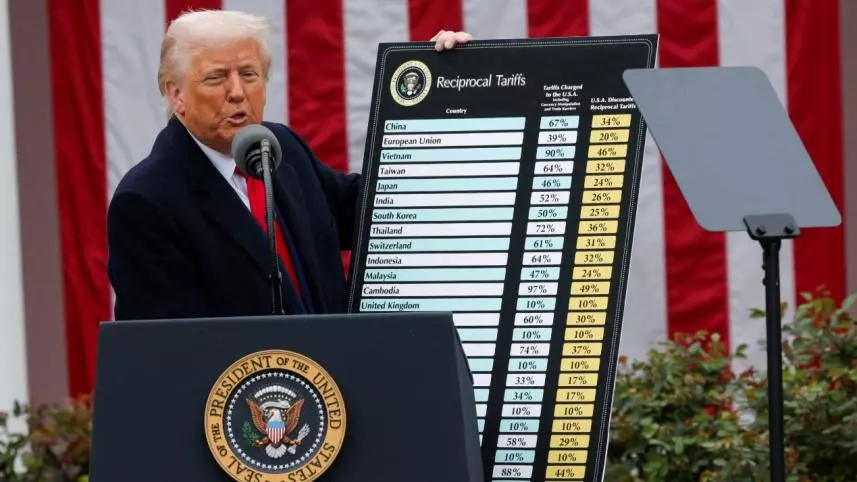
The power to impose tariffs rests primarily with Congress under the Constitution. The ruling strikes a serious blow to the core of the Trump administration’s economic policy. The tariffs, announced on Liberation Day in 2025, imposed a general tariff of 10% on goods imported from almost all countries, with higher rates (such as 25%) on a few countries, including China, Mexico, Canada, and the European Union.
These are imposed by presenting drug trafficking, immigration, and trade deficits as national emergencies.
The ruling will likely result in the elimination of most of these tariffs, although some duties imposed under other laws, such as those on steel and aluminum, may remain in place. Analysts estimate that the government could have to refund more than $130-175 billion in tariffs that it has collected from importers. The refund process will be complex and time-consuming.
President Trump called the ruling “disgraceful.” The White House said it would quickly take alternative action using other legal powers.
The ruling set important precedents for US trade policy, the limits of the president’s executive power, and Congress’s exclusive right to tax.
Experts believe this will help prevent future abuses of emergency powers by presidents and reduce uncertainty in global markets. However, the Trump administration’s trade policy is not completely over—it’s just that this particular path has been closed.
This incident could also have an impact on international relations, as many countries have been affected by these tariffs and now there may be an opportunity for new trade negotiations.
Visited 5 times, 1 visit(s) today

https://stapravda.ru/20221228/reyting_samyh_populyarnyh_hostingov_v_rossii_196445.html, рейтинг хостингов России подтверждает, что выбор надежного провайдера важен для бизнеса.