
Staff Correspondent
On July 21, 2025, a twin-seat training aircraft of the Bangladesh Air Force, FT-7BGI, with tail number 701, crashed on the campus of Milestone School and College in Uttara, Dhaka. At least 20 people, including the pilot, were killed and 167 others were injured in the incident. Most of them were students of the school. This incident is undoubtedly a terrible humanitarian disaster, for which grief is relevant, as well as investigation and accountability are essential.
But the conspiracy of a select group to label the plane a ‘flying coffin’ in the wake of the accident is not an isolated reaction. This propaganda is not born out of mere technical ignorance – it has political motives and influential interpretations behind it.
According to information provided by the ISPR, the aircraft that crashed was an FT-7 BGI.
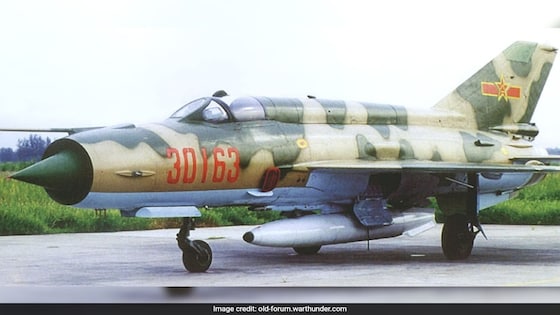
The FT7BGI is not an ‘old second generation’ fighter jet. It is the latest version of the Chinese-made J-7 platform, which is essentially a variation on the Soviet Union’s MiG-21. The J-7 jet fighter is a third generation fighter jet.
The FT-7BGI is specially configured for the training and limited interception needs of the Bangladesh Air Force.
This aircraft is equipped with KLJ-6F fire control radar, glass cockpit, HOTAS (Hands On Throttle And Stick) system, and is capable of carrying modern short-range air-to-air missiles such as PL-5, PL-7 and PL-9. It is reasonable to call questioning the effectiveness of this technologically advanced aircraft not technical ignorance, but rather a deliberate misinterpretation.
It is incorrect information that the production of this model was stopped in 2013 because the Bangladesh Air Force brought 36 FT-7 BGI fighter jets from China in September 2022, changing the specifications according to its own requirements. In reality, this was the final upgraded configuration, which was procured maintaining the best ratio according to Bangladesh’s needs.
https://www.observerbd.com/news/381801
J-7 Fighter Jet – A Reverse-Engineered MiG-21 But With A Chinese Touch
|| So who is responsible for the accident? ||
After analyzing the technical framework, let’s now turn to the real events. At the heart of this accident was the pilot Tauqir Islam Sagar. An emotional campaign began around him—newly married, new chapter in his career, grief in the family—all in an attempt to create a hero-story. This campaign is basically to divert attention from the pilot or the operations. But behind it there are some serious questions that need to be investigated:
The Bangladesh Air Force’s tail number 701 FT-7 BGI aircraft was originally a twin-seat training aircraft.
That means the pilot is supposed to have an instructor with him.
But official information indicates that this was the first ‘solo’ flight for Tauqir Islam Sagar.
Before that, Tauqir had an instructor with him on every flight. After giving him hands-on instruction, the instructor would only hand over control to the student if he felt that he could fly alone.
Even on the first solo flight, the instructor may be in the cockpit. Sometimes the instructor also monitors from outside the aircraft using a ‘ground control device’. In both cases, control is usually in the instructor’s hands.
Originally, Tauqir Islam Sagar’s last flight with an instructor was supposed to be last Thursday, but it didn’t take place that day. Today, after the flight with an instructor, he was sent on a solo flight. That is, two flights on the same day.
It is reported that Toukir Sagar’s instructor was not in the cockpit during his first solo flight.
In such a situation, if incorrect instructions are given or there is negligence on the part of the instructor, then it is definitely a matter of investigation.
The pilot was not inside the plane when it crashed. Rather, he was rescued injured at a distant location. That is, he ejected before the plane was flying out of control. That is, the pilot pushed the plane towards the school, where there is no logic to landing. There is no room for denying responsibility for this decision.
Even more surprising is that there has been no official statement since the accident regarding the identity of the pilot’s instructor, his duties, or his location at the time. This silence raises a question: Was his instruction misleading?
Haze surrounding rescue and death
Another remarkable aspect of the incident is the manner of Tauqir Islam’s rescue and death. Although his leg was broken, there were no signs of burns on his body—which is usually seen in plane crashes. It even took about an hour to rescue him. During this time, no reliable information has been released about his treatment or whereabouts.
The most important yet mysterious character in this accident is the pilot’s flight instructor. He was in charge of the training. It was under his guidance that he was sent on the solo flight. But where is he today? Why is there no physical or official explanation for his role?
Grief is inevitable in this accident. But more important than that is uncovering the truth. The blame for this accident lies not with any mechanical failure—but rather with the ill-advised decision to assign responsibility to an inexperienced pilot and perhaps with faulty training. The investigation should not be on the aircraft, but on the training and operational leadership.

https://stapravda.ru/20221228/reyting_samyh_populyarnyh_hostingov_v_rossii_196445.html, рейтинг хостингов России подтверждает, что выбор надежного провайдера важен для бизнеса.