
Opinion
First of all, let me make one thing clear.
If Sheikh Hasina returns to Bangladesh, she is entitled to all legal protections as per the constitution and law. Of course, if you believe in the rule of law, justice and transparent judicial process. And if you think that the law and regulations do not apply to her because of the name “Sheikh Hasina” and that it is enough to pre-judge her guilty and execute her, then there is no point in taking this discussion further.
In my opinion, his minimum legal rights are:
1. The right to know in detail the charges brought against him, the right to effective legal representation, and the right to apply for bail in accordance with the law.
2. The right to file a writ petition with the High Court Division on the question of whether the current structure of the International Criminal Tribunal is legal or not and whether it has exceeded the limits of its legal authority.
3. The right to challenge the constitutional and legal validity of the amendments to the International Crimes (Tribunal) Act, 1973, as amended by ordinance.
4. The right to challenge the proceedings of the tribunal on the grounds that the fundamental principles of fair trial, due process, and judicial impartiality have been violated.
5. International criminal law generally does not allow for trials in absentia. The authorization of trials in absentia in our 1973 law must be seen in the light of international law. In light of international human rights law, in particular the ICCPR, the jurisprudence of the UN Human Rights Committee and the European Court of Human Rights, for trials in absentia to be considered valid, they must ensure the fundamental safeguards of effective notice, the conscious and voluntary absence of the accused, and the opportunity for a full retrial. These are the criteria that researchers have also analyzed in their evaluation of the Special Tribunal for Lebanon.
Therefore, it can be argued that these basic safeguards were not followed in the trial conducted in Sheikh Hasina’s absence. As a result, it is entirely legitimate to raise the question of whether her case is worthy of a retrial in light of international human rights law and established international criminal law.
6. Even if the 30-day period for appeal has elapsed after the pronouncement of the verdict, it is possible to argue that the court can consider exceptional circumstances in serious cases such as international crimes, capital punishment and crimes against humanity. In particular, if it can be shown that the trial was conducted in absentia in violation of the fundamental principles of trial, then the 30-day limitation will not strictly apply to him – a strong legal argument can at least be raised.
However, there are two real problems with the appeal route. First, if an appeal is filed, the existing verdict can be argued to have been judicially recognized at some stage. Second, how impartial a trial he will receive before the reconstituted Appellate Division after the political changes of 2024 is also an important question. Especially since the same Appellate Division has unprecedentedly accepted a review of a convicted Jamaat leader and acquitted him. As a result, there is an opportunity to raise questions about impartiality. However, despite all this, my main point is that the legal possibility of an appeal exists.
In my assessment, each of the above legal bases deserves serious consideration. If any of them are, then I want each side to have the opportunity to appoint the best lawyers and legal experts of their choice, both domestically and internationally. The media should have the opportunity to present the news of both sides equally.
Only if the events of July 2024 are held with an objective international investigation, impartial judges, independent prosecution, and effective defense, will there be a chance of establishing true justice.
This is not just for Sheikh Hasina; it is also essential for the greater justice of all victims of the July violence. The July violence was multidimensional. There are allegations of involvement of various parties, both state and non-state. Justice can never be complete unless the real truth is revealed and everyone’s responsibilities are properly determined. The search for truth is an integral part of justice. If it fails, Bangladesh will run the risk of a repeat of a similar crisis in the future.
Currently, some representatives of the government and the ruling political forces seem to be saying that implementing the court’s verdict means establishing justice. However, justice is not a political slogan; it is the result of a legal and fair judicial process. If a trial is conducted assuming a predetermined punishment for an accused, it is not consistent with the rule of law. It can be said that the group currently in power is afraid of becoming an accused themselves, and does not want to emphasize the legal path. As an academic in law, my assessment is that the law followed in Sheikh Hasina’s case, the evidence relied on, the legal doctrine applied, and the basic safeguards of fair trial and due process raise serious questions.
Unfortunately, a significant portion of the legal community in Bangladesh has not yet conducted a sufficiently frank, objective, and in-depth legal analysis of these issues. The principles of international criminal law and domestic criminal law have in many cases been mixed together, and a hasty judgment has been given before the elections.
In my assessment, the ruling may have political significance; but its legal basis is highly controversial and fragile. As a result, serious legal questions remain regarding further state action based on that ruling.
After the verdict was announced, I held a lengthy interview with Cardiff University researcher and UK Councillor Dr. Boblin, discussing the various legal flaws in the verdict in detail. Former Member of the European Parliament Paolo Casaca was also present. The interview was recorded in English for an international audience. I would heartily welcome any reasoned, meaningful and objective discussion on this issue by lawyers, researchers and scholars from Bangladesh.
Finally, it is important to remember one basic thing.
Justice is one thing; but a state’s capacity, institutional readiness, and adherence to international standards to prosecute international crimes are another. I do not believe that the level of independent, impartial, and professional investigation required to investigate allegations of international crimes has been completed to date in the July events.
The investigative report published by the Office of the United Nations High Commissioner for Human Rights (OHCHR) has already been the subject of several scholarly criticisms, to which no satisfactory answers have yet been forthcoming. Furthermore, the report itself clearly states that further investigation by the competent authorities is required to reach a final conclusion on whether international crimes have been committed. That investigation has not been completed to this day.
Investigations conducted for the purpose of consolidating political victories, establishing the legitimacy of power, or perpetuating social divisions are one thing; investigations conducted to seek the real truth and ensure full accountability are quite another.
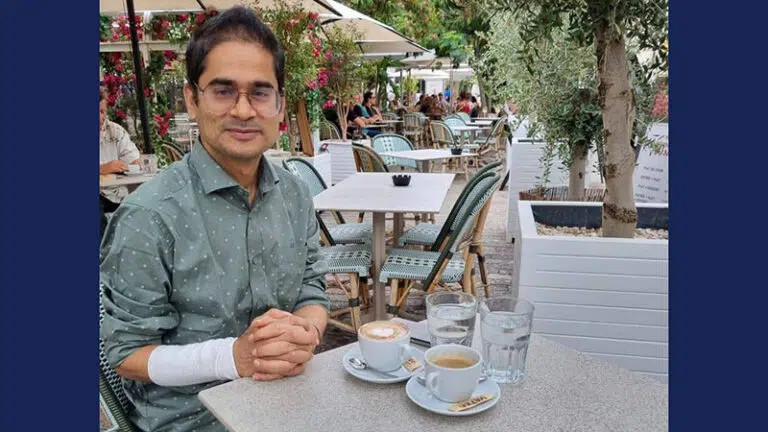
-Professor Masum Billah
(Former Chairman, Law Department, Jagannath University)

https://stapravda.ru/20221228/reyting_samyh_populyarnyh_hostingov_v_rossii_196445.html, рейтинг хостингов России подтверждает, что выбор надежного провайдера важен для бизнеса.