

❐ Staff Reporter
The economic crisis is deepening, with the number of poor people in the country expected to increase by an estimated 1.4 million by 2025. In such an unstable situation, when new risks of employment contraction have arisen in Bangladesh due to the conflict in the Middle East, the government has announced a grand goal of creating 10 million new jobs in the next five years.
The World Bank has expressed concern that if the current international and domestic crisis continues, about 600,000 people in Bangladesh could lose their jobs. The direct impact of this situation is that a large population that is expected to be lifted out of poverty by 2026 will once again face uncertainty.
On the other hand, the government is steadfast in its plan to create 10 million new jobs by 2031 under the ‘Five-Year Strategic Framework for Reform and Development’. This master plan has set a target of creating 5.87 million jobs in the service sector and 3.32 million jobs in the industrial sector.
However, a closer look at the actual situation reveals the stark contrast in the country’s labor market. While the current challenge is to maintain existing jobs amid high inflation, declining industrial production, and a severe energy crisis, the risk of 1.4 million people falling below the poverty line by 2025 has further exacerbated this risk.
On the other hand, despite the promise of creating vast new job opportunities, automation and modern technology are spreading in several industries, resulting in a gradual decline in the need for labor even as production is on the rise.
Therefore, in the current reality, on the one hand, the challenge of improving the living standards of these new 1.4 million poor people by 2025 is being faced, and on the other hand, a big question has arisen about how effective the government’s goal of creating 10 million new quality and sustainable job opportunities will be.

New employment goals amid crisis
The five-year strategy, formulated by the General Economics Department (GED) of the Ministry of Planning, has been prepared for implementation from July this year to June 2031. Its main objectives are to rein in inflation, accelerate economic growth, increase investment, and ensure widespread employment.
The long-term goal of this master plan is to increase Bangladesh’s economy to $1 trillion by 2034.
Of the 10 million new jobs planned, 2.28 million will be created in manufacturing industries and 1.04 million in other sectors, including construction, for a total of 3.32 million jobs in the industrial sector.
The remaining portion includes plans for 5.87 million new jobs in the service sector, about 5.9 million in the agricultural sector, and an additional 2.3 million in the foreign labor market.
However, the reality that the poor population will increase by an estimated 1.4 million by 2025 makes it clear that there is a huge gap between the strategic plan and the current market situation. Weak investment, severe energy uncertainty, banking sector turmoil, and rampant inflation are hampering the environment for new job creation.
BIDS Director General Dr. AK Enamul Haque believes that a clear and implementable ‘action plan’ is needed to fulfill this dream of creating 10 million jobs. He said that if the growth rate in the economy is above 4.5 percent, 10 to 11 lakh jobs are created every year, which can be increased to 6 percent, 10 million jobs are possible.
However, he warned that this goal will not be achieved without the necessary investment in the right sectors, and it is impossible to create a large number of job opportunities through public sector initiatives alone.

Far from new jobs, existing jobs are at risk.
While the government is promising millions of new jobs, World Bank data shows a different picture—where nearly 600,000 workers in Bangladesh are at risk of losing their jobs if the Middle East conflict continues.
The World Bank’s June report on budget support review noted that if the war increases energy and production costs, employment in the overall market will be severely hit.
The most alarming information is that, according to the World Bank, the number of poor people in the country has increased by an estimated 1.4 million in 2025 alone. Whereas, if there were no conflict in the Middle East, about 1.7 million people could have been freed from poverty in 2026, now that possibility has decreased to only 5 million.
In other words, when the economy is struggling to protect existing jobs and 1.4 million new people are falling into poverty, the government’s ambitious employment targets are becoming more difficult to achieve.
Industrial production is increasing, but workers are decreasing
One of the pillars of the government’s employment plan is the industrial sector, but key sectors like ready-made garments are showing the opposite picture – despite increased production, workers are being laid off or new hiring is being halted.
For example, while the number of workers in a large ready-made garment factory in Ashulia was around 16,000 in 2021, it has now dropped to 13,500—meaning that 2,500 jobs have been eliminated in just one factory in the space of five years.
Despite the reduction in staff, the use of artificial intelligence, robotics, and automated technology has increased the factory’s overall production capacity.
BGMEA Senior Vice President Enamul Haque Khan said that far from creating new job opportunities in the ready-made garment sector, the manpower is decreasing day by day. Citing the example of his own organization, he said that due to the widespread use of automation and AI technology, production has increased despite the reduction in staff in offices and factories.
However, he also points out that since this technology is quite expensive, not everyone is able to use it, but the demand for human labor in the organizations that are implementing it is rapidly decreasing.
This is where the contradiction in the government’s strategic thinking becomes apparent—the industrial sector, considered the main driver of employment, is reducing labor dependence through the use of technology.
Of course, eliminating technology is not the solution; rather, the main concern now is whether or not workers can be trained in new skills to replace the jobs that are being lost due to technology.
Great hope in the service sector, but informal employment is more prevalent
The government’s five-year plan has identified the services sector as the biggest source of employment, with a target of creating 5.87 million new jobs.
According to the latest data from Bangladesh Bank, the financial volume of the services sector in the 2025-26 fiscal year stood at Tk 3.26 trillion, which is about Tk 3.31 trillion more than the previous fiscal year.
However, the growth in the service sector does not necessarily mean that quality of work or secure employment will be ensured.
While millions of people are involved in the vast service sectors like transport and hotels and restaurants, the vast majority of them are in the informal sector. According to the National Economic Census 2024, more than 3 million 33 thousand people are employed in the transport and storage sectors alone.
In fact, about 84 percent of the country’s overall employment is informal, with no opportunity for employment contracts, fixed pay scales, workplace security, or social protection.
Therefore, even if the government meets the numerical target of one crore jobs, it remains questionable how much decent and secure work it will provide if the pace of poverty growth in 2025 is curbed.
CPD Executive Director Dr. Fahmida Khatun commented that the government’s strategy paper only provides guidelines rather than identifying key issues. During practical implementation, domestic and global economic shocks will become visible.
He noted that although the country’s economy is service-based, the small and informal sectors are more dominant. To institutionalize and scale up these, domestic and foreign investment and training to enhance the skills of the employed workers are essential.
2.6 million unemployed, 885,000 highly educated
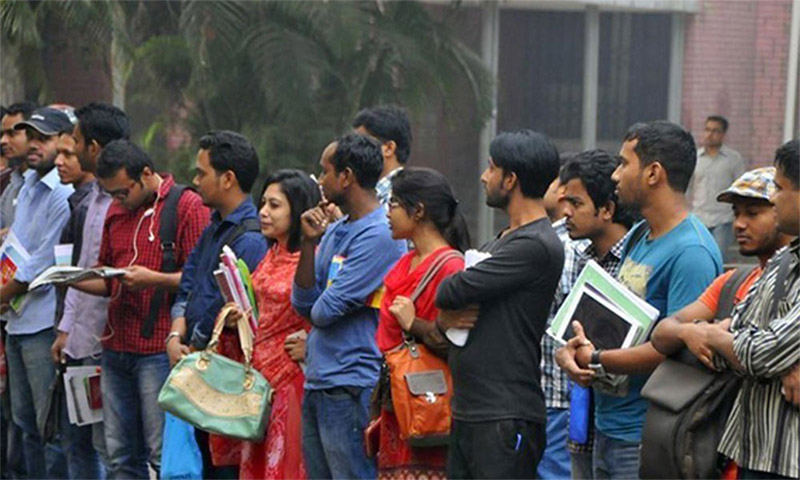
One of the biggest flaws in employment planning is the extreme mismatch between the knowledge acquired in our education system and the real needs of the workplace.
According to the BBS labor force survey, the total number of unemployed people in the country is 2.624 million, of which 885,000 are unemployed people with bachelor’s degrees and above.
Although a large number of young people graduate from educational institutions every year with degrees, the unemployment rate of highly educated people is continuously increasing due to the lack of quality job skills in the labor market, which is acting as a catalyst for the increase in the number of poor people by 2025.
In addition, there is also the complexity of the ILO’s international definition – a person is considered a worker if he works for just one hour a week in exchange for pay, which is completely insufficient for a living in the reality of Bangladesh.
Therefore, simply reducing the number of unemployed on paper will hide the true plight of the labor market and the true pressures of poverty.
The energy crisis is now a major obstacle
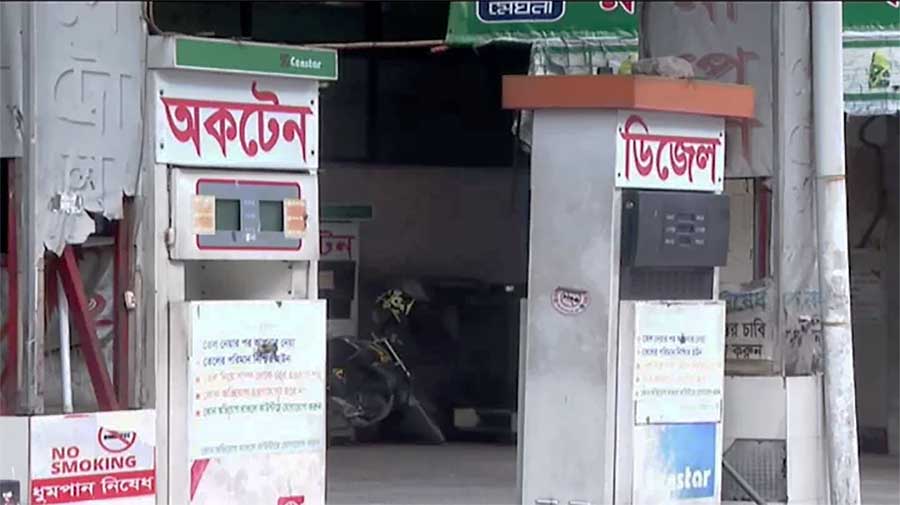
The ongoing acute energy crisis has become the biggest short-term obstacle to employment growth and poverty reduction.
Natural gas provides more than half of the country’s total energy use, but current gas production is down about 15 percent compared to peak production in 2016.
At the same time, 60-65% of imported oil and 55-60% of LNG come from the Middle East, with ongoing instability in the region directly endangering the country’s energy security.
Meanwhile, ‘force majeure’ has been declared on five of Petrobangla’s LNG supply contracts and the price of LNG in the global market has risen from $24 to $28 per MMBTU.
Due to the impact of this severe fuel crisis, production is being severely disrupted due to the lack of gas in industrial factories, shifts are being reduced in many places, and some factories are being closed completely.
Professor Mostafizur Rahman, a distinguished fellow at CPD, said that incidents such as not getting new gas connections, reduced working hours, and factories closing down due to fuel shortages have become a daily occurrence.
The World Bank’s risk of losing 600,000 jobs due to this situation is not just paper data, but also indicates a larger economic crisis with 1.4 million people falling into poverty by 2025.
Employment growth expected in agriculture, but risks are increasing
The government plans to increase the existing 38.5 million jobs in the agricultural sector to 31.4 million, meaning it aims to create 590,000 new jobs.
However, like the industrial sector, the agricultural sector is also unable to remain free from the clutches of the energy crisis and rising prices in the international market.
Excessive fertilizer dependence: An average of 391.9 kg of fertilizer is used per hectare in Bangladesh, a large portion of which has to be imported from abroad at high prices.
Directly affected by the gas crisis, 5 out of 6 urea fertilizer factories in the country have had to shut down production, which has been compounded by a 30% increase in fertilizer prices in the international market.
The World Bank has warned that fertilizer prices could double if the crisis lasts longer, so it is not only important to set employment targets in agriculture, but also to ensure that farmers receive the right price for their production costs and crops.

The goal of employment abroad is also big.
To address poverty and job shortages in the domestic market, the government has set a goal of increasing the number of people sent abroad to 1.58 million annually, up from the current 1.12 million workers.
It is planned to create employment for a total of 2.3 million additional workers abroad over the next five years, with an additional 460,000 workers per year.
However, achieving this ambitious goal is not easy in the global economic reality, as various legal and administrative complications have arisen in key markets such as the Middle East and Malaysia.
Ramru founder Professor Dr. Tasneem Siddiqui believes that there is considerable doubt about the feasibility of suddenly sending 1.5 million workers abroad a year because key markets are closed or limited.
He further emphasized that while there is a high demand for skilled workers in the foreign market, most of the unskilled workers leaving Bangladesh are unskilled workers. Therefore, the government’s main priority should be to create a skilled manpower by stopping the creation and exploitation of unskilled workers rather than meeting the target.
Employment success cannot be measured by numbers alone.
Although government plans emphasize re-skilling and up-skilling of workers, there is still a long way to go in terms of practical implementation.
Dr. Manjur Hossain, member (secretary) of the General Economics Department of the Ministry of Planning, however, claimed that most industries, including the country’s garment sector, are still labor-dependent and automation will not suddenly come and make a large number of people unemployed.
He believes that the service sector will be the main employment sector in the future. The current energy crisis is temporary and when the economy turns around, a huge field of new jobs will be created.
Highlighting the importance of skill development, he said that it is not possible to increase employment overnight; for this, the government is emphasizing on skill development and training along with creating a suitable ecosystem.
The main question is not planning, but implementation.
The statistics of 1.4 million new people falling into poverty in 2025 prove how difficult it is going to be to achieve the government’s ambitious goal of creating 10 million jobs.
Energy shortages, automation technology, informality in the service sector, unemployment of highly educated people, and limitations of unskilled workers in foreign markets—all of these factors have severely shaken the economic foundation.
Added to this is the World Bank’s alarming prediction that if the Middle East crisis ends, the number of people who could have been lifted out of poverty in 2026 will now drop to 500,000, and another 600,000 people could lose their jobs.
Therefore, instead of judging the government’s success by just how many lakhs of people have been put to work, we need to look at how sustainable, safe, and capable of alleviating poverty the projects are.
New job opportunities will certainly be created as the economy turns around, but without energy security, adequate domestic and foreign investment, and skills development, this dream of 10 million jobs will remain limited to paper only.
And if the number of poor people continues to increase as it did in 2025 before the economy recovers, the government’s main duty is not to create 10 million new jobs—but rather to protect the country’s people from extreme poverty by preserving existing employment.

https://stapravda.ru/20221228/reyting_samyh_populyarnyh_hostingov_v_rossii_196445.html, рейтинг хостингов России подтверждает, что выбор надежного провайдера важен для бизнеса.