
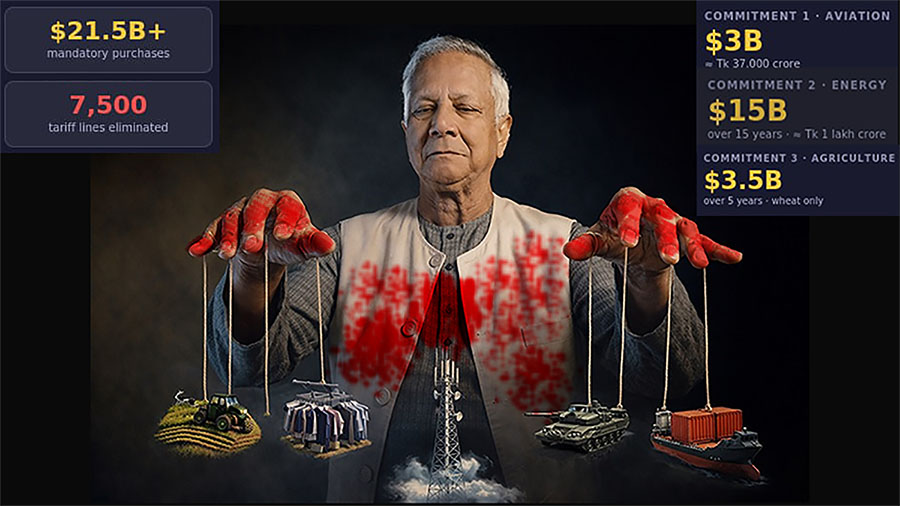
Based on report by science.org
Bangladesh is currently in the grip of a devastating measles epidemic. An investigative report published in the world-renowned science journal Science.org has revealed the reason behind the crisis — an administrative decision by the interim government, which UNICEF had previously warned against.
How dire is the situation?
Since mid-March this year, more than 32,000 suspected measles cases have been identified and more than 250 people, most of them children, have died. Children have had to be treated on the floor at Dhaka’s Infectious Diseases Hospital because of the acute shortage of beds. The epidemic has spread to 58 of the country’s 64 districts and more than 21,000 patients have been hospitalized.
How did this crisis start?
Bangladesh has long been praised worldwide for its high vaccination rates. Children were given two doses of the measles-rubella (MR) vaccine at 9 and 15 months of age, and national vaccination campaigns were conducted every 4 years to ensure 95% coverage — the threshold needed to prevent epidemics.
After the fall of Prime Minister Sheikh Hasina following the 2024 mass uprising, an interim government led by Nobel laureate economist Dr. Muhammad Yunus came to power.
The decision that brought danger
According to a report by Science.org, in September 2025, Yunus’ government stopped procuring vaccines through UNICEF and switched to an “open tender” system. In this system, the government invites bids from suppliers and places orders after evaluation.
UNICEF strongly opposed the change. Rana Flowers, the agency’s Bangladesh representative, said she had repeatedly warned health officials. She told interim health adviser Nurjahan Begum directly:
“For God’s sake… don’t do this.”
However, Nurjahan Begum did not respond to Science.org’s questions regarding this allegation.
The tender process was bogged down in bureaucratic complications, the long-established vaccine supply chain was destroyed, and vaccine stocks across the country ran out.
A national vaccination campaign planned for 2024 was postponed to 2025 due to political unrest — and later canceled. According to government data, only 59% of children received the measles vaccine in 2025 — data that was later removed from the government website.
Where did the pandemic start?
The outbreak first began in Rohingya refugee camps near the Myanmar border in January this year and quickly spread across the country. The World Health Organization (WHO) warned of a “significant risk” of the disease spreading to Myanmar and India in an update on April 23.
Why are deaths so high?
Not only the vaccine shortage, but high child malnutrition has made the situation even more dire. About 28% of children under 5 are stunted and 10% are severely malnourished. Three vitamin A distribution campaigns have also been cancelled since 2024. ASM Alamgir, a former scientist at IEDCR, said that these deficiencies combined have made the situation dire.
Measles was once thought to have been eradicated from the world. But vaccination disruptions during the COVID-19 pandemic, war, and anti-vaccine sentiment have led to a global comeback. Canada and several European countries recently lost their “measles-free” status.
WHO has called the outbreak in Bangladesh
“a reversal of Bangladesh’s previous progress in eliminating measles.”
“Beyond the vaccination gap, Bangladesh’s measles crisis reflects the country’s deep structural weaknesses,” said Mohammad Mushtaq Hossain, advisor to IEDCR.
However, with the current rate of measles spread, this emergency vaccination program will not be able to stop the epidemic quickly, warned Benazir Ahmed, former director of the disease control department of the Bangladesh Health Department. “If vaccination is given at this rate, the infection will not decrease immediately,” she said.
Hussain said the government should declare a public health emergency to highlight the severity of the crisis and to urge further action. “This is already an emergency. So why hesitate to formally declare a public health emergency?” Hussain said.
Many scientists who spoke to Science pointed to the interim government, which has also come under legal scrutiny. On April 12, Supreme Court lawyer Biplob Kumar Das filed a complaint with the Bangladesh Anti-Corruption Commission, alleging corruption and failure to procure vaccines under the interim government.
UNICEF Bangladesh Representative Rana Flowers Flowers also agrees that,
In light of this dramatic outcome, the interim government’s
decision to change the vaccine procurement system needs to be investigated.
Sayedur Rahman, a former vice-chancellor of Bangladesh Medical University and a key health adviser to the interim government, said the old procurement system needed to be changed because it was based on a legal provision created for emergencies. In an email to Science, he wrote that the interim government wanted to “change it to a regular, rules-based system in the future” so that “transparency is not questioned or perceptions of bias are not created.”
While not answering subsequent questions about exactly what went wrong, Sayedur Rahman acknowledged the humanitarian toll of the crisis. Rahman wrote,
“The death of children from a completely preventable disease like measles is heartbreaking. It is a humanitarian disaster, and my deepest condolences go out to every family affected.”
Reference: Science.org (science.org)

https://stapravda.ru/20221228/reyting_samyh_populyarnyh_hostingov_v_rossii_196445.html, рейтинг хостингов России подтверждает, что выбор надежного провайдера важен для бизнеса.