
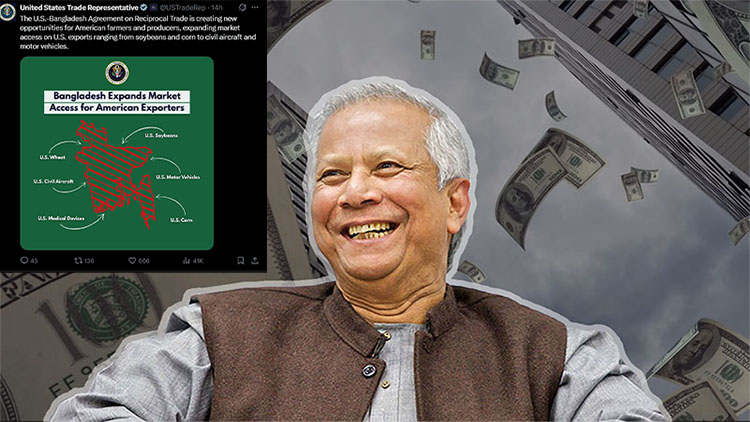
Under the US Reciprocal Trade Agreement , Bangladesh will have to import various products including cars , aircraft , LNG , agricultural products .
Staff Correspondent
Under the ‘Agreement on Reciprocal Trade’ (ART) agreement signed with the United States, Bangladesh will have to import a large amount of industrial and agricultural products from the United States. As a result of the agreement, the reciprocal US tariff on Bangladeshi exports has been reduced from 20% to 19% and some textile and clothing products (made using US cotton and synthetic fibers) will get zero duty benefits. But in return, Bangladesh has had to promise to import large amounts of various US products and provide preferential market access. The main import commitments and products of the agreement are as follows:
- Cars and Vehicles: Motor vehicles, motorcycles, vehicle components, and automobile parts—vehicle imports in accordance with US standards have been expanded, which will receive preferential access to the Bangladesh market.
- Civil aircraft: There are commitments to purchase aircraft (specifically, up to 25 Boeing aircraft have been mentioned), which are linked to textile facilities as part of the agreement.
- Energy products: LNG, oil and other energy products—import commitments totaling about $15 billion over 15 years, with an annual average of about $1 billion.
- Agricultural products: Wheat, soybeans, cotton, corn, soy products, dairy products, beef, poultry, tree nuts, fruits, etc.—commitment to import agricultural products worth approximately $3.5 billion.
- Other industrial products: Chemicals, medical devices, machinery, ICT equipment, pharmaceuticals (US approved), etc.—Promise to provide preferential market access to Bangladesh and reduce non-tariff barriers for these products.
In addition, the agreement also required Bangladesh to pledge not to impose new tariffs on e-commerce, comply with US intellectual property standards, and support US proposals for WTO reform.
After the signing of the agreement, Chief Adviser Dr. Muhammad Yunus said it was a “historic new dimension” in bilateral relations.
But some economists and analysts are criticizing it as “one-sided.” According to them, the promise of imports worth about $18.5 billion over 15 years in exchange for only a 1% tariff reduction and limited textile benefits could put long-term pressure on Bangladesh’s foreign exchange reserves, domestic agriculture and industrial sectors, and consumers.
As the agreement was signed just days before the national elections, it is being seen in political circles as a “parting gift” that could create new economic challenges for future governments.

https://stapravda.ru/20221228/reyting_samyh_populyarnyh_hostingov_v_rossii_196445.html, рейтинг хостингов России подтверждает, что выбор надежного провайдера важен для бизнеса.