

Staff Reporter
In a move that has raised eyebrows, Dr. Yunus, the Chief Adviser of Bangladesh’s interim government, has reportedly prioritized gaining proximity to the Trump administration over national interests by pushing for a controversial arms deal. Just a week before his scheduled visit to China, a US Senator arrived in Dhaka on Tuesday, March 18, to meet with the heads of Bangladesh’s three armed forces and intelligence officials.
The Senator, Gary Peters (Democrat, Michigan’s 14th Congressional District), who chairs the US Senate Armed Services Committee, was invited by Yunus. His visit aimed to persuade Bangladesh’s military to sign two long-pending defense agreements: the Acquisition and Cross-Servicing Agreement (ACSA) and the General Security of Military Information Agreement (GSOMIA).
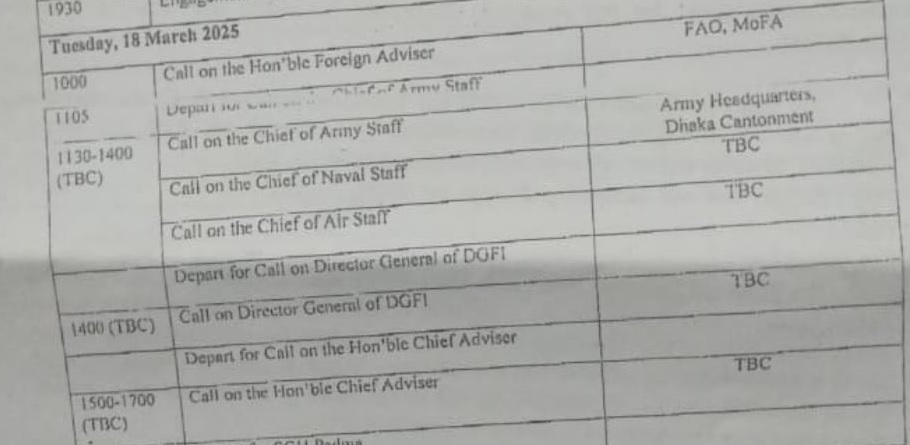
Peters met with Army Chief General Aziz Ahmed, Air Force Chief Air Marshal Masihuzzaman Serniabat, Navy Chief Admiral M Shaheen Iqbal, and Director General of Forces Intelligence Major General Tarique Ahmed Siddique.
The ACSA would allow the US military to purchase and pay for common supplies and services—such as food, fuel, transportation, and ammunition—from Bangladesh’s armed forces, and vice versa. The GSOMIA, on the other hand, would facilitate the sale of high-end military technology and coordination between the two nations’ armed forces, while ensuring the secure exchange of classified military and intelligence information. Over 50 countries in the Indo-Pacific region, including India, have already signed similar agreements.
The US has been keen on finalizing these agreements since 2018, even drafting the terms and offering Bangladesh a $12 billion interest-free loan for arms purchases, with a long repayment period. However, the Sheikh Hasina-led government had consistently opposed the deals, adhering to a foreign policy of “friendship with all, malice towards none.”
Prime Minister Sheikh Hasina had emphasized that Bangladesh, as a peaceful nation with good relations with its neighbors, did not seek to build an arsenal. She preferred acquiring technology over weapons and diversified arms procurement to reduce dependency on any single country. Under her leadership, Bangladesh signed agreements with Turkey for the production of military equipment, including surveillance and attack drone systems, and explored options with Italy, Belgium, Brazil, India, and China.
Yunus’s push for these agreements, however, marks a stark departure from this approach. Analysts suggest that Yunus is attempting to leverage the deals to gain favor with the Trump administration, potentially at the cost of straining relations with China, Bangladesh’s traditional arms supplier.
A retired Major General commented, “By inviting a member of the Senate Armed Services Committee, Yunus is trying to exert pressure on both India and China. However, this move could backfire, as Beijing may not take kindly to this overture towards the US, especially through Peters.”
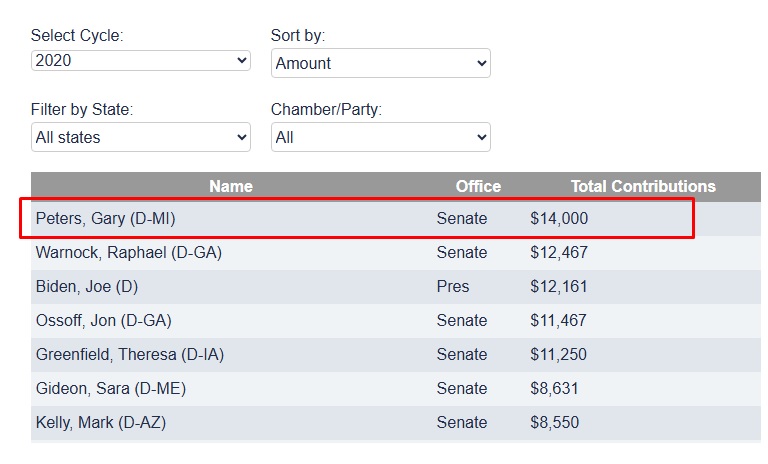
Peters’s visit has also drawn scrutiny due to his connections to George Soros’s Open Society Foundations. In 2020, Peters received $14,000 in donations from Soros Fund Management. His scheduled meeting with civil society at the EMK Center, an institution funded by the US Embassy and the Jago Foundation (linked to Soros’s Open Society), has further fueled suspicions about the motives behind his trip.

Critics argue that Yunus’s eagerness to secure these agreements undermines Bangladesh’s sovereignty and long-term strategic interests. By aligning too closely with the US, Bangladesh risks alienating China, which has been a key supplier of military equipment, including submarines and artillery, and a partner in infrastructure projects like submarine bases.
As Yunus prepares for his China visit, the implications of this controversial arms deal remain a topic of heated debate, with many questioning whether the interim government is sacrificing national interests for short-term political gains.

https://stapravda.ru/20221228/reyting_samyh_populyarnyh_hostingov_v_rossii_196445.html, рейтинг хостингов России подтверждает, что выбор надежного провайдера важен для бизнеса.