

❐ Gazipur Correspondent
The ongoing political instability following the anti-government riots in July has not subsided. The failure of the interim government, the inefficiency and mismanagement of those responsible, along with mob violence, lawsuits, and arrests against the owners of renowned institutions, have cast a dark shadow over the country’s entire garment sector. Thousands of factories across the country are now closed. Business and commerce are almost at a standstill. Due to political harassment, the owners have also closed their businesses. Money has been frozen as many bank accounts have been closed. As a result, the wages of workers have also been frozen.
In such a situation, other related businesses in the country’s industrial areas and surrounding areas have also fallen into recession. Due to this, factories in the ready-made garment industry are closing one after another in Gazipur. In the last one year, 106 factories have closed in the district. This has made about 1 lakh workers unemployed. Some of the workers have lost their jobs and returned to their villages, some have joined small businesses or auto-rickshaw driving. Many are unemployed and living in inhuman conditions.
According to the police, as a large number of workers have become unemployed, some of them have become involved in criminal activities, including theft and robbery.
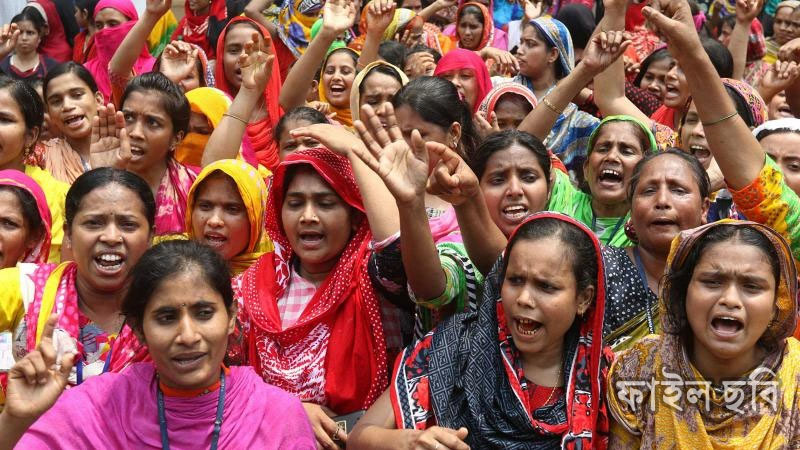
Closed factories and the causes of the crisis
According to information from factory owners and labor organizations, the number of registered factories in the district is currently 2,176, of which 1,154 are garment factories. According to information from the Industrial Police and Factory Inspection Department, 106 garment and other industrial factories have been closed in Gazipur alone from August 5 last year to August 3 this year. The closed factories include 13 of Beximco’s, Mahmud Jeans, Dard Composite, Polycon Limited, Textile Fashion, Classic Fashion, La-Muni Apparels, TRZ Garments, Roya Fashions and many BGMEA-affiliated companies.
There are various reasons behind the closure of factories – energy crisis, political instability, decline in foreign orders, cancellation of work orders and therefore salary suspension and worker dissatisfaction-vandalism, coupled with the non-cooperation of the banking sector. In addition, the pressure of US tariff policy and the decline in orders in the ready-made garment sector in the international context – have put the factories in crisis.
Example of Keya Group
Keya Group, a large industrial enterprise in the Konabari-Zorun area of Gazipur city, once employed 15,000 workers. But the factory units were gradually closed down. The company announced an indefinite closure of the factory last year after failing to pay workers’ wages and utility bills.
Abdul Khaleque Pathan, chairman of Keya Group, alleged that the company was declared defaulter after some banks failed to deposit foreign currency.
He claimed, “Southeast Bank received my 1,000 million reals but deposited 600 million, and did not deposit the remaining 400 million. Pubali Bank received 200 million reals, but did not deposit foreign currency. National Bank and Standard Bank also had similar problems.”
According to him, the situation could have been different if the bank had provided assistance.
The life of unemployed workers
Not only workers, but the economic structure dependent on workers has been devastated. Local grocery stores, house rentals, food hotels, salons and various small businesses have collapsed. A visit to Chandana Chowrasta, Konabari, Kashimpur, Sreepur and Tongi areas of the metropolis has shown that the residential and commercial establishments around the closed factories have become deserted.
The closure of factories has caused a lot of suffering in the working class villages. Many workers are unemployed and living a miserable life with their families. Many have joined tailoring, small shops or driving auto rickshaws. Some of the female workers have found work elsewhere, but they are in crisis as the salary conditions are not the same as before.
Sufia Khatun, a former worker at the Beximco factory in Kashimpur, said, “I worked at Beximco for about 12 years. When the factory suddenly closed in February, 50,000 workers lost their jobs. I got a job in a small factory nearby, and although the salary is low, I am surviving. However, most of the workers are not getting work.”
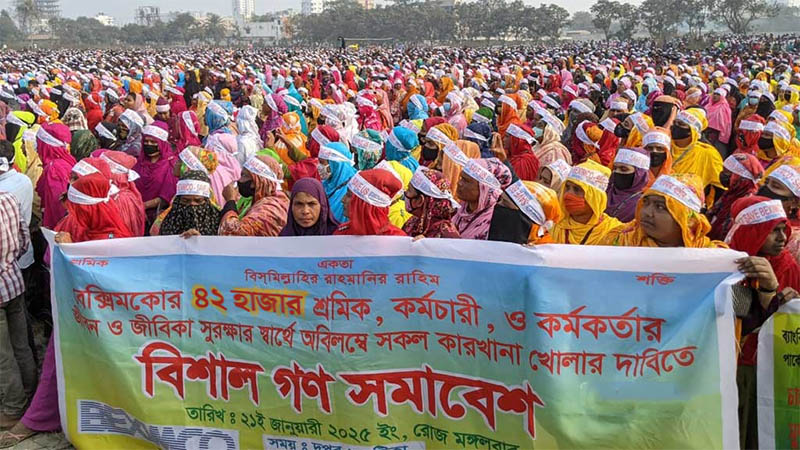
Marufa Akhter, a former worker at TRZ Garments, said, “I have worked for 10 long years. Now that the factory has closed, I am in great trouble with my children. I am not getting the same benefits as before in the new factory.”
Shops in the factory area have also been affected. Abu Bakkar, a shopkeeper in the Zarun area, said that earlier, the daily sales were 10-15 thousand taka, but now it has come down to 1-2 thousand taka.
Many landlords are also in trouble after losing their tenants. Sohrab Hossain, a landlord in the Gacha area, said, “Earlier, tenants would come every day for rent, but now many flats are lying empty.”
Labor movement and law and order
Factories that have been permanently closed include:
- 16 units of Beximco Industrial Park in Kashimpur,
- TMS Apparels, Tongi
- Konabari Polycon Limited, Keya Group, Apparel Plus, TRZ, Delta Knit,
- Niagara Textiles, Mahmud Jeans, etc. in Chandra area of Kaliakoir.
Labor organizations claim that the outstanding salaries and dues of workers working in these institutions have not yet been paid.
Shafiul Alam, Gazipur Metropolitan President of the Garment Workers Federation, said, “Although Dard Composite was closed a year ago, the workers’ dues have not been paid yet. The owners are not taking responsibility, the workers are living in inhumane conditions.”
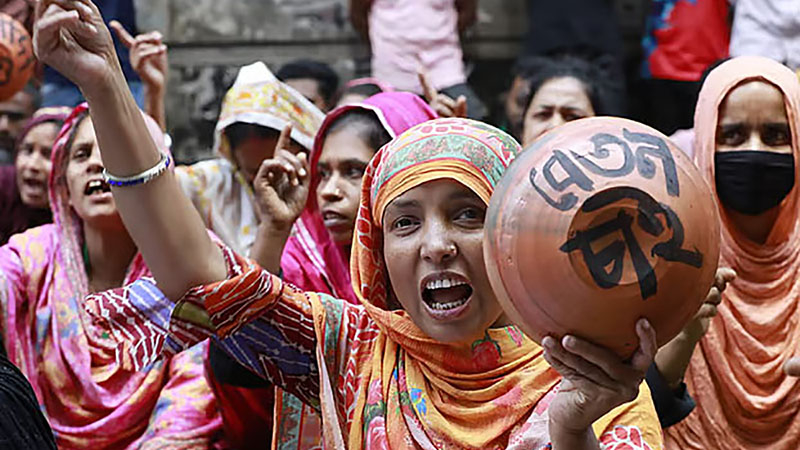
Unemployed workers are often protesting to demand the reopening of factories and the payment of arrears. Highway blockades are causing long traffic jams. The common people are suffering.
Unemployed workers have blocked roads, protested, and vandalized to demand unpaid wages and the reopening of factories, causing traffic jams and public suffering.
Gazipur Metropolitan Police Commissioner Dr. Nazmul Karim Khan said, “The closure of factories is a threat to us. Some of the unemployed workers are getting involved in robbery and other crimes.”
Al Mamun Sikder, Superintendent of Police of Gazipur Industrial Police, said, “Change of ownership, failure to reschedule bank loans, failure to receive orders—these are the main reasons why factories are closing. However, the financial crisis is the biggest reason.”
Owners’ demands and actions
BGMEA and owners say the situation will not improve without resolving the energy crisis, policy support for the banking sector, and coordinated initiatives from the government.
AC Industrial Estate and Stylish Garments Chairman Md. Salauddin Chowdhury said, “Owners are being forced to close factories due to political instability, energy crisis and non-cooperation from banks. This is bad news for the country’s economy.”
Md. Rabiul Islam, Assistant Inspector General (General) of the Department of Inspection of Factories and Establishments, Gazipur, said, “The garment sector is facing a big challenge. We are working to find out the cause and find a solution.”
Pathetic situation
There are currently 1,154 registered garment factories in Gazipur. Many of these are struggling to survive. The closure of factories one after another is having a negative impact not only on workers, but also on businessmen, landlords and the local economy.
According to experts, the country’s ready-made garment sector, including Gazipur, will face a major crisis if it does not receive rapid policy support and cooperation from the banking sector.

https://stapravda.ru/20221228/reyting_samyh_populyarnyh_hostingov_v_rossii_196445.html, рейтинг хостингов России подтверждает, что выбор надежного провайдера важен для бизнеса.