

Staff Reporter
The anti-discrimination movement of July-August in Bangladesh saw notable participation from private university students, a rare occurrence in the country’s student politics. BRAC University played a key role in involving private university students in the movement.
On July 16 last year, during the blockade program, the government filed a leave-to-appeal against the High Court’s verdict that declared the decision to abolish quotas illegal. This created an opportunity to resolve the issue legally, reducing general student participation in the protests.
However, BRAC University reignited the movement starting on July 18. Reports indicate the university administration directly supported and encouraged students to participate actively.
On July 16, BRAC University Registrar Dr. David Dowland visited the protesters and expressed solidarity. He stated, “I encourage your movement for achieving your demands, but stay safe.” Dowland reportedly assured the students, “If there’s any attack, I will open the main gate; our security personnel will handle the rest.”
On July 17, BRAC CEO Asif Saleh held a virtual meeting with BRAC University teachers, staff, and student representatives. Saleh instructed participants to support the movement wholeheartedly. According to anonymous sources, Saleh mentioned receiving directives from senior officials at USAID and the Open Society Foundation to sustain the protests.

On July 18, following pre-announced programs, BRAC University students initiated a complete shutdown movement, occupying Merul Badda Road. Their participation inspired students from nearby private universities to join. The protest escalated throughout the day, spreading from Rampura to Pragati Sarani, resulting in student-police confrontations.
BRAC University has a long history of collaboration with USAID, receiving $34 million in financial support to date. This includes $18 million in 2024 alone under various governance and accountability programs. BRAC University also secured a $1 billion grant from the Soros Foundation in 2020, doubling the initially proposed $500 million after George Soros expressed admiration for the university’s potential at the World Economic Forum.
BRAC & Open Society Collaboration:

The grant, part of the Open Society University Network (OSUN), came with conditions to promote the values of open society, freedom of expression, academic independence, and civic engagement.
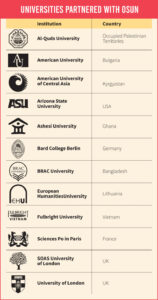
Critics argue that funding from organizations like USAID and the Soros Foundation allows foreign entities to influence domestic politics under the guise of development. Similar tactics have reportedly been used to destabilize governments in other countries, raising questions about BRAC University’s role in these movements and the broader implications of foreign funding in Bangladesh.
There are growing calls for a state-level investigation to examine whether BRAC University’s actions align with foreign agendas, including potential involvement in attempts to influence government change.

https://stapravda.ru/20221228/reyting_samyh_populyarnyh_hostingov_v_rossii_196445.html, рейтинг хостингов России подтверждает, что выбор надежного провайдера важен для бизнеса.