

Chittagong Bureau
Chittagong has been facing a severe shortage of the much-needed ‘radioiodine’ capsules used in the treatment of thyroid cancer for the past month. Due to the lack of government supply, cancer patients who have undergone surgery are living in extreme uncertainty about the next step of therapy. Patients and their families are becoming increasingly anxious as they do not receive their therapy on time.
These radioiodine capsules are mainly imported from South Africa and Poland. As there is no legal approval for the private marketing of this drug in Bangladesh, all patients in the country have to rely entirely on government allocation.
The supply and therapy of these capsules in the country is conducted through the ‘Institute of Nuclear Medicine and Allied Sciences’ (INMAS) under the Bangladesh Atomic Energy Commission.
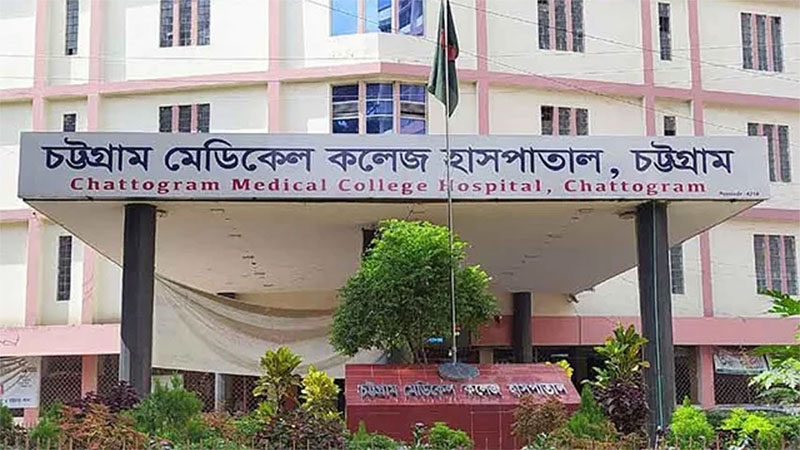
In the Chittagong region, this special treatment is provided in cabin number 12 of ward number 29 of Chittagong Medical College Hospital.
Professor Dr. Pavitra Kumar Bhattacharya, Director of Inmas Chittagong, said, “The capsule crisis has been going on for some time. We have sent the necessary requirements and the import process has also started. We hope that the supply will be normal soon.”
However, he could not give a specific timeframe for when the medicine would reach the patients.
According to institute sources, an average of 20 to 24 thyroid cancer patients undergo radioiodine therapy at the Chittagong center every month. The supply has been cut off for a month, causing many patients’ specific therapy schedules to be delayed.
However, this is not the first time that such a crisis has occurred in Chittagong. Earlier, in January last year, the supply of radioiodine capsules suddenly stopped, which took a long time until August to return to normal. With the return of a similar crisis, there is a fear that the continuity of treatment for patients will be disrupted.
According to doctors, after surgery for thyroid cancer, ‘radioiodine therapy’ is given according to the patient’s physical condition. It uses a radioactive isotope called ‘Iodine-131’ (I-131). It plays a very effective role in destroying the remaining thyroid tissue in the body and any dormant or spread cancer cells. If this therapy is not received at the right time after surgery, there is a risk of the cancer returning or spreading.
Although the concerned authorities have assured of prompt import of medicines, the anxiety of the waiting patients and their relatives is increasing day by day as there is no specific date for normal supply.

https://stapravda.ru/20221228/reyting_samyh_populyarnyh_hostingov_v_rossii_196445.html, рейтинг хостингов России подтверждает, что выбор надежного провайдера важен для бизнеса.