
❐ Special Correspondent
Bangladesh’s power sector has been hit hard by the onset of the intense heat wave. In the first week of April, the power deficit in the national grid exceeded 2,000 megawatts, which is likely to increase further in the coming days.
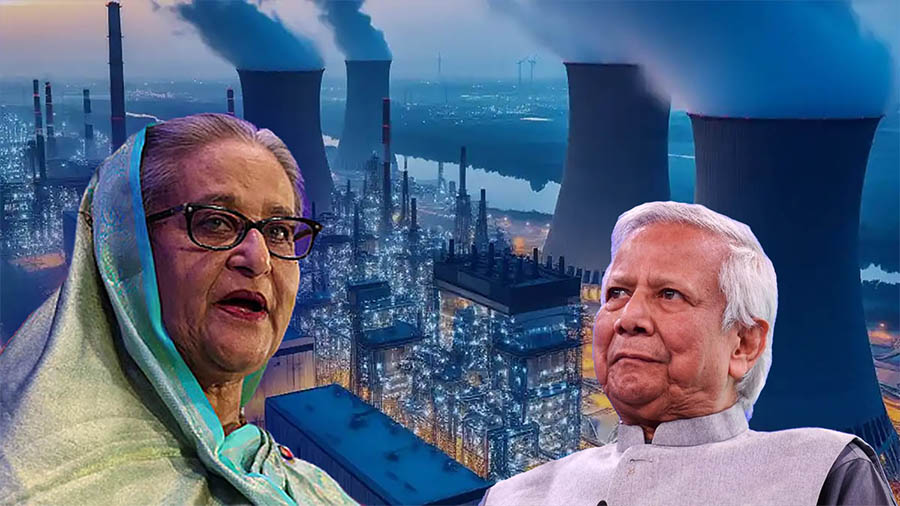
Experts say that the root of this crisis lies in the vindictive and immature decision of Yunus’ interim government to cancel several quick rental power projects, including 37 renewable energy solar power projects taken under the Awami League.
These 37 solar projects, approved during the Awami League government, were supposed to add about 1,500 megawatts of electricity to the national grid by 2027. In addition, the Yunus government also canceled power purchase agreements with high-priced quick rental plants. As a result, an important option to ensure electricity security for citizens has been lost amid the uncertainty of imported oil, gas and coal-based electricity.
Analysts believe that there was no long-term plan or vision behind this cancellation. They were cancelled out of revenge, claiming that they were projects from the Awami League era. And all the allocated money was spent on the luxurious running of the interim government without providing any alternative.
The Awami League government purchased electricity at high prices to ensure agricultural and industrial production and supplied it to the citizens with subsidies, while at the same time planning for low-cost renewable energy for the future. The beautiful framework that was built for 100% electrification is now facing destruction due to the immature decisions and inefficiency of the Yunus government.
Currently, due to the war in the Middle East, the import of oil, gas and coal has become uncertain. In this situation, solar power projects could have guaranteed electricity to citizens during the intense summer. But now the countrymen have lost that opportunity and are suffering from load shedding.
There has been a deficit of more than 2000 MW since the beginning of April, which may become more severe as the heat increases. At the same time, the demand from the industrial sector has decreased as thousands of mills and factories have closed down after August 2024. Yet the government is struggling with power management. The structure that used to supply electricity at subsidized prices to meet the needs of citizens as well as industry during the Awami League era has collapsed today.
Experts warn that the Yunus government’s vindictive decision has crippled Bangladesh’s most important driver of development—the energy sector. Instead of moving towards renewable energy, the country is once again stuck in the uncertainty of imported energy. As a result, it is feared that summer misery will reach its peak.
To overcome this crisis, experts demand that the government reconsider the canceled projects, pave the way for their speedy implementation, and adopt long-term plans. Otherwise, the country’s economy and civil life will fall into deeper darkness as a victim of vendetta politics.

https://stapravda.ru/20221228/reyting_samyh_populyarnyh_hostingov_v_rossii_196445.html, рейтинг хостингов России подтверждает, что выбор надежного провайдера важен для бизнеса.