
❐ International Desk
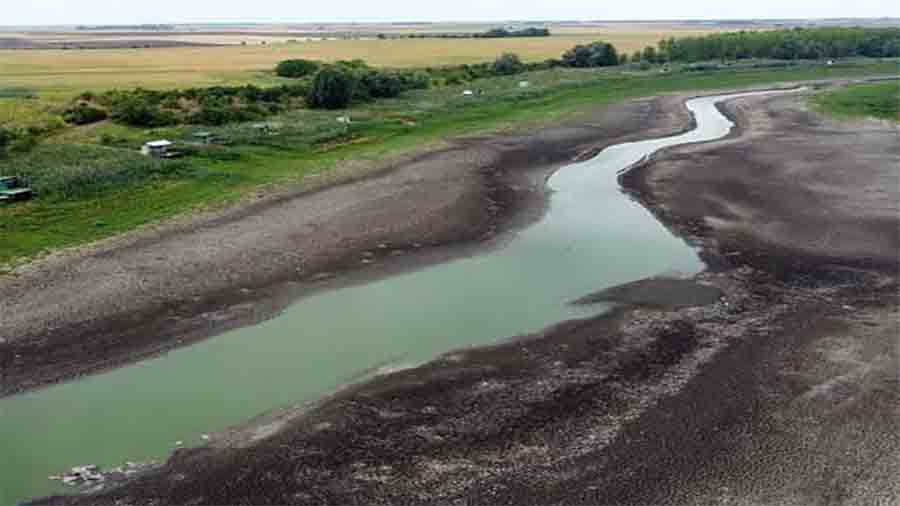
The continent’s rivers are drying up as a heatwave grips Europe this summer. Water levels in major waterways such as the Rhine, Danube and Po rivers have fallen to record lows. The Rhine in Cologne, Germany, fell to its lowest level since 1816 earlier this month. In the shallowest part of the river, the river at Kaub, the water level dropped to just 6cm two weeks ago, down from the previous record low of 25cm in 2018.
These rivers, although small in size, serve as very important arteries for inland navigation. They are also closely linked to sources of drinking water, power plant cooling, hydroelectric power generation and tourism. Experts say that this heat wave is of an exceptional level and the Rhine is now on the verge of a catastrophe, which will cost the European economy.
Rivers have traditionally been a reliable means of transporting liquid goods such as oil, petrol and chemicals, and dry goods such as iron ore, coal and grain. Disruptions to waterways in such situations are rare, but when they do occur, the consequences are dire, because there are no alternative systems in place, says Professor Romart Dekker, a logistics expert at Erasmus University in Rotterdam, the Netherlands.
This summer, the Rhine River was too low to carry Germany’s coal, chemicals and grain, forcing truck traffic to resume. Almost all but one German state temporarily relaxed Sunday truck traffic restrictions.
Professor Decker said that using trucks and rail as alternatives to shipping is much more expensive—about 200 trucks could be needed to replace a single barge—which is also reducing production as supplies of goods are disrupted.
The impact on the European economy is huge. According to estimates by Triodes Bank, the losses due to this summer could reach around 180 billion euros (about $295 billion), which is equivalent to about 1 percent of total GDP.
According to the bank’s report, France could be hit the hardest — its growth could fall by about 1.4 percentage points and the economy could enter a contraction. Italy and Spain would be the next worst hit, while the Netherlands could see its GDP growth hit by about 0.8 percentage points.
The freight transport sector is one of the main causes of this economic loss, said economist Ernst Hobma, co-author of the Triodes Bank report. Small waterways have already become unnavigable due to lack of water, which has disrupted the supply chain of many companies. Companies located along the river and directly sourcing raw materials from it are being hit the hardest, while companies further down the supply chain are also being affected.
River water is also essential for crop irrigation, so there is a risk of lower yields due to drought, which could increase food prices. Habma said that extreme heat and drought are certain to reduce yields, which could lead to lower yields in the future and possibly put pressure on GDP by increasing food inflation.
According to data from the European crop organization Coceral, the June heatwave alone destroyed about 9 million tons of grain, costing farmers about 2 billion euros in lost revenue, according to an estimate by the Energy and Climate Intelligence Unit.
The intense heat has also made it difficult to work, especially for those who work outdoors, such as construction workers. Habma said they are having to take more breaks and change their work hours, making it difficult to complete all the planned work.
The Triodes Bank report says that heat-related loss of productivity is the biggest cause of economic loss, although it is difficult to quantify. According to Hobmar, excessive heat in offices without climate control reduces people’s mental performance.
The impact of the heatwave is not limited to the economy. The low water level in the Danube River has led to strict restrictions at Hungary’s Paks nuclear power plant, which relies on the river’s water to keep its reactors cool.
In Romania, the navy used controlled explosions to remove rocks and direct water toward the country’s only operating nuclear reactor, but that plant was later shut down. In France, where about 70 percent of the country’s electricity comes from nuclear power, several reactors were shut down due to a massive jellyfish infestation caused by rising sea temperatures.
Habma said the shutdown of the power plant is further hurting economic activity by driving up electricity prices. He called the shutdown a “double blow” amid ongoing war in Eastern Europe, and said it was now urgent to build an energy system that is resilient to extreme climate conditions—measures like insulating homes could help reduce energy demand and maintain living standards.
Professor Decker said that the losses from nuclear power plants are reaching millions of euros per day, because gas and coal have to be used as alternatives, which are very expensive.
The global energy crisis caused by the Iran war and the virtual closure of the Strait of Hormuz has already put pressure on oil supplies, and Professor Decker said the heatwave in Europe would add to that, adding to the already high prices. The damage to tourism is also evident, with river cruises across the continent being cancelled or disrupted, he said.
This year’s widespread drought has also contributed to devastating wildfires in France and Spain, and warmer and drier weather is forecast until September, with the risk of heatwaves continuing, according to the European Commission.
According to the European Drought Observatory, almost half of the EU and UK are currently experiencing some degree of drought.
According to the World Health Organization (WHO), analyzing data for June alone, there were nearly 10,000 excess deaths related to the extreme heat this summer in five countries.
Richard Allan, a professor of climate science at the University of Reading in the UK, said recent extreme heat and drought in Europe suggests that continued warming will make heatwaves, droughts and wildfires more intense in the future.
He added that in addition, flooding caused by rising sea levels due to melting ice and warming ocean waters will also increase.
According to data from the European Union’s Copernicus Climate Change Service and the World Meteorological Organization (WMO), Europe is currently the fastest-warming continent in the world.
According to Professor Alan, only by adopting long-term sustainable policies and practices and rapidly changing lifestyles to reduce greenhouse gas emissions can we limit the increasing damage caused by global warming.

https://stapravda.ru/20221228/reyting_samyh_populyarnyh_hostingov_v_rossii_196445.html, рейтинг хостингов России подтверждает, что выбор надежного провайдера важен для бизнеса.