
Hafizur Rahman Rik
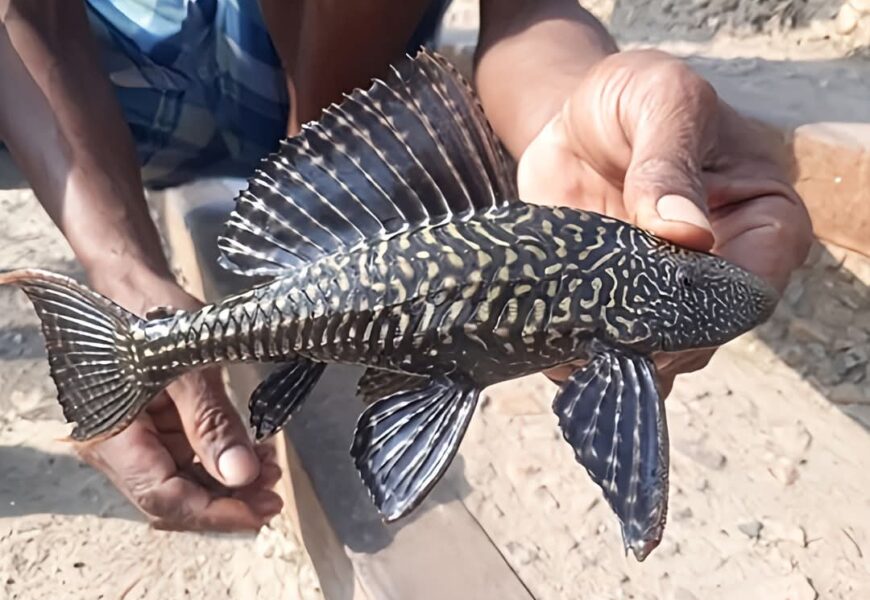
A silent revolution has taken place in the Buriganga River, away from public attention. For the past few years, the invasive suckerfish (sucker catfish) had dominated the river.
Already, due to polluted water, fish reproduction in the Buriganga was minimal. On top of that, these predatory fish consumed the fry and eggs of other fish species. Fishermen would cast their nets only to find them filled with suckerfish. Other fish species had nearly vanished.
The suckerfish infestation became particularly noticeable after the COVID-19 lockdown. These fish reproduce rapidly, and their population exploded, taking over the entire Buriganga. It is believed that this foreign species, likely discarded from aquariums, entered the river through drains and gradually took control.
Fazlu, a fisherman of the Buriganga, began catching suckerfish. Since these fish are not commonly consumed by humans, there was little demand for them. However, their supply was overwhelming. Fazlu received an offer from a link interested in buying these invasive fish in bulk, promising to purchase as much as he could supply.
This link turned out to be a fish farm. They bought the suckerfish from Fazlu at 20 taka per kilogram, ground them into feed, and used them as food for their catfish farm.
Later, an agro-farm joined in, purchasing the fish to use as feed for chickens and ducks. Some content creators picked up on this trend and started making content about Fazlu and his suckerfish-catching endeavors in the Buriganga.
Gradually, more fish hatcheries and agro-farms began buying suckerfish. At 20 taka per kilogram, the feed was cost-effective for them, and they eagerly embraced the offer.
Meanwhile, demand soared. The supply was abundant—casting a net would bring in loads of suckerfish. Fazlu teamed up with other fishermen and began catching these fish in large quantities. Daily sales reached 800 to 1,000 kilograms.
In just a few months, Fazlu and his team managed to rid the Buriganga of suckerfish. Now, casting a net no longer yields suckerfish. In one video, I saw fishermen catching stronger, more resilient fish like shing (catfish) and koi (climbing perch) in their nets. However, due to extreme water pollution, other sensitive fish species are still unable to reproduce.
Suckerfish were originally imported by aquarium enthusiasts to clean algae and waste. In many countries, they are released into lakes or water bodies to clean algae but are later removed to prevent them from disrupting the ecosystem.
The Buriganga cannot be cleaned of pollution by suckerfish alone. The river, the lifeline of Dhaka, carries the polluted water and waste of an entire city. While the suckerfish may have slightly benefited the river during their five-year reign, addressing such massive pollution requires awareness and systemic change. Moreover, the presence of suckerfish disrupts the ecosystem, leading to the extinction of other fish species.
For now, the departure of this uninvited guest has given the Buriganga’s ecosystem a chance to recover slightly, favoring other fish species. However, it is certain that the suckerfish will return. But it is equally certain that Fazlu will return as their nemesis.
The suckerfish’s five-year reign has left us grateful, and their departure has been surprisingly swift—something even environmentalists did not anticipate. The dominance of suckerfish had made headlines and worried environmentalists. But Fazlu, like the Pied Piper of Hamelin, came and took away all the suckerfish. This is truly astonishing.

https://stapravda.ru/20221228/reyting_samyh_populyarnyh_hostingov_v_rossii_196445.html, рейтинг хостингов России подтверждает, что выбор надежного провайдера важен для бизнеса.