
International Desk
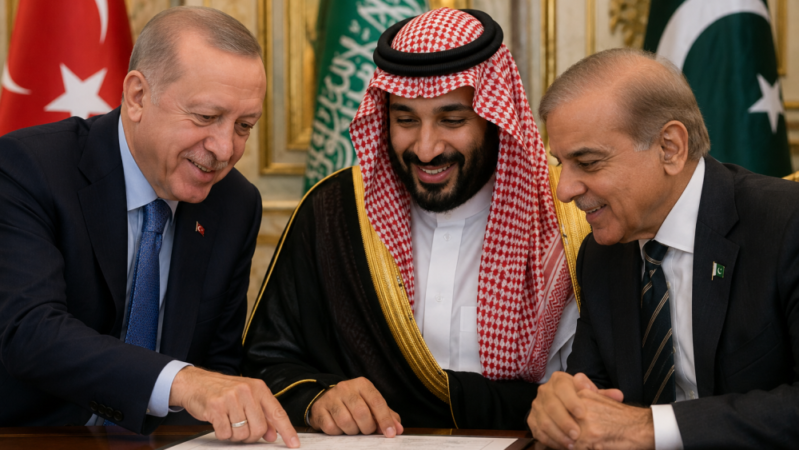
On August 7, 2026, Saudi Arabia signed a landmark defense agreement with Turkey and Pakistan in the holy city of Mecca, Saudi Arabia. The main content of the agreement, signed in the presence of Saudi Crown Prince Mohammed bin Salman, Turkish President Recep Tayyip Erdogan, and Pakistani Prime Minister Shehbaz Sharif, was that an armed attack on any of the three countries would be considered an attack on all three, much like NATO’s Article Five. Analysts at the time called it a major change in the security architecture of the Middle East.
But just two days after the agreement was signed, on August 9, that promise was put to the test. Yemen’s Iran-backed Houthi rebels launched a drone attack on an Aramco oil refinery in the southwestern Saudi city of Jizan, setting it on fire. Houthi spokesman Yahya Sari claimed it was in retaliation for Saudi airstrikes. Since then, there have been several Houthi attacks on Saudi territory since September—including one in the Najran province that injured civilians, including Saudi, Yemeni, Egyptian, and Pakistani nationals.
However, the joint defense clause of the Mecca Agreement did not seem to be implemented. According to a report in the Jerusalem Post, Turkey and Pakistan did not immediately make any statements, let alone any military response, after the attack. Later, in the context of the recent attacks,
Pakistani Prime Minister Shehbaz Sharif called the Houthi attack “cowardly”
He also said that such attacks pose a threat to the lives of innocent people and regional peace and security. But beyond this condemnation, there has been no specific military action or declaration of cooperation under the mutual defense agreement. The reaction from Turkey has so far been limited to diplomatic statements.
Turkish Foreign Minister Hakan Fidan, however, explained the structure of the agreement. According to him, if a member country is attacked, the other members will first consult with each other, then determine the type and level of assistance – this is also similar to the NATO system, he said. A permanent secretariat of the alliance has already been established in Riyadh, whose first secretary general will be from Pakistan.
But many analysts say the alliance’s practical effectiveness in the face of the Houthi attacks remains questionable. An analysis by the Council on Foreign Relations suggests that Saudi Arabia itself has not sought help from its new allies, perhaps because it does not view the Houthi threat as serious. A report by the Israel Institute for National Security Studies also notes that the three countries’ differing threat perspectives, leadership rivalries, and Turkey’s and Pakistan’s complex relations with Iran make it doubtful how close the alliance will become a military alliance.
The bottom line is that the Houthi attacks, which began just two days after the Mecca agreement, have become a real test for the coalition.
Where in the language of the contract
“An attack on one country is an attack on three countries”
The announcement has so far been met with mostly condemnation and sympathetic statements—no joint military response. The true test of the alliance is yet to come, many regional analysts say.

https://stapravda.ru/20221228/reyting_samyh_populyarnyh_hostingov_v_rossii_196445.html, рейтинг хостингов России подтверждает, что выбор надежного провайдера важен для бизнеса.