

Mekong News
Military contacts and relations between Bangladesh and Pakistan have increased significantly in recent times, signaling a significant and worrying shift in South Asian politics. Following the August 2024 coup attempt to overthrow Sheikh Hasina’s government, Bangladesh, under an interim leadership in Dhaka, has changed its foreign and defense policies and is gradually tilting towards Pakistan.
This change is already raising questions: Is Bangladesh losing its strategic independence? Many fear that Bangladesh could unwittingly become part of Islamabad’s larger geopolitical plans.
Recent high-level military visits, defense talks, and new partnerships signal a major shift away from the previous India-centric security policy. In addition, reports of multiple visits to the India-Bangladesh border by an associate of international terrorist Hafiz Saeed have raised new concerns about regional security.
Dhaka’s contacts with Pakistani military officials have increased significantly since the political unrest in Bangladesh. In late October 2025, Pakistan’s Joint Chiefs of Staff Committee Chairman General Sahir Shamshad Mirza visited Bangladesh. He met with Bangladesh Army Chief General Waqar-uz-Zaman. There, regular military visits, joint training, and exchange of experience in counter-terrorism were discussed.

Pakistan’s ISPR claimed that the talks were taking the relationship between the two countries forward in a “positive direction.” Later, another top Pakistani military official, Lieutenant General Tabassum Habib, visited Bangladesh and discussed military training and cooperation.
Notably, the Bangladesh Army Chief’s visit to India has been cancelled. This change is taking place despite the bitter history of the 1971 Liberation War between the two countries (Pakistan’s humiliating defeat).
This situation complicates Bangladesh’s security and international standing. Although Bangladesh wants to diversify diplomatic relations, excessive closeness with Pakistan could make Bangladesh a “pawn” in its regional strategy. Pakistan wants to restore its old influence in South Asia and portray itself as a “restrained power.”
The report said that increased military cooperation between Bangladesh and Pakistan could also increase the risk of extremism.

Bangladesh is already witnessing a rise in religious extremism amid political unrest. The report says that various Pakistan-based militant groups—such as Tehreek-e-Taliban Pakistan (TTP), Al-Qaeda in the Indian Subcontinent (AQIS), and Lashkar-e-Taiba (LeT)—are taking advantage of the situation to expand their influence and recruit young people in Bangladesh.
China’s role in this whole situation is also important. China is developing close military relations with Pakistan and Bangladesh. China is a major supplier of weapons to Pakistan. At the same time, China is also providing Bangladesh with weapons, technical assistance and military training. This is further complicating the strategic situation in South Asia.
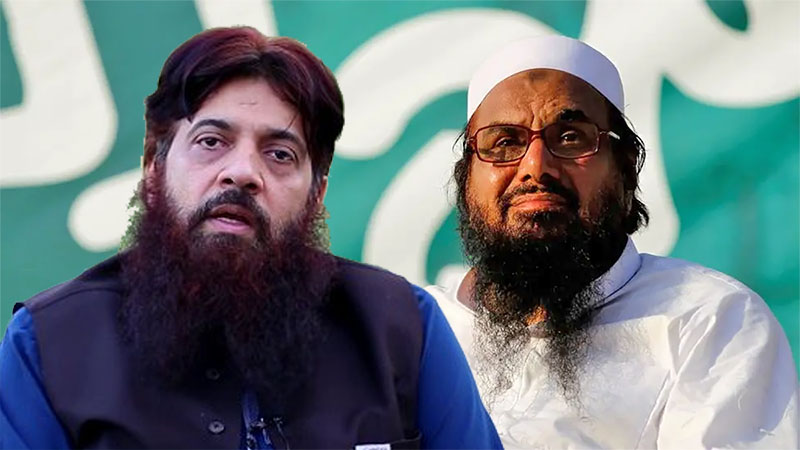
Zaheer, an associate of terrorist Hafiz Saeed
In contrast to Pakistan’s close military ties with Bangladesh, India’s border diplomacy remains cautious. This policy conflict poses a major challenge for Dhaka. Concerns are growing in New Delhi about this shift. India believes that Pakistan is seeking to weaken traditional India-Bangladesh relations by increasing its influence in Bangladesh.
Finally, the growth of Bangladesh-Pakistan military ties is not just a diplomatic shift; it could also alter the regional security balance. While Bangladesh may seek to develop an independent foreign policy in the post-Sheikh Hasina era, excessive closeness to Pakistan could make the country an unwitting part of their larger strategic plans. The news of a border visit by an associate of militant Hafiz Saeed has made this risk even clearer.
Reporter: Linn Maung

https://stapravda.ru/20221228/reyting_samyh_populyarnyh_hostingov_v_rossii_196445.html, рейтинг хостингов России подтверждает, что выбор надежного провайдера важен для бизнеса.