
International Desk
Bangladesh has reaffirmed its strong support for the “One China Policy,” declaring that the People’s Republic of China is the sole legitimate representative of all of China and that Taiwan is an inseparable part of China. Under the leadership of Chief Advisor Dr. Muhammad Yunus, Bangladesh has opposed Taiwan’s independence and expressed support for China’s efforts to uphold national sovereignty and territorial integrity.
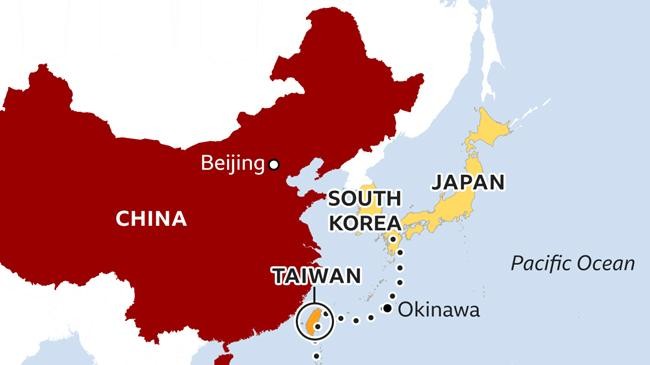
Earlier, Taiwan’s outgoing President Tsai Ing-wen, along with Japan, the United States, and other nations, issued a warning to China regarding the current situation in Taiwan. Taiwan’s president expressed hope that increased cooperation between Taiwan and its allies would compel China to restrain itself from adopting strict policies.
In May last year, Lai Ching-te was sworn in as Taiwan’s new president amid increasing military pressure from China. China, which claims Taiwan as part of its territory, has labeled the 64-year-old Lai as a “dangerous separatist.”
Before assuming office, Dr. Yunus had warned India in a statement, saying, “If instability is created in Bangladesh, the Seven Sisters will not remain intact.” Student coordinators affiliated with Dr. Yunus made controversial remarks about India’s territorial integrity, which strained Bangladesh-India relations. Delhi did not take these comments lightly.
Dr. Yunus’s support for China’s efforts to maintain territorial integrity by rejecting Taiwan’s independence could impact Bangladesh’s relations with its allies. Analysts have examined the potential effects on Bangladesh’s bilateral ties with Japan, South Korea, and the United States.
Japan does not have formal diplomatic ties with Taiwan but considers peace and stability in the Taiwan Strait crucial to its security. Japanese leaders have voiced support for Taiwan’s peaceful existence and warned against Chinese military aggression. Bangladesh’s rejection of Taiwan’s independence and full support for China may create tension in relations with Japan, which is a key development partner and investor in Bangladesh. This stance might lead Japan to reconsider its strategic support for Bangladesh, particularly in countering China’s influence in the Indo-Pacific region. Japan is expected to maintain economic ties, but strategic cooperation could cool.
South Korea does not have formal diplomatic relations with Taiwan but considers peace and stability in the Taiwan Strait essential for Indo-Pacific security. Bangladesh’s position could raise concerns in Seoul, which seeks to balance economic ties with China while maintaining security alliances with the United States and Japan. Bangladesh’s pro-China stance may prompt South Korea to approach its relations with Bangladesh cautiously. However, South Korea is likely to prioritize economic and trade relations. Bangladesh’s clear pro-China stance on the Taiwan issue may impact strategic cooperation with South Korea.
Donald Trump and then-Taiwanese President Tsai Ing-wen spoke by phone in 2016, marking the highest-level contact between the two countries since 1979. Beijing reacted with anger.
The Trump administration sent high-ranking officials to Taiwan, including then-Health Secretary Alex Azar, the most senior U.S. official to visit the island in four decades. The U.S. continued arms sales to Taiwan.
Until the end of 2023, Taiwan was the United States’ 10th largest export market, valued at $40 billion, and its eighth-largest import source, valued at $88 billion. Taiwan’s investment in the U.S. has been dominated by semiconductor giant TSMC, which launched a $65 billion plan to build three factories in Arizona. The U.S. government provided $6.6 billion in subsidies and up to $5 billion in low-interest federal loans for the project.
The U.S. does not maintain formal diplomatic relations with Taiwan, but the Taiwan Relations Act commits it to supporting Taiwan’s security and autonomy. Bangladesh’s rejection of Taiwan’s independence and strong support for China could raise concerns in Washington. The U.S. considers Bangladesh a crucial partner in its Indo-Pacific strategy and seeks to strengthen ties to counter China’s influence. This stance might prompt the U.S. to reevaluate its policy toward Bangladesh, particularly regarding military and strategic cooperation. The U.S. has already issued strong warnings to Bangladesh over minority rights issues and the rise of Islamic extremism. The Trump administration’s response to Bangladesh’s opposition to the U.S. Indo-Pacific strategy remains uncertain.
Bangladesh’s position strengthens its ties with China but could create tension with Japan, South Korea, and the United States. These countries coordinate strategies to counter China’s influence in the Indo-Pacific, and Bangladesh’s pro-China stance may conflict with their objectives. Given Bangladesh’s strategic location and economic potential, these nations may opt for a balanced approach rather than disengagement. Experts suggest that Bangladesh must maintain diplomatic caution and balance to strengthen ties with China while preserving relations with Western powers and regional allies.

https://stapravda.ru/20221228/reyting_samyh_populyarnyh_hostingov_v_rossii_196445.html, рейтинг хостингов России подтверждает, что выбор надежного провайдера важен для бизнеса.