
Staff Correspondent
The International Crimes Tribunal building no longer sees the same crowd as before. Lawyers from the prosecution or defense are not appearing in court for testimonies or arguments. Following the political changes of 2024, a prolonged silence seems to have descended over the system of war crimes trials.
What was once a symbol of justice for the crimes of 1971 has now prioritized cases of “genocide and crimes against humanity” from July-August 2024 during the anti-government protests, according to the perspective of the new government.
As a result of this shift, the trials for the crimes of 1971 have effectively come to a standstill. In the nine months since the new government assumed power in August 2024, no significant progress has been made in any cases related to the Liberation War.
Other than the hearing for the review of the death sentence of Jamaat leader ATM Azharul Islam in the Appellate Division, proceedings in all other cases have virtually come to a halt. The verdict in this case is set to be announced on May 27.
No Progress in Old Cases, Busy with New Cases
Since its establishment in 2010, the International Crimes Tribunal has registered 108 cases for crimes against humanity committed in 1971. Among these, verdicts have been delivered in 55 cases, while the future of the remaining 53 cases remains uncertain.
Some officials admit that disruption in proceedings is due to the failure to receive documents from the previous prosecution team. State counsel Gazi MH Tamim said, “The previous prosecution did not hand over the necessary documents to us. As a result, we are only seeking time from the court at the moment.”
Many prosecutors appointed during the Awami League regime resigned in August 2024. Subsequently, the investigative agency was also restructured, with new individuals appointed to fill the vacancies. However, the progress of ongoing cases in the tribunal depends on old documents, witness testimonies, and evidence—areas where the lack of proper handover is evident.
The new cases gaining importance in the tribunal primarily concern alleged “genocide and crimes against humanity” during the government-toppling movement. Chief Prosecutor Tazul Islam reported that 339 complaints related to this period have been submitted to the investigation agency, of which 22 cases have charged 141 individuals.
This list includes ousted Prime Minister Sheikh Hasina, eight former ministers of her government, and other law enforcement and government officials. Fifty-four individuals have already been arrested, while the remaining 87 are fugitives. Interpol has also been requested to issue Red Notices against Sheikh Hasina and 10 others.
According to the prosecution, the investigation involves incidents not only of shootings but also of burning bodies, shooting from rooftops, and killings during mass blockades. Testimonies and digital evidence have been collected for many cases.
Prosecutor Controversy and Questions About the Justice Process
The appointment of Mohammad Tazul Islam, who was previously known as a lawyer for Jamaat leaders, as the tribunal’s Chief Prosecutor has sparked controversy. His appointment on September 8, 2024, became even more contentious when it was revealed that he represented the state in the hearing of ATM Azharul Islam’s case.
In a U.S.-based talk show, questions were raised about this appointment. The host asked why someone who had previously represented Jamaat leaders was made Chief Prosecutor of the tribunal. Legal advisor Asif Nazrul responded, “He is not a judge, but a skilled lawyer. Previously, those who fought against Jamaat were aligned with Awami League. No one questioned that then.”
When asked if no capable lawyer from BNP could have been appointed as state counsel, Asif Nazrul replied, “If BNP has any capable lawyer, let me know, and I will personally arrange for their appointment.” This response implies that apart from Jamaat’s lawyers, no capable lawyer exists, not even from BNP.
Meanwhile, the lack of progress in cases related to 1971 has frustrated senior Supreme Court lawyer Md. Omar Faruq. He remarked, “The stagnation in old cases is disheartening. While the new cases have gained momentum, leniency in delivering justice for the Liberation War is not acceptable.”
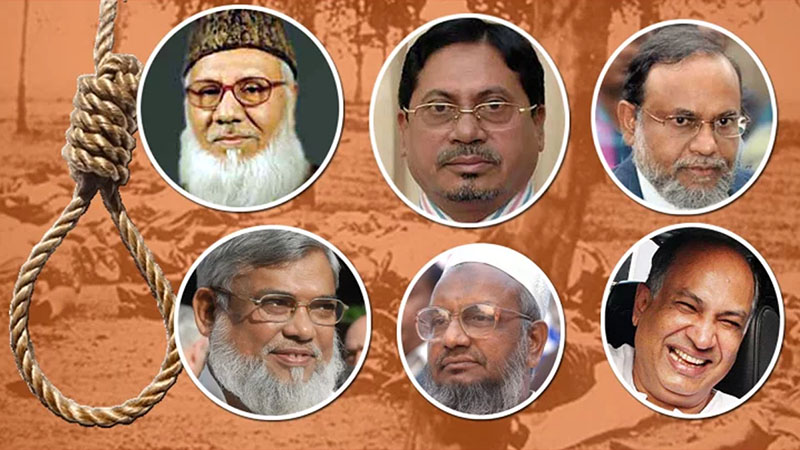
So far, of the 188 individuals convicted by the tribunal for crimes against humanity in 1971, 155 have been sentenced, including 106 to death. Six executions have been carried out, five of whom were Jamaat leaders, and one was BNP leader Salauddin Quader Chowdhury.
Authorities remain silent on the status of the remaining 53 cases—whether they are under investigation, at the charge-framing stage, or in hearings. Some claim that such information is “confidential.”

https://stapravda.ru/20221228/reyting_samyh_populyarnyh_hostingov_v_rossii_196445.html, рейтинг хостингов России подтверждает, что выбор надежного провайдера важен для бизнеса.