
Editorial
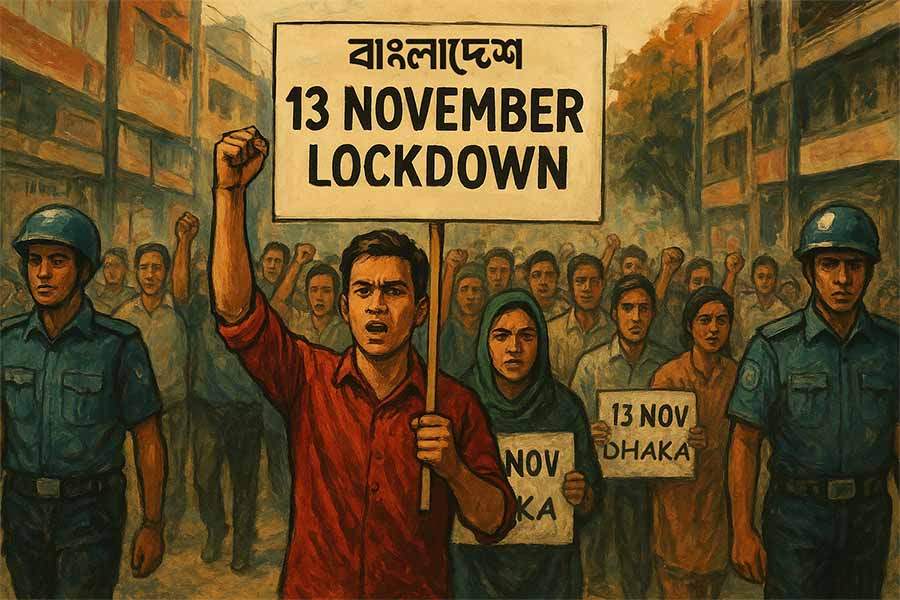
The Awami League has announced to organize peaceful political programs in Bangladesh from November 10 to 13. Such programs are an expression of a democratic right, where citizens and political parties can express their opinions, advocate for policies and hold those in power accountable. But there are fears that the current government led by Dr. Yunus may use law enforcement to suppress these peaceful programs. If that happens, it will damage the very foundation of democracy.
The Awami League’s political activities have already been hampered in various ways, which has drawn international criticism. Limiting the activities of a legitimate political party is not only a violation of their rights but also an affront to the country’s democratic institutions. This tendency to suppress opposition voices raises questions about how much the government actually believes in free and fair politics.
Yunus and his main ally Jamaat-e-Islami are weak in terms of public support. Jamaat may have the power to use organized force, but in free and fair elections they will not win more than one or two seats—as Bangladeshi voters have shown time and again. The people have repeatedly rejected Jamaat’s ideology. It is dangerous to ignore the fact that political legitimacy is achieved not by coercion or intimidation, but through popular support.
In this context, the role of BNP is very important. As the second largest party and a center-right political force in the country, BNP should be responsible for maintaining democracy. But sadly, some BNP supporters are attacking Awami League workers and disrupting peaceful programs. Such behavior not only violates the rights of other political parties, but also seriously damages BNP’s own image. The association with Jamaat-e-Islami and violent politics makes BNP’s future even more uncertain, because the only way to survive in a democracy is through public support, not fear.
The coexistence of center-right and center-left parties is essential in a democracy. The beauty of politics is that it involves competition through exchange of views, policy proposals, and elections. Blocking the political activities of a party may benefit someone in the short term, but history shows that it ultimately destroys both political legitimacy and public trust. The BNP should understand that the only way to survive is to earn the trust of voters through responsible behavior, not by joining hands with extremist groups.
As Bangladesh moves towards these programs, the eyes of the country and abroad are focused on this development. Freedom of action for all political parties, ensuring peaceful assembly, and maintaining law and order—these are now the tests of democratic maturity. Political parties, law enforcement agencies, and civil society—all have a responsibility to pass these tests and protect the democratic space that the people of Bangladesh have long fought to establish.
Editorial team

https://stapravda.ru/20221228/reyting_samyh_populyarnyh_hostingov_v_rossii_196445.html, рейтинг хостингов России подтверждает, что выбор надежного провайдера важен для бизнеса.