
International Desk
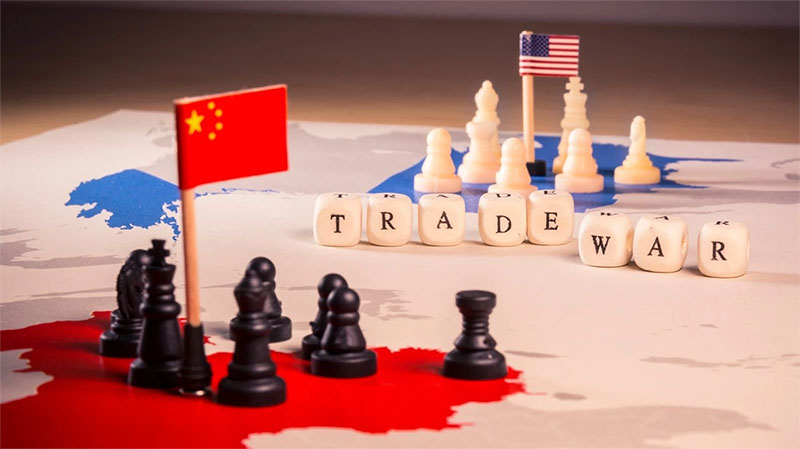
China reported a trade surplus that topped a trillion dollars for the first time in history in 2025, thanks to strong export growth. The achievement comes despite tariffs imposed after former US President Donald Trump returned to power, which could exacerbate questions about China’s trade behavior, excess production capacity (overcapacity) and overreliance on Chinese goods in the global economy.
China’s customs department said in data released on Wednesday that the country’s trade surplus stood at $1.189 trillion for the full year of 2025. This is equal to the gross domestic product (GDP) of one of the world’s top 20 economies, like Saudi Arabia. China’s trade surplus exceeded $1 trillion for the first time last November.
Donald Trump imposed new, steep tariffs on Chinese goods after taking office as US president in January last year. The aim was to reduce the flow of Chinese goods into the US market and encourage US companies to find alternative markets and suppliers. But despite these measures, China has managed to maintain a relatively stable position.
According to analysts, Chinese companies have adopted a strategy to increase exports to Southeast Asia, Africa and Latin America to cope with the US tariff pressure. As a result, while exports to the US have decreased slightly, China’s overall export growth in the global market has not been significantly affected.
“The overall growth momentum of world trade is still not strong enough, and the external environment for China’s foreign trade development remains complex and difficult,” Wang Jun, vice minister of the Chinese Customs Administration, said at a press conference on Wednesday. However, he added, “China’s ability to cope with risks has been significantly strengthened by diversifying trading partners. The fundamental foundation of China’s foreign trade is still solid.”
China’s exports rose 6.6 percent in value terms in December from a year earlier, compared with 5.9 percent in November. Economists polled by Reuters had forecast growth of just 3 percent for December. Imports rose 5.7 percent in the same period, up from 1.9 percent in November and higher than the forecast (0.9 percent).
The positive data kept China’s currency, the yuan, relatively stable. At the same time, investors were optimistic about the stock market. The Shanghai Composite Index and the blue-chip CSI 300 Index both rose more than 1 percent in morning trading.
China’s monthly export surplus exceeded $100 billion seven times in 2025, compared to just once in 2024. The weak yuan has also partly supported this trend. The data suggests that while exports to the United States have been somewhat limited by Trump’s tariff policies, China’s trade with the rest of the world remains largely intact.
Economists expect China to continue to grow its share of the global market this year. A major reason for this is that Chinese companies are setting up production facilities abroad, which allows them to enter the US and European Union markets at relatively low tariffs. In addition, strong demand for low-quality chips and other electronic products is also helping exports.
China’s auto industry has also seen significant growth in exports. Total car exports grew by 19.4 percent in 2025 to 5.79 million units. Of this, exports of fully electric vehicles (EVs) increased by 48.8 percent. China is expected to retain its position as the world’s top car exporter for the third consecutive year, after surpassing Japan in 2023.
However, Beijing is increasingly realizing that to maintain long-term success, it must bring its exports of manufactured goods under some control. In recent years, the country’s leadership has become more aware and vocal about the negative image that China’s economic imbalances and large export volumes are creating in the international arena.
After the release of a trillion-dollar trade surplus in November, Chinese Premier Li Keqiang called for “actively expanding imports and balanced development of imports and exports” in a speech on state television.
China has also scrapped export tax breaks or subsidy-like benefits for solar energy, a major source of friction with the European Union. In December, lawmakers passed the revised foreign trade law in two readings instead of the usual three, a significant sign that China is ready to move towards a more open and free trade environment by reducing its reliance on industrial subsidies.
Although Trump and Chinese President Xi Jinping reached an agreement in late October to suspend the tariff war for a year, the average U.S. tariff on Chinese goods currently stands at 47.5 percent. Analysts say that rate is well above the 35 percent threshold, making it difficult for Chinese companies to export profitably to the United States.

https://stapravda.ru/20221228/reyting_samyh_populyarnyh_hostingov_v_rossii_196445.html, рейтинг хостингов России подтверждает, что выбор надежного провайдера важен для бизнеса.