
Editorial
The right to assemble, voice dissent, and engage in politics is a fundamental human right, not a privilege granted by the government. However, in Bangladesh today, these rights are increasingly being undermined. The widely perceived unauthorized interim regime, led by Nobel Laureate Dr Muhammad Yunus, is actively attacking these democratic principles, turning this issue from a political dispute into a serious challenge to democratic values.
The initial steps of the interim regime establish a concerning precedent: quickly suspending the Bangladesh Awami League’s registration and effectively banning its political activities, citing the nation’s Anti-Terrorism Act.
Amnesty International expressed strong regret over the interim Bangladeshi government’s decision to ban the activities of the Bangladesh Awami League. This move raises doubts about the government’s role in safeguarding the rights to freedom of association and expression, as outlined in international human rights law. Amnesty International also worries that the broad ban and the removal of the party’s registration with the Election Commission do not comply with the rigorous standards established by international law to ensure protections for these freedoms.
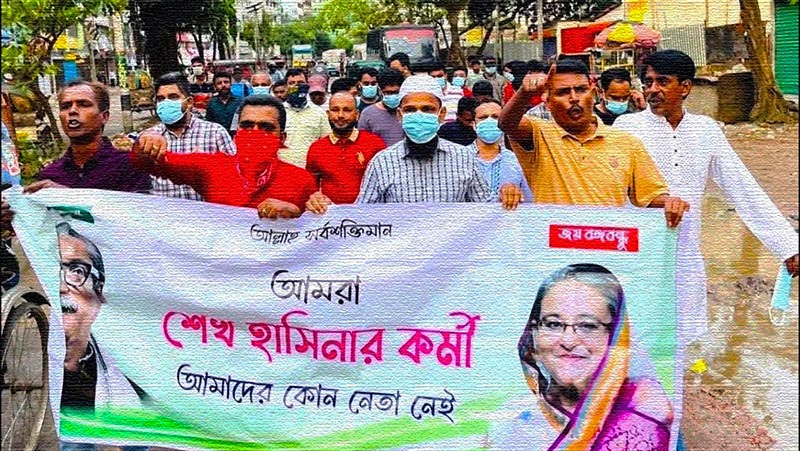
In practice, this ban has created a chilling effect, criminalizing ordinary democratic participation. Citizens attending peaceful protests or supporting the Bangladesh Awami League face dangers such as arrest, harassment, and detention. Reports show that security forces aligned with the Yunus regime conduct daily raids, detaining activists, students, and ordinary citizens whose only “crime” is exercising their constitutional right to dissent. Despite the ban and crackdown, Bangladesh Awami League supporters still organize occasional demonstrations in Dhaka and other regions, often being arrested afterwards. Reports also indicate that several thousand Bangladesh Awami League supporters and ordinary citizens have been detained.
Bangladesh is a signatory to the Universal Declaration of Human Rights (UDHR) and is bound by the International Covenant on Civil and Political Rights (ICCPR). Both documents affirm essential rights to peaceful assembly and association (UDHR Article 20; ICCPR Articles 21 and 22). These rights are fundamental; they underpin human dignity and the ability to self-determine. The Yunus regime’s restrictions on assembly, protest, dissent, and the ban on the Bangladesh Awami League breach UDHR principles and international law. To preserve democracy, Bangladesh needs to re-establish political freedoms, ensure due process, and secure citizens’ right to peaceful participation.
The interim government asserts that its ban on the Bangladesh Awami League is lawful. However, a clear difference exists between the rule of law and rule by law. The rule of law upholds laws that safeguard universal rights and are enforced equally and impartially. Conversely, rule by law involves manipulating laws as tools to suppress political rivals. The Yunus regime employs this tactic to disable Bangladesh by infringing on human rights and betraying Bangladesh’s core values.
The interim government prohibited all Bangladesh Awami League activities, both online and offline, using the Anti-Terrorism Act. This law has been misused to suppress the country’s largest political party and broadly criminalize its supporters. It’s not about enforcing the law; it’s about manipulating it.
A democracy cannot survive without dissent. When citizens are unable to assemble, participate in a procession or rally, opposition parties are banned, and individuals are imprisoned for their political beliefs, democracy collapses. Bangladesh’s future depends on more than just suppressing one political party to favour another or silencing criticism of the Yunus regime. A truly stable and pluralistic society needs tolerance for opposition, not its suppression.
The path ahead requires restoring the rights to assemble and dissent, along with the right to join rallies and processions. All individuals detained for participating in these activities should be freed, and fair treatment must be ensured. Conditions should also be established for free and inclusive elections. The international community such as the United Nations, the Commonwealth, and regional partners must exert strong pressure on the interim government to fulfil its legal commitments.
Ultimately, Bangladesh’s citizens must be empowered to exercise their rights to speak, gather, and participate in shaping the country’s future. The right to dissent is the core of democracy. Silencing it destroys the very essence of freedom.

https://stapravda.ru/20221228/reyting_samyh_populyarnyh_hostingov_v_rossii_196445.html, рейтинг хостингов России подтверждает, что выбор надежного провайдера важен для бизнеса.