

Staff Correspondent. Dhaka, August 21, 2025, Thursday:
On the afternoon of August 21, Dhaka Metropolitan Awami League organized a rally in front of the Awami League party office on Bangabandhu Avenue in Dhaka to protest the 2004 terrorist bombings across the country and police torture in Gopalganj.
Since the BNP took power in 2001, post-election violence and torture, oppression, torture and rape of minorities have continued. Later, the leaders of the extremist organization Jagrata Muslim Janata Bangladesh, Banglabhai Siddiqur Rahman and Shaikh Abdur Rahman, emerged, who established a reign of terror across the country, including the killing of judges and militancy.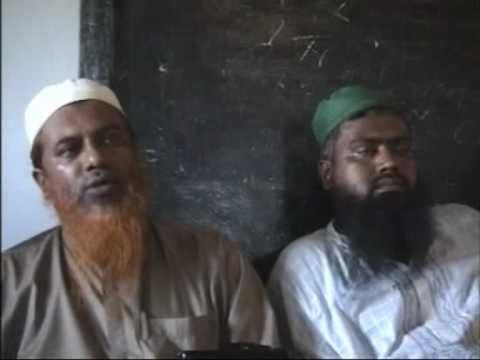
In protest, the then opposition party Awami League called for a rally on August 21. When the chief guest of the rally, Sheikh Hasina, arrived at the venue at 5 pm, she announced the start of a protest procession after a twenty-minute speech on a stage built on a truck. Bangabandhu’s daughter started coming down from the stage. At that moment, a grenade attack targeting the stage began. In just one and a half minutes, 11 powerful grenades exploded. Twelve people were killed on the spot and 12 more were later killed in the hospital. Sheikh Hasina herself was injured, and while trying to protect her, Sheikh Hasina’s personal security guard Mahbub fell to her death from bullets and grenade splinters. Senior leaders including Amu, Hanif, who had prepared human armor to protect Sheikh Hasina, were injured. While trying to safely take Sheikh Hasina to her car, Mahbub, the trusted bodyguard, fell victim to the assailant’s bullets and fell there. Ivy Rahman, wife of former president Zillur Rahman and mother of BCB chief Nazmul Hossain Papon, along with 24 activists were killed. More than a hundred were injured. Many were permanently paralyzed, many lost their ability to function and the certainty of returning to normal life.
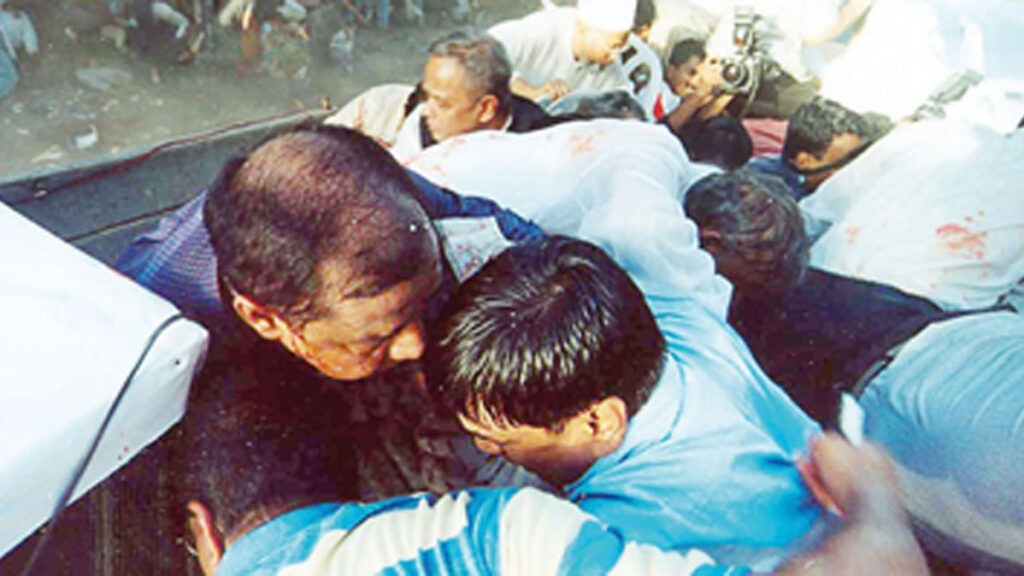
Events following the grenade attack and the lack of cooperation from law enforcement:
But the events following the grenade attack on August 21 were even more tragic. No police or security agency came forward to help the injured and the dead, instead the office area was lathi-charged and evacuated within an hour. Awami League workers themselves rushed the injured and the dead to various hospitals in rickshaws and scooters. But on the orders of the government and security agencies, the injured did not receive immediate treatment anywhere. Due to lack of treatment, they died on the hospital verandah due to excessive bleeding, the injured writhed in pain for hours, no one came forward, not a doctor, not a nurse. No police station took up the case.
BNP-Jamaat’s political filth after the incident:
The subsequent political filth was even more horrific. On September 15 of the same year, in the National Parliament, the MPs of the BNP-coalition government gave a speech blaming the Awami League itself for the grenade attack on August 21. They said that after failing to come to power through the people’s vote, the Awami League now wants to come to power by gaining the sympathy of the people through anarchy and that for that purpose the Awami League launched grenade attacks on its own leaders and activists, because no major leader was harmed in this.
The BNP-Jamaat coalition government tried to convince the entire country that the grenade attack was planned by India’s intelligence agency RAW and that Sheikh Hasina herself had taken the grenade in a vanity bag. The four-party BNP-Jamaat coalition government and the intelligence agencies also spread all that false information in newspapers supporting the BNP-Jamaat government. Intellectuals supporting the BNP-Jamaat coalition government helped spread that lie by speaking in the same tone at meetings and seminars and writing columns in newspapers. The strange thing is that the then Pakistani ambassador also spoke in the same tone, “This is the work of the Awami League. They will benefit from this incident, they will get sympathy.”
Obstruction of investigation, attempts to divert attention and scapegoats:
1. Shaibal Saha Partha: The then BNP-Jamaat coalition government was the first to frame an innocent Hindu boy named Shaibal Saha Partha in the August 21, 2004 grenade attack case. In order to take the investigation of the grenade attack incident to a different sector, members of a special intelligence agency staged a drama of sending an e-mail to a daily threatening to kill Sheikh Hasina from a hardnet cyber cafe on Elephant Road in Dhaka, and on August 25, members of a special intelligence agency called Shaibal Saha Partha from his sister’s house to the cyber cafe and arrested him. After being held in an unknown place for 4 days and tortured, the CID inspector sent him to court on August 29 and took him to Malibagh CID office on remand for 14 days and subjected him to brutal torture to extract a confession.
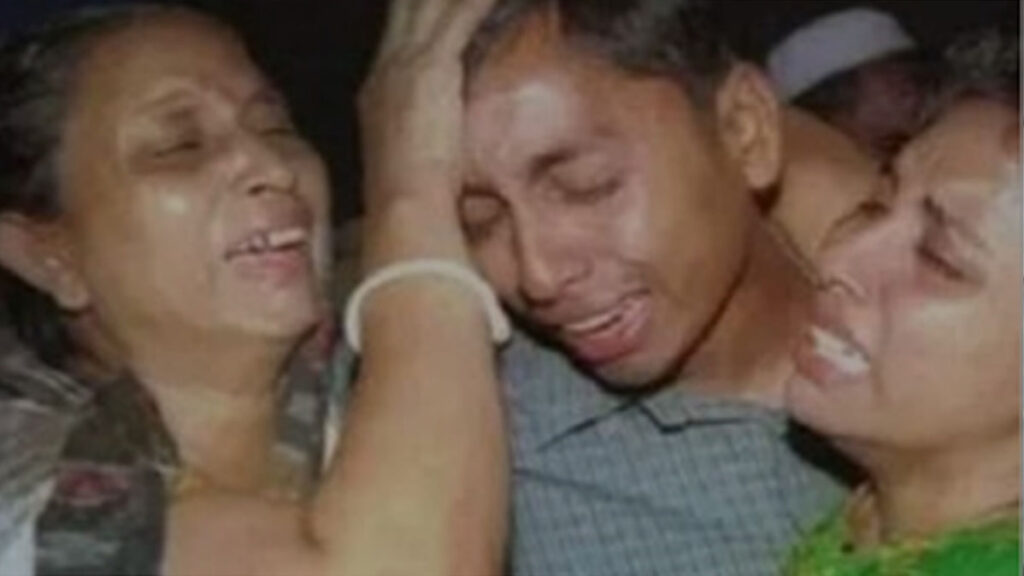
He was blindfolded with black cloth for 24 hours and given electric shocks and beaten with sticks. During his 18-day long detention in the custody of the law enforcement agencies, he was subjected to various tortures and pressure to extract a fabricated confession. Parthar’s mother offered prayers in the temple with her own blood for her son’s release. Since Parthar had studied in India, the BNP-Jamaat alliance government also tried to prove him as an Indian spy. After serving a long 7-month prison term, he was released from prison on March 23, 2005, on the orders of the High Court.
2. Judge Mia: The BNP-Jamaat-backed law enforcement agencies tried to obtain a statement for the grenade attack by framing Ramna Awami League President Mokhlesur Rahman as the mastermind and making him the main attacker. Faced with pressure from the world community to investigate and prosecute the August 21 grenade attack, Judge Mia was arrested on January 9, 2005 from Senbagh in Noakhali and shown as the culprit in the grenade attack case. Later, Judge Mia was forced to give a confessional statement in court under Section 164 by offering him the responsibility of taking care of his poor family for life and by threatening his two brothers Rana and Shafiqul Islam with crossfire. If he did not comply with the CID’s orders, Judge Mia was threatened with hanging. If he did not agree to this, he was blindfolded and taken on a weapons recovery operation and preparations were made to kill him in crossfire.
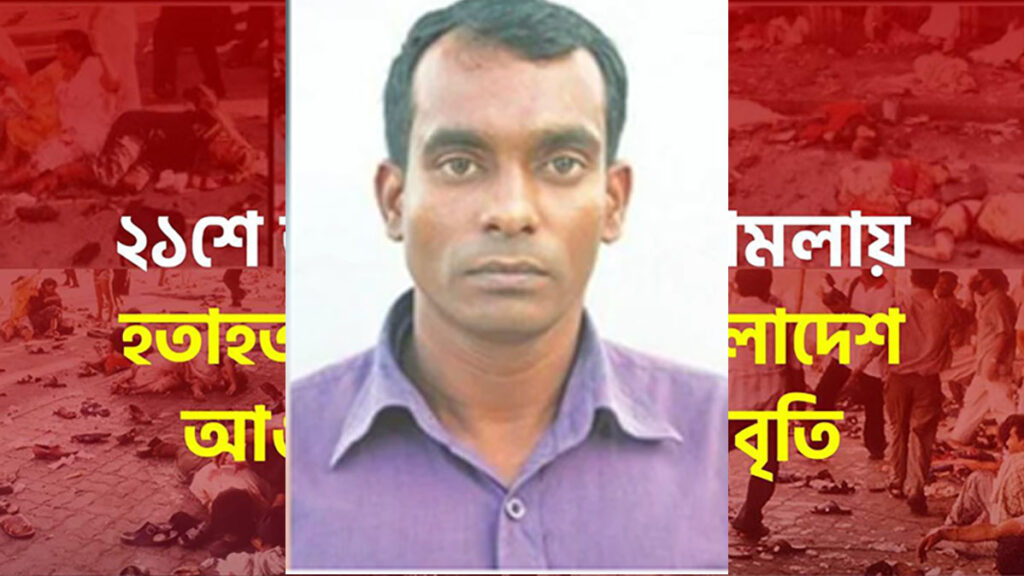 Judge Mia was terrified in such a situation. Finally, Judge Mia agreed to the CID’s proposal. The then CID officers, ASP Munshi Atiqur Rahman, ASP Abdur Rashid and SP Ruhul Amin, promised to provide lifelong support to his family. It is known that these three CID officers had framed Judge Mia. When the caretaker government came to power in 2007 due to political changes, the investigation into the case started anew. Judge Mia was proven innocent. He was released from prison on July 27, 2009. Then he gave a statement as a witness in the case. In it, the names of those three CID officers came up for staging the ‘Judge Mia drama’.
Attempts to destroy evidence and divert the investigation:
On the advice of the then high-ranking officials of the then coalition government, the Home Ministry, the National Security Intelligence Agency, the CID and the police tried to divert the investigation of the August 21 grenade attack in various ways. They tried to save the real criminals by trying to pin the responsibility of the attack on the professional killer gang, the Awami League leadership and India. They filed charge sheets in the names of 13 people to prove India’s involvement. Bangabandhu Avenue was deliberately cleaned up and evidence of the case was destroyed. FBI and Interpol experts brought in as a show-off were misled with false information. Former Prime Minister of the coalition government, Begum Khaleda Zia, directly prohibited the Directorate General of Defense Intelligence from conducting any investigation into the August 21 grenade attack at that time. And ordered her own trusted officers to conduct an investigation, the report of which has not been published anywhere to this day.
The main attacker was Mufti Hannan:
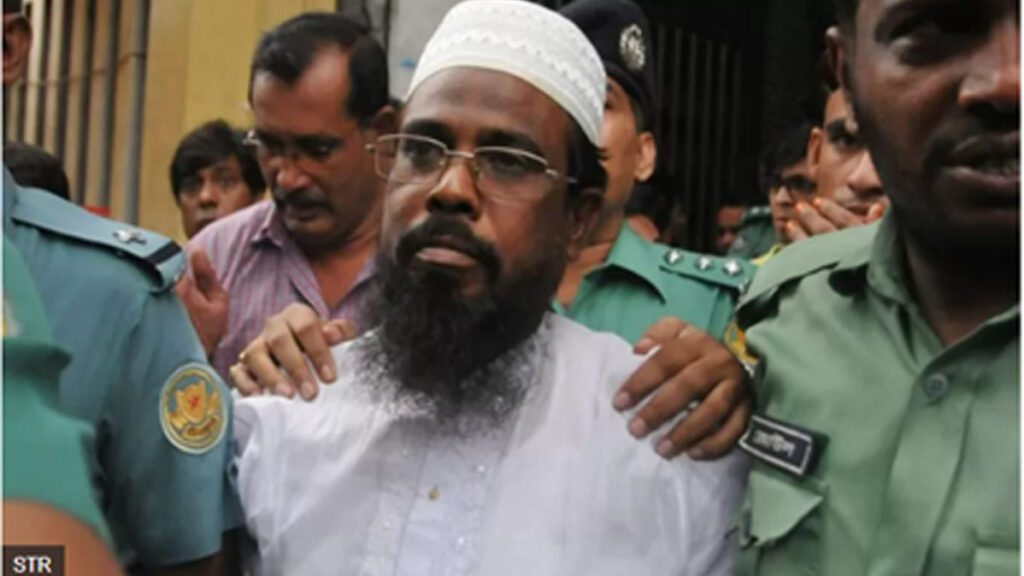
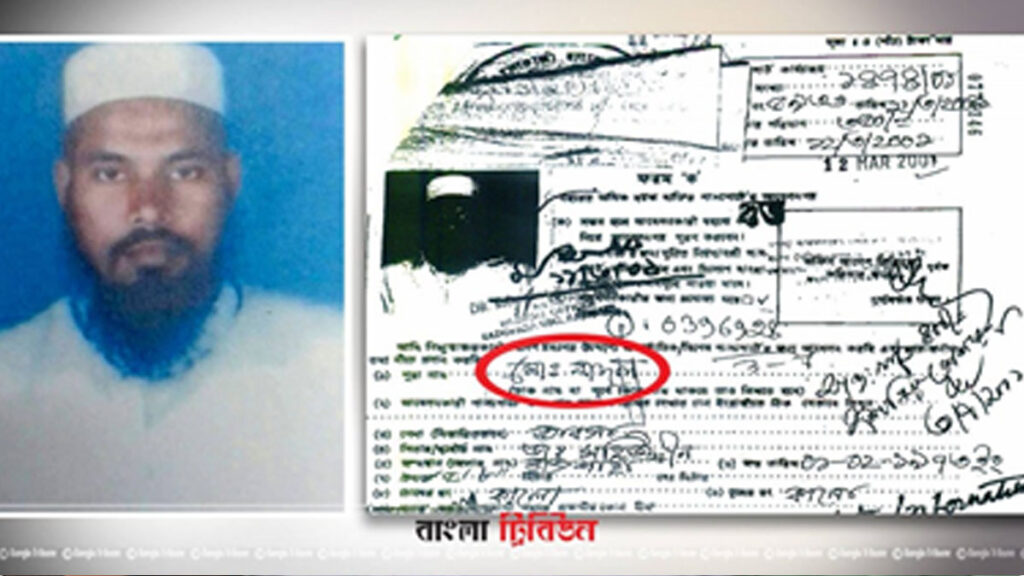
The main attacker of the August 21 grenade attack was Mufti Abdul Hannan alias Abul Kalam alias Abdul Mannan, who had fought and trained for the Taliban in Afghanistan and was the leader of Harkatul Jihad. Mufti Hannan also led the assassination of former Awami League Finance Minister Shah MS Kibria on January 27, 2005, the attack on British High Commissioner Anwar Chaudhry at the Shahjalal shrine in Sylhet on May 21, 2004, and the attempt to assassinate Sheikh Hasina by planting a bomb near the then Prime Minister Sheikh Hasina’s meeting stage in Kotalipara, Gopalganj in 2000. Mufti Hannan’s statement mentions his long-standing desire to assassinate Sheikh Hasina, for which purpose he tried to assassinate Sheikh Hasina 19 times, out of which 7 were solo attempts. But due to lack of sufficient cooperation and opportunity, he failed again and again. This opportunity and bridge of cooperation was created by Maulana Tajuddin, who was the brother of Abdus Salam Pintu, Deputy Minister of the BNP government.
Hawa Bhavan’s connection with Harkatul leader Mufti Hannan:
The first link was the radical Islamist thoughts of Mufti Hannan and Maulana Tajuddin, who believed in the ideology of making Bangladesh like Pakistan and Afghanistan in the Sharia style. With Mufti Hannan’s long-cherished dream of killing Sheikh Hasina and Maulana Tajuddin’s radical Islam, they went to Tajuddin’s brother, BNP Deputy Minister Abdus Salam Pintu, with their combined thoughts and plans. Abdus Salam Pintu took them to the then Home Minister Lutfuzzaman Babar. On August 14, 2004, Lutfuzzaman Babar and Comilla’s elected BNP MP Kaikobad went to Tarique Rahman at Hawa Bhaban to discuss the plan to kill Sheikh Hasina and those interested in doing so and presented Mufti Hannan’s plan and interests. Mufti Hannan was called there the day after receiving the green signal from Hawa Bhaban for the said plan.
Ali Ahsan Mohammad Mujahid, Haris Chowdhury, Lutfuzzaman Babar, the then DGFI Major General (retd) Rezzakul Haider Chowdhury, Brigadier (retd) Abdur Rahim and Tarique Rahman, son of the then BNP leader and Prime Minister Khaleda Zia, were present at the meeting held at Hawa Bhaban on August 15, 2004 to hear Mufti Hannan’s plans. Mufti Hannan also mentioned in his statement that after hearing all the plans at the meeting, Tarique Rahman agreed and said, “You don’t need to come to Hawa Bhaban anymore. After that, you will work in contact with Babar Saheb and Abdus Salam Pintu. They will provide you with all kinds of support.” Mufti Hannan also assured Tarique Rahman that you will always be in power.
Maulana Tajuddin Grenade Supplier:
After receiving the green signal from Hawa Bhaban, Home Minister Lutfuzzaman Babar ordered Pakistani citizen Majed Bhat to deliver RGS military grade grenades. From Majed Bhat, the grenades reached Abdus Salam Pintu’s house. Mufti Hannan collected all those grenades from his brother Maulana Tajuddin at Abdus Salam Pintu’s house on August 18, 2004. Abu Taher Jandal and Kajal, leaders of the military wing of Harkatul Jihad, Harkatul Jihad, were present with Mufti Hannan. After August 21, Maulana Tajuddin was hastily sent to Pakistan using a fake passport. His name was Badal in that fake passport. ATM Amin and Saiful Islam Duke, officers of the then intelligence agency DGFI, assisted in this task. By sending Maulana Tajuddin to Pakistan, an attempt was made to erase all connections between the BNP government and the Hawa Bhaban and the August 21 grenade attack plan.
Who is this Majed Bhat?
The main purpose of the grenade attack on August 21, 2004 was to kill the current Prime Minister and then opposition leader Sheikh Hasina and dismember the Awami League. Through this, it was ensured that the Awami League could not come to power in the future. This information has emerged from the statement of Abdul Majed Bhat alias Yusuf Bhat (50), the Islamabad (Pakistan) chief of Hizbul Mujahideen, who led the militant organizations Tehreek-e-Jihadi, Lashkar-e-Taiba, Jaish-e-Mohammad, Harkat-ul-Jihad (Al-Alimi), who was sentenced to death in this case.
Majed Bhat was arrested in 2009. After being remanded on the pretext of being arrested in the grenade attack case on August 21, he gave a confessional statement at the Dhaka CMM Court on December 6 of the same year.
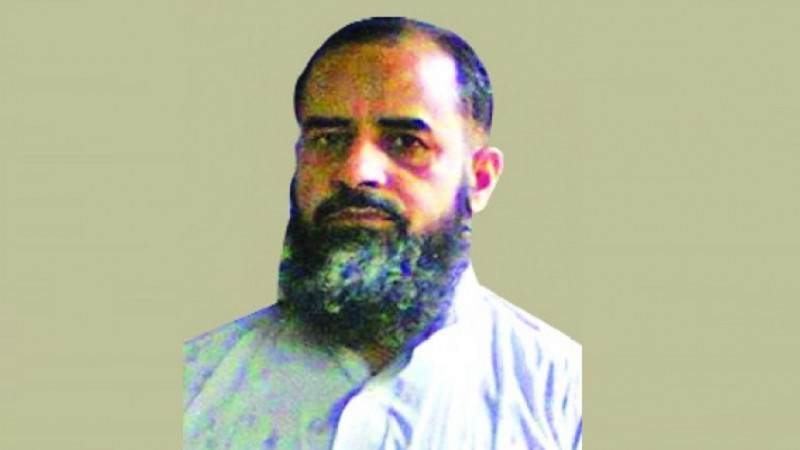
Majed Bhatt said in his statement that Maulana Tajuddin used to provide him with all kinds of support in carrying out militant activities in Bangladesh. Tajuddin used to give him courage and say that his own brother (Abdus Salam Pintu) was a cabinet member; there would be no police trouble. While Muzaffar Shah was in Dhaka, he gave him some grenades and explosives in two cartons. After he arrived in Chittagong by ship from Pakistan, Muzaffar arranged for the grenades and explosives to be brought to Dhaka. Tajuddin said that he would send those grenades to Indian Kashmir. Sometimes the grenades were kept in Majed Bhatt’s house, sometimes in Tajuddin’s house. During that time, Majed got acquainted with Mufti Hannan, Maulana Abu Taher and other militants in Bangladesh through Tajuddin. During that time, Majed collected shipments of bullets from Pakistan with Tajuddin several times and kept them at his house. But those bullets could not be sent to Kashmir due to excessive restrictions on the Indian border.
Mufti Hannan’s aides in the bombing:
On August 21, the day before the bombing, Mufti Ahsanullah Kajal and Abu Jandal conducted reconnaissance of the scene and surrounding areas on August 20. As planned, by 10 am on August 21, the militants selected for the attack gathered at Mufti Hannan’s house, joined by Abu Saeed Zafar, the deputy chief commander of the so-called military wing, Jahangir Badr, the metropolitan ameer Abu Taher and several others. They were briefed and sent to the gathering place.
Then, at 5:22 am on August 21, the execution of that thrilling plot began. The attackers divided into several groups and took part in the attack. Among the attackers were 15 Jamaat-e-Islami activists.
Despite all this, the truth could not be hidden. The attack was re-investigated during the 2007 military-backed caretaker government. The names of Mufti Abdul Hannan, leader of the banned organization Harkat-ul-Jihad-al-Islam, and Abdus Salam Pintu, deputy minister in the then BNP government, came up.
The investigation was resumed when the Bangladesh Awami League came to power in 2009. A special fast-track court in Dhaka sentenced 19 people, including BNP leaders and former State Minister for Home Affairs Lutfuzzaman Babar and Abdus Salam Pintu, to death for their involvement in the grenade attack on a Bangladesh Awami League rally on August 21, 2004. The verdict also sentenced 19 people, including BNP Senior Vice Chairman and current Acting Chairperson Tarek Rahman and Haris Chowdhury, to life imprisonment. In addition, Jamaat-e-Islami Secretary General Ali Ahsan Mohammad Mojahid (death sentence for crimes against humanity – executed), Mufti Abdul Hannan Munshi (death sentence for grenade attack on British High Commissioner – executed), and Sharif Shahedul Alam Bipul were acquitted from the case due to their conviction in other cases. Judge Shahed Noor Uddin of the Dhaka Fast Track Tribunal announced the verdict at 12 noon on October 10, 2018. Forty-nine people, including BNP acting chairperson Tarique Rahman and former state minister for home affairs Lutfuzzaman Babar, were accused in the case. The state’s lawyers sought the maximum punishment for 41 of them.

https://stapravda.ru/20221228/reyting_samyh_populyarnyh_hostingov_v_rossii_196445.html, рейтинг хостингов России подтверждает, что выбор надежного провайдера важен для бизнеса.