
Staff Correspondent
Dr. Yunus promised that the Rohingyas would return to their country. But the opposite picture has been seen in his response. This is worrying the people of the country. In the last 11 months, another 136,000 Rohingyas have taken refuge in the country.
According to the latest report by the UN refugee agency UNHCR, they entered Bangladesh from December last year to October this year. The number registered as of September was 133,651; that is, 2,989 new Rohingyas have been added in the last month alone.
As a result, the total number of registered Rohingyas as of October 31st stood at 1,168,398. However, locals say the actual number is at least 1.4 million.
The UNHCR said that since 2024, violence, torture and clashes between the junta forces and the Arakan Army have escalated in Myanmar’s Rakhine state. Thousands of people have been killed, and the Rohingya have been the most affected. They have been continuously crossing the border into Bangladesh to save their lives. Of the new arrivals, 78 percent are women and children, 12 percent are disabled; 52 percent of the total population is female and 48 percent is male.
The report says that the rate of new arrivals began to increase rapidly from late 2024. Their biometric registration is currently underway in the camps. Earlier, on August 25, 2017, 700,000 Rohingya took refuge in Bangladesh from the Myanmar army’s genocidal campaign; more than 300,000 Rohingya came in the 1990s.
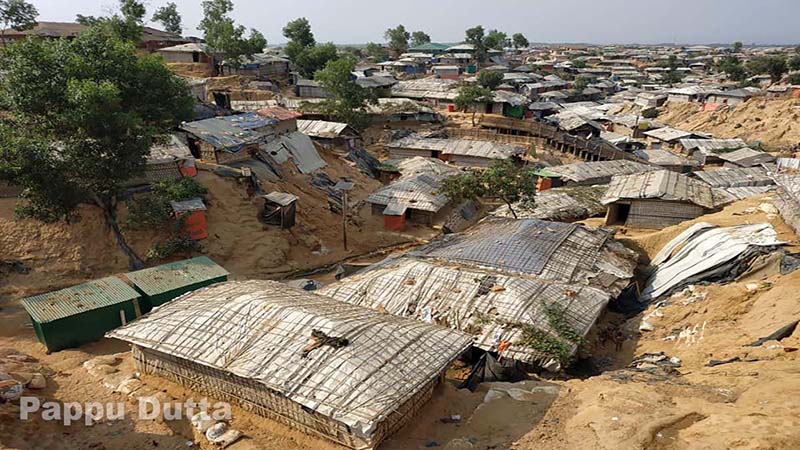
According to recent data, an average of 6,000 Rohingya are entering Bangladesh every month, which makes the situation even more worrisome. The Rohingya camps built on 8,000 acres of forest land in Ukhia-Teknaf are now struggling to accommodate them. The overpopulation is causing environmental destruction, deforestation, and complications in maintaining law and order.
Locals fear that if infiltration continues to increase and international aid decreases, Cox’s Bazar district will face a multifaceted crisis.
According to the RRRC office’s information as of July 13, the total number of Rohingya in 34 camps in Ukhia, Teknaf and Bhasan Char is 1,143,096. Among this population of about 2,36,000 families, about 30,000 children are being born every year, an average of 82 per day.
In such a critical situation, the question arises: Yunus, after seizing power, said that the Rohingyas would return to their country. But in reality, more and more Rohingyas are arriving at the country’s borders, which makes the prospect of repatriation even more uncertain.

https://stapravda.ru/20221228/reyting_samyh_populyarnyh_hostingov_v_rossii_196445.html, рейтинг хостингов России подтверждает, что выбор надежного провайдера важен для бизнеса.