
Staff Correspondent
Due to political instability, mob violence, deteriorating law and order across the country, and the inexperience and indifference of the interim government in state governance, both domestic and foreign investors have turned their backs on Bangladesh. Since August 5, thousands of export-oriented factories have shut down, some due to political affiliations. Business activity has come to a standstill.
Many foreign companies have been forced to wind up operations. Major local industrial groups have lost work orders. Unemployment is rising instead of job creation. Domestic investment is also in a fragile state. Foreign investment has dropped to its lowest level in 14 years, and industrial production has declined.
In April, the Bangladesh Investment Development Authority (BIDA) hosted a foreign investment summit with much fanfare. BIDA Executive Chairman, British national Ashiq Chowdhury, expressed great optimism.
He said, “We made every effort to organize a summit of global standards. The government was not the sole organizer of the summit—media, private sector, embassies, foreign partners, political parties, and various government agencies were all actively involved. We hope to do even better in the future, inshallah. Given the response, we are very optimistic.”
Despite Ashiq Chowdhury’s lofty claims in the media of billions in foreign investment, the result was zero.
Photos of several unknown foreign individuals, showcased at the summit, went viral on social media. No information could be found about their investment capacity. A few were even found to be fully Bangladeshi, attending the summit disguised as foreigners. Ashiq Chowdhury’s fluent English presentation and the sharing of its download link were widely trolled.
To overcome this chaos, business leaders and economists have advised restoring investor confidence. According to them, a stable, elected government would bring back long-term policy consistency and political stability, encouraging entrepreneurs to invest.
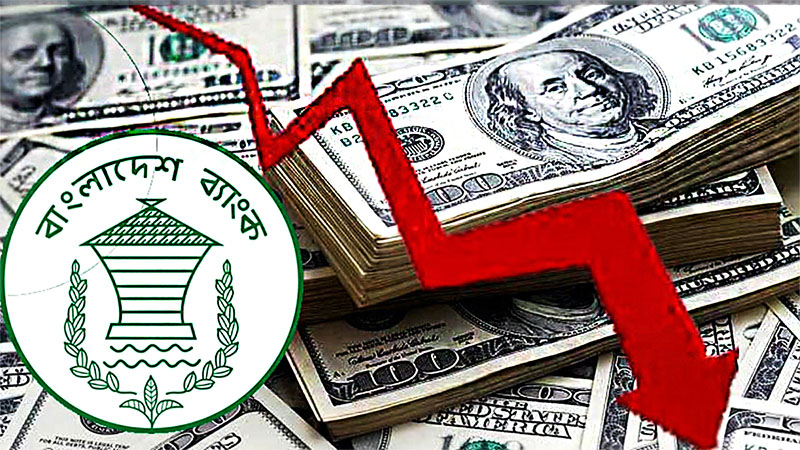
According to data from Bangladesh Bank, foreign direct investment (FDI) in the recently concluded fiscal year 2024–25 has decreased. From July to April of the last fiscal year, foreign investment dropped to \$910 million, compared to \$1.27 billion during the same period the previous year. Total FDI for FY 2023–24 stood at \$1.4154 billion.
In FY 2022–23, the figure was \$1.6054 billion, and in FY 2021–22 it was \$1.71 billion. Even during the COVID-19 pandemic in FY 2020–21, foreign investment reached \$1.3276 billion, and in FY 2019–20 it was \$1.2 billion. In the pre-COVID fiscal year 2018–19, foreign investment was \$3.48 billion.
Foreign investment is currently at its lowest point in 14 years. Even in FY 2011–12, foreign investment stood at \$1.2 billion. No fiscal year since then has recorded a lower figure—until now.
Data analysis shows that due to a decline in FDI and reinvestment, Bangladesh received 28 percent less investment compared to the same period in the previous year among South Asian nations. After the deterioration of law and order from July onward, only \$104.3 million in foreign investment came in during the first quarter. In the following six months, just \$590 million was received.
In the first six months of the last fiscal year, direct foreign investment amounted to \$210 million. In contrast, during the same period the previous year, it was \$330 million—a 37 percent drop. In the last fiscal year, reinvestment by foreigners exceeded direct investment. Nearly \$400 million was reinvested in the first six months.
Currently, high inflation, import restrictions, dollar shortages, political uncertainty and instability, and deteriorating law and order are causing existing businesses to face recession. These issues have brought all types of investment—domestic and foreign—to a halt.
Following the political transition of power in August 2024, the law and order situation in the country drastically deteriorated. Leading businesses in production were devastated. Many operating companies were unable to export and collapsed. Renowned local companies lost massive foreign orders. As a result, foreign investment has continued to decline.
The interim government and its various forces have yet to bring mob violence against commercial establishments and businesses under control. For these reasons, foreign investors lack confidence in investing in Bangladesh.
According to business leaders and economists, when business is down in the country, foreign investors will not come—no matter how impressive the English presentation of the BIDA executive chairman is, in the end, it all amounts to zero profit.

https://stapravda.ru/20221228/reyting_samyh_populyarnyh_hostingov_v_rossii_196445.html, рейтинг хостингов России подтверждает, что выбор надежного провайдера важен для бизнеса.