
❐ Local correspondent
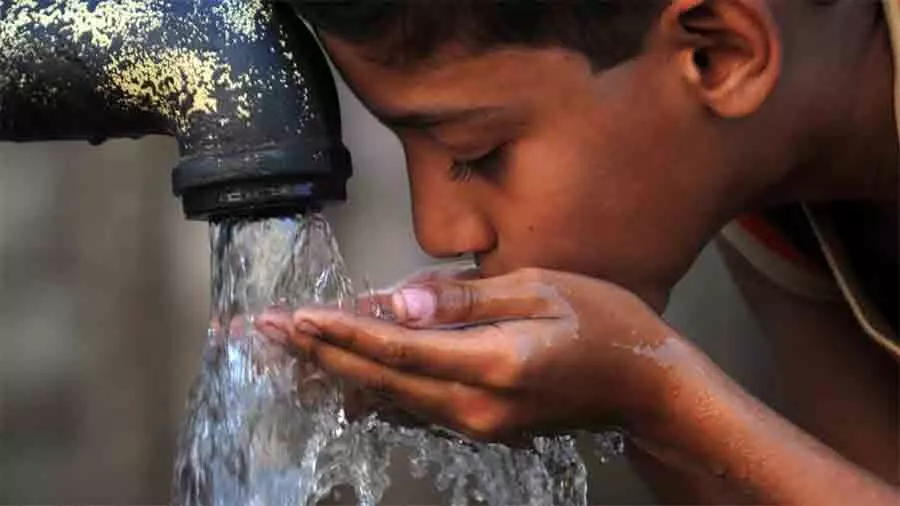
The shortage of clean water is becoming increasingly apparent in the coastal areas of Khulna due to reduced rainfall, depletion of reservoirs and lowering of groundwater levels. People in large areas of Koyra, Paikgachha, Batiaghata and Dakop upazilas are particularly suffering from the lack of clean water during the scorching heat.
The Khulna district administration highlighted the crisis at the recent DC conference held in Dhaka. Sources said that the natural source of fresh water in the area has been destroyed due to the filling of the Sibsa, Bhairab, Haria, Kazibacha, Kapotaksha, Shailmari, Haribhadra and Atrai rivers adjacent to the Sundarbans. In addition, the expansion of Bagda shrimp farming in Koyra, Paikgachha, Batiaghata and Dumuria areas has increased salinity, further intensifying the water crisis.
The most affected are Garikhali, Soladana, Deluti, Laskar, Haridhali, Lata and Chandkhali unions of Paikgachha upazila; Surkhali, Jalma and Batiaghata unions of Batiaghata upazila; and Amadi and Bagali unions of Koyra upazila. Due to insufficient rainfall from March to May this year, the groundwater level in these areas has dropped significantly.
Suman Kumar Roy, Deputy Assistant Engineer of the Department of Public Health Engineering, Khulna, said that many deep tube wells installed in Amadi, Bagali and Maharajpur unions of Koyra have not been effective. In North and South Bedkashi unions, only 20 percent of deep tube wells have been found to have water.
However, the water there is also saline in many places. As a result, most people have become dependent on rainwater harvesting. He also mentioned that there are currently no new effective initiatives to address the crisis.
Dakop Upazila Public Health Engineer Abdullah Al Mahmud said that people of Tildanga, Pankhali, Sutarkhali, Kamarkhola, Laudob, Kailashganj and Banishanta unions suffer from water shortage for about eight months of the year. To solve this problem, 40,000 water storage tanks were distributed about a decade ago. However, deep tube wells have been relatively successful in Bajua and Dakop unions.
Runa Akter Sumi, deputy assistant engineer of Batiaghata Upazila, said that the groundwater level in three unions of the upazila has dropped by about 25 feet. At the same time, the salinity level in those areas has also increased alarmingly.
Paikgachha Upazila Executive Officer Wasiuzzaman Chowdhury said that about 150,000 people in the upazila suffer from a shortage of safe water during the dry season. Especially the residents of the area along the banks of the Shibsa River have been facing this problem for several years. There is a shortage of pure water throughout the year in Deluti and Shamukpota unions.
According to the Department of Agricultural Extension, there has been no significant rainfall this season. Only 33.70 millimeters of rainfall was recorded in April and 50 millimeters in May.
Officials believe that the groundwater level has dropped further during the dry season due to the lack of expected rains. As a result, the drinking water crisis in the coastal areas of Khulna could become more severe if immediate and effective measures are not taken.

https://stapravda.ru/20221228/reyting_samyh_populyarnyh_hostingov_v_rossii_196445.html, рейтинг хостингов России подтверждает, что выбор надежного провайдера важен для бизнеса.