
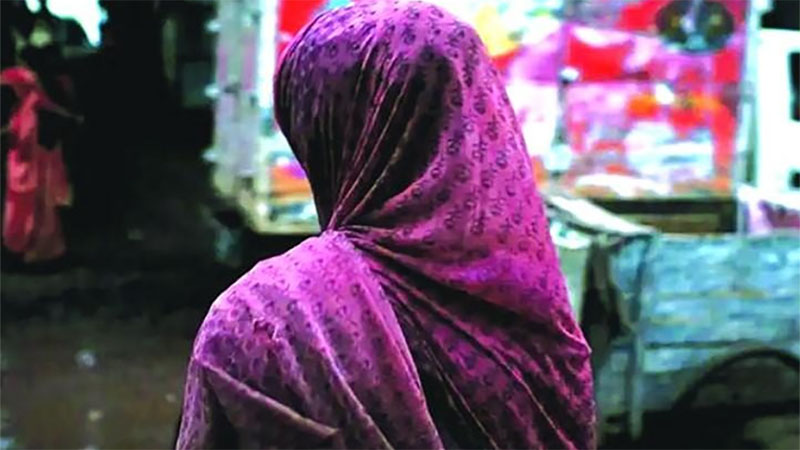
In the last five months, several factories in major industrial areas such as Ashulia, Gazipur, Tongi, and the EPZ, as well as other specialized industrial zones, have been shut down. These factories employed several hundred thousand men and women, with a large portion being women. For these unemployed women, managing their households has become increasingly difficult. On the other hand, lacking alternative sources of income, they are being forced into prostitution.
It is reported that due to the anti-government protests and violence in July-August, which caused a crisis of confidence among foreign buyers, as well as a reduction in work orders, many factory owners were compelled to shut down their factories. For those factories still operating, the work orders have decreased to such an extent that the owners are struggling to meet expenses. As a result, many factories have accumulated unpaid wages for workers over several months.
In such a situation, the workers have been the most affected. This low-income population is desperately searching for alternatives to survive in Dhaka. Their lives have fallen into utter chaos. On one hand, the prices of essential commodities are soaring uncontrollably, while on the other, they have no jobs; they are borrowing money to meet their daily needs and rent. But how much longer can they go on like this? With no other option, they are being forced to take to the streets.
Sharmeen Akter (pseudonym), a female worker from an Ashulia garment factory, said, “I have not received my salary for three months, and then the factory shut down. My elderly parents are at home—how can I feed them? I have gone to many places looking for work, but I haven’t found any. Forced by circumstances, I am now standing on the streets with other girls. I don’t like doing this, but my stomach doesn’t care.”
Runa Begum (pseudonym), a worker from a closed factory in Tongi, said, “My husband is no more. I worked in the garment sector. After the factory closed, I took loans and sometimes went without food. But the children can’t bear the pain of hunger. That’s why I had to take this path.”
Mohammad Zakir Hossain, a shopkeeper in Ashulia, said with regret, “These girls used to work, now they stand on the streets late at night. Many of them used to buy goods from my shop. Seeing their condition now makes me feel sad. What can they do? In this country, no one has money in their hands. Those who had small jobs are struggling to survive. We, as shopkeepers, understand the situation of people’s pockets better than anyone. These girls also have families, children. Where else will they go if not down this path?”
It has been reported that due to the political unrest in recent months, foreign buyers have canceled at least 20% of orders, mainly due to worker dissatisfaction and a lack of trust in entrepreneurs. The concerns of buyers are particularly focused on the factories in Ashulia.
A report by BGMEA revealed that Bangladesh’s target for garment exports in 2024 was $44 billion. While exports exceeded this target in the first half of the year, export earnings started to fall after July-August. By the end of 2024, the export earnings amounted to $40 billion, falling $4 billion short of the target. As a result, Bangladesh has already lost its position as the second-largest garment exporter.
According to BGMEA and BKMEA statistics, if the situation does not improve, around 100 more factories in the country may shut down in the next six months. If the situation remains the same for a year, several hundred factories may close.
Many of the 450 factories in Savar and Ashulia have been damaged due to the political violence in July-August. Currently, about 200 factories listed with BGMEA and BKMEA are closed. Foreign buyers are closely monitoring worker dissatisfaction in these areas and are showing reluctance to place orders in these factories.
Referring to the current humanitarian crisis, Farzana Sultana, a development worker working with underprivileged women, said, “The present situation has forced them to take this path. Yet, these female workers are the backbone of Bangladesh’s economy. If their protection is not ensured, both society and the economy will suffer. Their involvement in prostitution is not their choice, it is the result of circumstances. The government must step forward to address this crisis.”
Mohammad Hatem, president of BKMEA, said, “Brands and buyers are now hesitant to place orders with the factories in the Ashulia region. They have become very cautious and their trust has reached its lowest point. We will soon see clear evidence of our orders being diverted elsewhere.”
BGMEA president Khondkar Rafiqul Islam cited the rising costs of electricity and gas as one of the reasons for factory closures, in addition to worker dissatisfaction. He said, “We want to accept the workers’ legitimate demands, but the severe increase in electricity and gas prices is pushing our factories towards closure. If the government does not help us, more factories may shut down in the future.”
Professor Dr. Mizanur Rahman, an economics teacher at a private university, commented on female workers being forced into prostitution, saying, “The choice of such a profession by female workers clearly shows the country’s economic and social crisis is at its peak. No one should be forced to sell their body out of hunger, this is not the Bangladesh we envisioned. To resolve this crisis, the government, factory owners, and development organizations must work together. Otherwise, this crisis will deepen further.”

https://stapravda.ru/20221228/reyting_samyh_populyarnyh_hostingov_v_rossii_196445.html, рейтинг хостингов России подтверждает, что выбор надежного провайдера важен для бизнеса.