
❐ BD Digest Desk
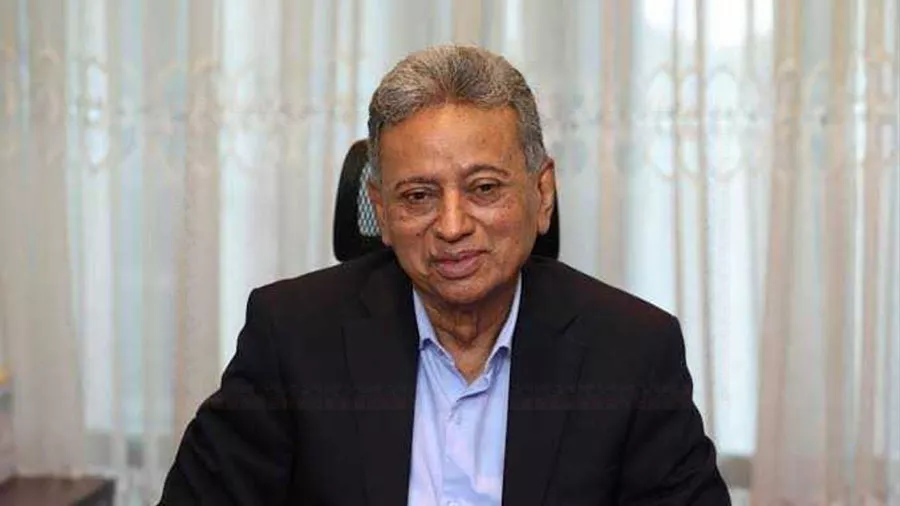
Finance Minister Amir Khasru Mahmud Chowdhury has said that the electricity and gas problems are not under the government’s control. He said, this problem is not something that can be solved in a month. However, efforts are being made to solve the problem. The energy crisis will be solved; but slowly.
He made these remarks while addressing the chief guest at a seminar titled ‘Bi-Annual Economic Situation of Fiscal Year 2026: Outlook for Revenue and Monetary Policy and Private Sector Expectations’ organized at the DCCI Auditorium in Motijheel, the capital, on Saturday, August 22nd.
Businessmen, economists, researchers, and prominent policymakers were present.
The Finance Minister said the government is working to create an investment environment in the country. Without investment, nothing can be done in the economy. For this, the government and the private sector must work together.
Amir Khasru Mahmud Chowdhury said, “The Finance Minister or the government alone cannot do anything. Everyone has to work together to create an investment environment. BNP has repeatedly turned around from difficult situations since coming to power.”
He said, “This harassment is not like the energy crisis that will take two years to resolve. The government can stop this ‘harassment tax’ if it wants.”
Amir Khosru Mahmud Chowdhury said, “Energy security is very important for the development of the country’s economy. The government is working to ensure three months of reserves in every energy sector.”
He said, “Energy security is the primary component for the development of the economy.” However, this problem cannot be solved in a month. However, efforts are being made to solve it as soon as possible.
Amir Khasru said that the government is moving forward with short, medium and long-term plans to solve the electricity and gas crisis. Discussions are underway on FSRU to address the gas crisis. At the same time, work has also started on onshore gas sources and pipelines.
He said, “There is a goal to ensure three months of reserves in every energy sector. For this, the government is making all kinds of efforts.”
The Finance Minister said, “There is no alternative to investment to turn around the country’s economy. If there is no investment in the country, the confidence of foreign investors will not be built.”
He said, “In the past, Bangladesh’s growth was mainly dependent on the private sector. The basic philosophy of BNP is private sector-dependent growth. The private sector will drive the growth of the economy and the government’s responsibility will be to create the necessary environment, provide support and facilities. We are trying to do this work with all of you. The whole thing is actually related to investment. Without investment, there is no chance of getting out of here.”
Emphasizing the importance of deregulation to improve the business environment, Amir Khasru said that it is not enough to just announce policies, but to ensure their implementation.
He said the government is working to bring the issues of deregulation to the fore and has taken steps to launch a website for traders to report any obstacles they face. In addition, trade associations should also take a stand on the problems of their members.
He said that discussions are being held with representatives from customs, ports, and the private sector to reduce business costs, adding that about 8 to 10 decisions were taken in one meeting.
He also said that deadlines are being set for how long it will take to release cargo after importing goods, and how many days it will take for customs and ports to complete certain tasks.
Regarding the problem of defaulted loans of businessmen, the Finance Minister said, “The industrial sector has been affected by various reasons including the energy crisis. Considering this situation, Bangladesh Bank has provided loan rescheduling and one-time settlement opportunities.”
He said that for those who want to continue their business, there is an opportunity to provide time and grace periods through rescheduling. And those who want to exit the business can exit through a one-time settlement.
Stating that this package will be effective from September 1, he said, those who are eligible for this benefit should inform the government if they encounter any obstacles in any bank.
The Finance Minister said, “There is no benefit in showing money on the bank’s balance sheet that is unlikely to be recovered in reality. It is necessary to clean up the bank’s balance sheet by disposing of such assets and create opportunities for businessmen to conduct new activities.”
The Finance Minister said that a package of 60,000 crore taka has been provided for micro, small and medium industries and its proper utilization will be ensured.
He said, there will be no scope for any political interference in the financial sector. Only those who meet the qualifications and set criteria will be given benefits. We will not give any political appointments in the financial sector. Where there is sensitivity in the financial sector, politics cannot come there. This is the market, you have to respect the market.
The Finance Minister also said that the government is working on the ‘creative economy’ to bring cottage and small entrepreneurs into the mainstream of the economy.
He said that entrepreneurs associated with various traditional products, including village blacksmiths, weavers, Shitalpati, Shatranji, Nakshi Kantha, etc., have not been adequately brought into the mainstream of the economy so far.
Entrepreneurs in this sector will be provided with loans, skill development, design, branding and marketing support as per their needs. Initiatives are also being taken to create opportunities for selling domestic products in the international market through online platforms.
Amir Khosrow emphasized the importance of considering the sports and entertainment sector as part of the economy.
He said, “Theater, film, music and sports are associated with employment of a large number of people. Although these sectors generate income and employment opportunities, they have not been given enough importance in the mainstream of the economy so far.”
Citing the example of London’s theatre district, he said, “A theatre is the center of various economic activities, including ticket sales, shops, restaurants, legal services, designer shops and art galleries. Similarly, in Bangladesh, it is possible to create major economic activities centered around theatre, films and sports. These are also part of the GDP. We have never monetized them. Now we want to increase economic activities by investing in these places.”
He also said that efforts are being made to bring people who are deprived of capital or credit opportunities in the conventional economy into the mainstream of the economy through new initiatives.
Syed Mahbubur Rahman, Managing Director (MD) and Chief Executive Officer (CEO) of Mutual Trust Bank PLC, Simin Rahman, Group CEO of Transcom Limited, Dr. AK Enamul Haque, Director General of Bangladesh Institute of Development Studies (BIDS), and Professor Mostafizur Rahman, Distinguished Fellow of the Central for Policy Dialogue (CPD), participated in the panel discussion of the seminar.
The seminar discussed in detail the overall economic situation of the fiscal year 2026, the impact of fiscal and monetary policies, the current state of the country’s private sector, and future expectations. The discussion brought together the views of policymakers, businessmen, and economists on the current challenges and prospects of the economy.

https://stapravda.ru/20221228/reyting_samyh_populyarnyh_hostingov_v_rossii_196445.html, рейтинг хостингов России подтверждает, что выбор надежного провайдера важен для бизнеса.