

❐ Staff Reporter
The minimum wage has increased nearly 13 times in 30 years; despite each round of wage increases, workers are unable to keep up with inflation, rent, and the prices of daily necessities
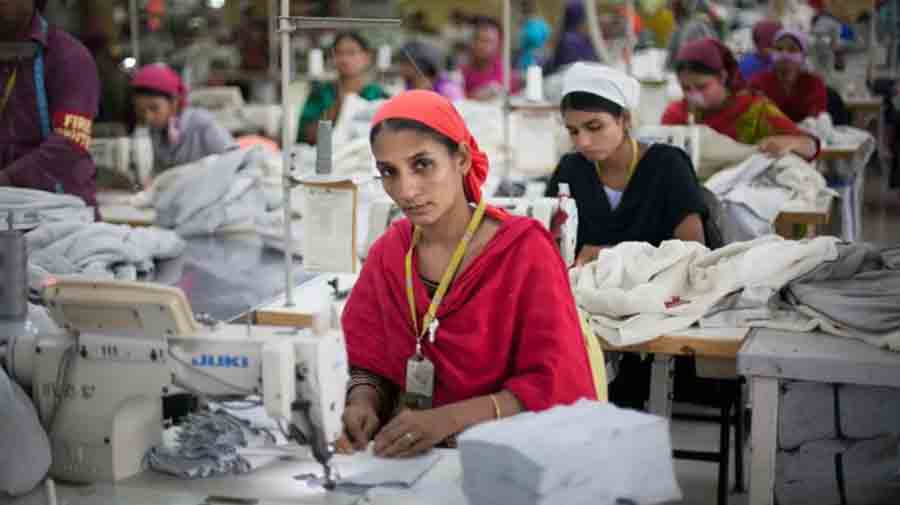
The minimum wage for workers in Bangladesh’s ready-made garment industry has been increased several times in the last three decades. In 1994, the minimum monthly wage for a garment worker was Tk 930. In the latest wage structure announced in 2023, it was increased to Tk 12,500. That is, the minimum wage in terms of Tk has increased by about 13.44 times in 30 years. However, there is a big question as to how much this increase has increased the actual purchasing power of the workers.
A review of the history of wage increases in the garment industry shows that in most cases, the government announced a new wage structure after workers’ movements, dissatisfaction, strikes, and conflicts at various times. Workers sometimes had to wait up to 12 years between one round of wage increases and the next.
Minimum wage increase continues for three decades
The notable trend in the increase in the minimum monthly wage in the garment industry in Bangladesh is:
| Year | Minimum Monthly Wage | Increase compared to previous structure |
| —- | ——————— | ———————– |
| 1994 | 930 Taka | — |
| 2006 | 1,662.50 Taka | 78.71% |
| 2010 | 3,000 Taka | 80.51% |
| 2013 | 5,300 Taka | 76.67% |
| 2018 | 8,000 Taka | 50.94% |
| 2023 | 12,500 Taka | 56.25% |
Reference: History of wage structure published by The Daily Star, Dhaka Tribune and TBS.
Notable developments in wage increases
1994: 930 taka
In 1994, the minimum wage for garment workers was set at 930 taka. Earlier, when the first wage structure was set in 1984, the minimum wage was 560 taka; later, in 1986, it was raised to 627 taka.
2006: 1,662.50 taka
After 12 long years, a new wage structure was announced in 2006. In this, the minimum wage was increased from Tk 930 to Tk 1,662.50. The increase rate was about 78.71 percent.
2010: 3,000 taka
In 2010, wages were increased again. The minimum monthly wage was increased from 1,662 taka 50 paisa to 3,000 taka. The rate of wage increase by occupational category was about 67 to 81 percent.
2013: 5,300 taka
After the Tazreen Fashions fire and the Rana Plaza collapse, there was widespread discussion and pressure at home and abroad about the safety and wages of garment workers. A new wage structure was finalized in November 2013. The minimum wage was increased from Tk 3,000 to Tk 5,300. The new structure came into effect from December 1.
2018: 8,000 taka
In September 2018, the government set the minimum wage for garment workers at Tk 8,000. The increase was about 50.94 percent from the previous Tk 5,300. The new structure came into effect in December. However, after workers protested against the inconsistencies in different grades of the new wage structure, wages for some grades were revised in January 2019. The minimum wage remained at Tk 8,000.
2023: 12,500 taka
In November 2023, the minimum wage for garment workers was increased from Tk 8,000 to Tk 12,500. The increase rate was 56.25 percent. The new wage came into effect from December 1.
However, labor organizations demanded a minimum wage of Tk 23,000. As a result, dissatisfaction among workers continued with the announced Tk 12,500.
Wages have increased 13 times in 30 years, but the cost of living?
According to wage statistics, the minimum monthly wage of a garment worker in 1994 was Tk 930. In 2023, it stood at Tk 12,500. That is, wages have increased by about 1,244 percent in nominal or taka terms.
But there is no scope to consider wage increases in monetary terms alone as an improvement in the quality of life of workers. Because at the same time, food, rent, electricity, gas, transportation, and medical expenses have also increased. Especially in industrial areas, due to the increase in rent, a large portion of wages is spent on housing.
The workers also objected to the new wage structure for 2023. The workers demanded that wages be set in line with the current market rates. On the other hand, the owners cited production costs, the price of clothing in the international market, and business viability as arguments.
New wage board, workers waiting again
According to a report by the Daily Star published on November 2, 2026, a wage board has been formed again to determine the new wages of garment workers. This means that the process of determining new wages has begun after 2023. However, the amount of the new wage has not yet been announced.
The garment industry is one of the main sources of foreign exchange earnings in Bangladesh. The country’s export earnings and industrial growth are achieved through the labor of millions of workers dependent on this industry. However, the question of how much money is needed to meet their minimum living expenses comes up every time a new wage is set.
The history of three decades of wage increases shows that despite the increase in workers’ income, the gap between income and the cost of living has re-opened after each new wage structure. Therefore, in determining wages this time, there is a demand to give importance not only to the cost of production of the employer or the competitiveness of the industry, but also to the ability of workers to meet their basic needs for food, housing, medical care, education, and family.

https://stapravda.ru/20221228/reyting_samyh_populyarnyh_hostingov_v_rossii_196445.html, рейтинг хостингов России подтверждает, что выбор надежного провайдера важен для бизнеса.